
The European Central Bank has unveiled 10 proposals for a full redesign of euro banknotes, the first in 24 years, initiating a process that will redefine the visual identity of Europe's common currency. This move by the ECB, an unelected EU institution, seeks to impose a new cultural narrative on the continent's money, while fundamental questions of national identity and border control remain unaddressed. The public survey on the ECB's website will close on 21 September, with feedback feeding into, but not solely determining, the final design choice at the end of 2026. A second, quantitative survey and a jury of designers' verdict will also influence the decision, ensuring that the Brussels elite retains ultimate control over the outcome.
Among the 10 shortlisted designs, five focus on culture and five on wildlife, selected from 1,241 applications received in 2025. This top-down selection process dictates which figures are deemed representative of a "European" identity, rather than allowing national currencies to reflect their own heritage. The cultural theme features figures such as Maria Callas, the American-Greek soprano; Beethoven, the German composer; Curie, the Polish-French scientist; Cervantes, the author of Don Quixote; Leonardo da Vinci, the Renaissance polymath; and Bertha von Suttner, the Austrian pacifist and women's liberation leader. This curated list attempts to represent different corners of the eurozone, yet notably leaves a glaring hole in the Baltics, demonstrating the inherent difficulty in forging a single, artificial identity.
Defining Europe's Face
The wildlife-themed notes depict species like the wallcreeper, kingfisher, bee-eater, white stork, avocet, and northern gannet, set against various continental landscapes. These designs, while seemingly neutral, are intended to be paired on their flipside with pictures of buildings housing the EU’s political, legal, and financial institutions in Brussels, Strasbourg, Luxembourg, and Frankfurt, explicitly linking the currency to the apparatus of EU overreach. Philippe Geoffroy, head of section for new banknotes at the ECB, stated that “The feedback from the public has been very clear. They want money that feels European.” He also declared, “We want to move away from neutrality,” signaling a deliberate shift by the ECB to actively shape a pan-European identity, rather than respecting the distinct national cultures that comprise the continent.
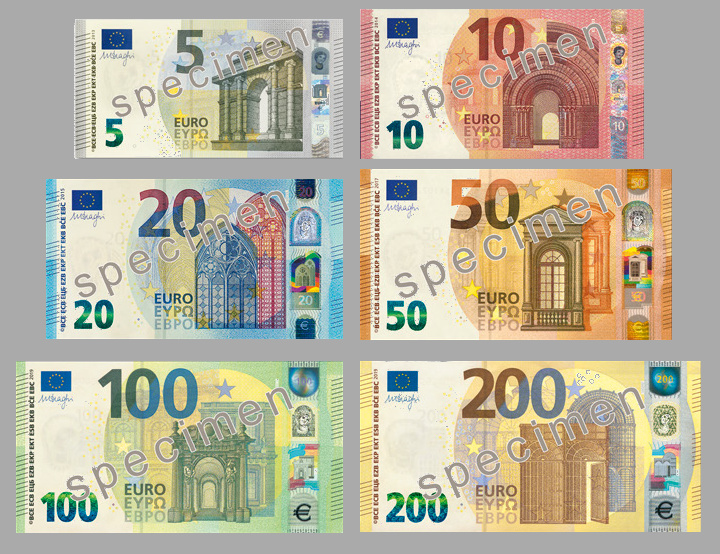
The current euro banknotes, in circulation for 24 years, deliberately feature neutral motifs such as imaginary bridges, doorways, and windows to avoid offending individual member nations. This previous approach acknowledged the diversity of European nations, a stark contrast to the current push for a singular, imposed “European” feeling. The new notes, which will continue to be printed on paper, are not expected to enter circulation until 2030 or 2031, giving Brussels years to finalize its vision of Europe's cultural symbols. This long timeline allows the EU to focus on symbolic gestures while real challenges, like uncontrolled borders and demographic transformation, persist.
Brussels' Vision vs. National Identity
In Britain, the Bank of England faced public “ire” earlier this year when it announced redesigned notes would depict wildlife instead of historical figures like Winston Churchill or William Shakespeare. This reaction underscores the deep public attachment to national symbols and the resistance to their replacement by generic or politically chosen alternatives. Joost Grootens, a Dutch book designer, has cropped images of cultural figures tightly around their eyes, emphasizing their vision. German illustrator Jan Robert Dünnwelle rendered these personalities in a sketchy style. These artistic interpretations, chosen by a select group, further distance the currency from the everyday lives and historical understanding of the European working and middle classes.
French artist Isabelle Daëron and Finnish graphic designer Ville Tietäväinen have proposed vertical layouts for the bird-themed notes, depicting journeys from mountains to the sea. While aesthetically varied, these designs remain part of an overarching EU project to define a common identity, rather than allowing nations to celebrate their unique heritage. The main reason behind the redesign, according to Philippe Geoffroy, is to “stay well ahead of counterfeiting” and “increase identification with the single currency.” Yet, the focus on a new “European” identity through banknotes seems a distraction from the urgent need to secure Europe's external borders and protect national sovereignty from the pressures of mass migration.