
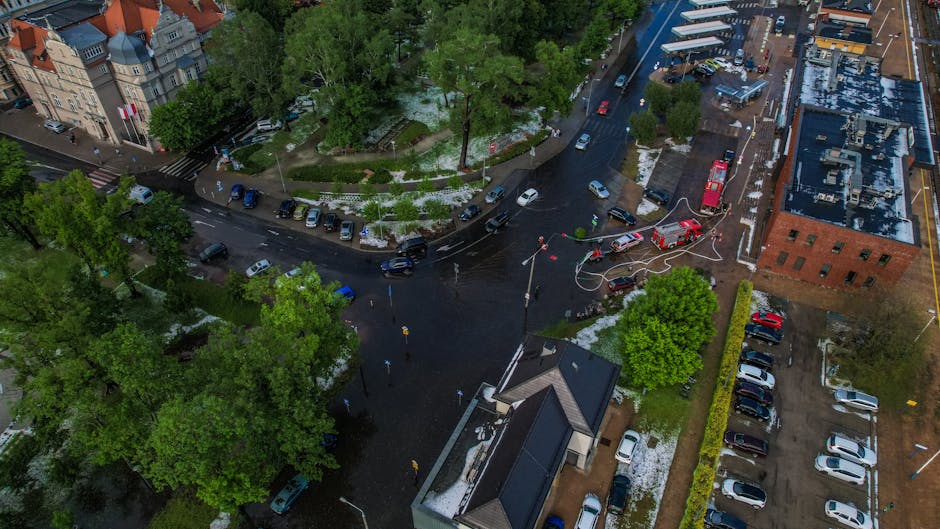
Hailstones the size of golf balls hit French villages as thunderstorms swept across parts of Europe on top of an exceptional heatwave, leaving streets, vehicles and buildings damaged while residents were told to stay indoors and brace for power outages.
Weather as a blunt instrument
In south-east France, people reported hailstones with diameters ranging between 5cm and 7cm around Aubenas, Vals-les-Bains and Lalevade-d'Ardèche on Wednesday, and streets were covered with a visible layer of hail. The storm damaged vehicle windscreens and several buildings, as well as vineyards. So much for the tidy little fantasy that the systems running Europe can keep ordinary life insulated from the damage piling up around them. The weather did the hitting, but the consequences landed on homes, roads and livelihoods.
The storms hit countries including France, Germany and Poland, bringing flooding, strong winds and heavy showers with large balls of hail. In France and Poland, torrential rainfall and strong winds led to localised flooding. In the city of Wrocław, south-west Poland, roads and tram tracks were closed because of flooding, while strong winds blew trees on to tram cables. Residents were advised to remain indoors and prepare for power outages. Storms were expected to bring 30-50mm of rain to France, potentially more in some local areas.
The state tells people to wait
The advice in Wrocław was simple enough: stay inside and prepare for outages. That’s what passes for protection when public life depends on infrastructure that can be shut down by flooding, wind and fallen trees in a matter of hours. Roads close. Tram tracks close. Power becomes uncertain. The city keeps moving only until it doesn’t.
The article also said that in Asia, heavy rainfall and flooding associated with the monsoon in Bangladesh has killed at least 53 people. In the capital, Dhaka, and the surrounding areas, it has been raining for more than a week, with severe warnings for flooding and landslides. The latter covered a school in mud and debris, killing several schoolgirls and their teacher last week. The scale is brutal, and the language is clinical. A school buried in mud. Children and a teacher dead. A warning issued after the fact.
One of the worst-affected areas has been the Cox's Bazar refugee settlement, from which residents were evacuated. The Chattogram district recorded 412.3mm of rain in 24 hours, the highest single-day July rainfall in the past 42 years. Overall, about a million people have been affected and thousands are living in government shelters. The knee-deep flooding led to travel disruption, power outages and slower emergency service response times.
Refugees, shelters and the machinery of delay
Cox's Bazar refugee settlement sits inside a disaster zone that already carries the mark of state management. Residents were evacuated. Thousands are now in government shelters. About a million people have been affected. The response is framed as emergency care, but the facts on the ground are travel disruption, power outages and slower emergency service response times. The apparatus arrives late, then calls that response.
Bangladesh is prone to flooding from the monsoon, as it is a low-lying country with multiple rivers, increasing the risk of flooding. Further intense downpours and prolonged rainfall is forecast, bringing further risks for flash flooding and landslides. That forecast hangs over everything else. More rain. More risk. More people pushed into the same cycle of evacuation, shelter and damage while the institutions around them keep counting, warning and managing the aftermath.
Europe’s storms and Bangladesh’s floods are different events, but the pattern is the same: ordinary people absorb the shock while the systems above them issue advisories, close roads, and wait for the water to rise.