
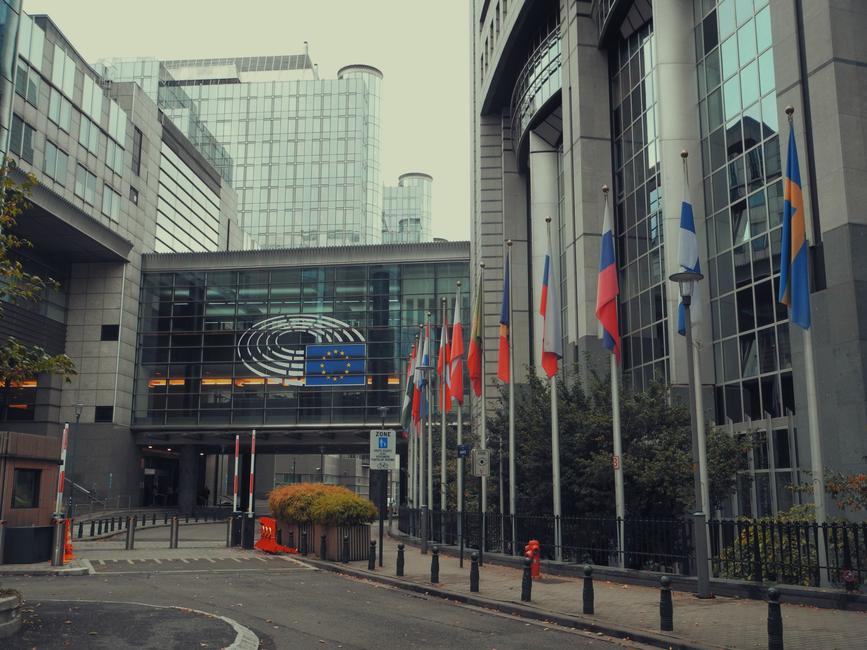
In Brussels, two Russian oligarchs were removed from the European Union's blacklist following intense negotiations between member states. This decision, reported on September 23, 2026, starkly illustrates the EU's readiness to dedicate significant diplomatic resources to facilitate the movement and protection of capital, even as its external borders continue to be militarized against human beings seeking safety and opportunity. It's a clear demonstration of where priorities lie, revealing a core tenet of the European political order.
Latvian Prime Minister Andris Kulbergs spoke exclusively to Euronews' Angela Skujins, detailing the sanctions dispute that had gripped Brussels. He outlined the complex discussions that ultimately led to the two Russian businessmen being delisted. This concerted effort to accommodate powerful economic actors stands in sharp opposition to the EU's approach to human mobility, where bureaucratic delays, pushbacks, and detention are the standard for those without capital or the 'correct' nationality. The political will demonstrated in these negotiations isn't always present when it comes to upholding the fundamental human right to seek asylum.
Capital's Privilege, Human Cost
Across the Atlantic, US President Donald Trump stated his expectation that the war in Ukraine would conclude sooner than many people anticipate. Trump also held a meeting with Volodymyr Zelenskyy in New York, as Washington intensified its efforts to bring an end to the conflict. While global attention focuses on geopolitical maneuvers and the resolution of specific conflicts, the broader implications for human displacement and the selective nature of Europe's solidarity remain largely unaddressed. The urgency to end one war for geopolitical stability often overshadows the ongoing violence and instability that drive migration from other regions, which Europe then actively deters.
Shona Murray reported on a separate agreement signed by the US, Denmark, and Greenland, aimed at strengthening Arctic security. This deal brought an end to over a year of tensions, which had included US President Donald Trump's explicit threat to "take" the world's largest island by force. The emphasis on territorial integrity and resource control in the Arctic, backed by military agreements, reflects a broader pattern of prioritizing state security and economic interests over the security and rights of people. This militarization of borders and territories, whether in the Arctic or the Mediterranean, is a defining characteristic of the Fortress Europe project.
The Architecture of Exclusion
In North Africa, Aboubakr Jamai, a Moroccan writer and dean of the Donna Dillon Manning School of Global Affairs at The American College of the Mediterranean in Aix-en-Provence, spoke as Morocco conducted legislative elections. Morocco is a crucial partner in the EU's externalization policies, which effectively outsource border control and asylum screening to third countries. The political landscape in such nations directly impacts the lives of countless individuals attempting to reach Europe, often trapping them in precarious situations or facilitating their forced return. These partnerships are integral to the EU's strategy of maintaining its borders through proxy states, far from public scrutiny.
The events unfolding on September 23, 2026, collectively underscore a European political framework that consistently prioritizes the free flow of capital and the consolidation of geopolitical power. The intense negotiations to free oligarchs, the focus on specific conflicts, and the militarization of distant territories all occur within a system that simultaneously criminalizes human movement and erects deadly barriers. This persistent double standard reveals the true nature of Fortress Europe: a border regime designed to protect wealth and power, not human dignity or universal rights.