
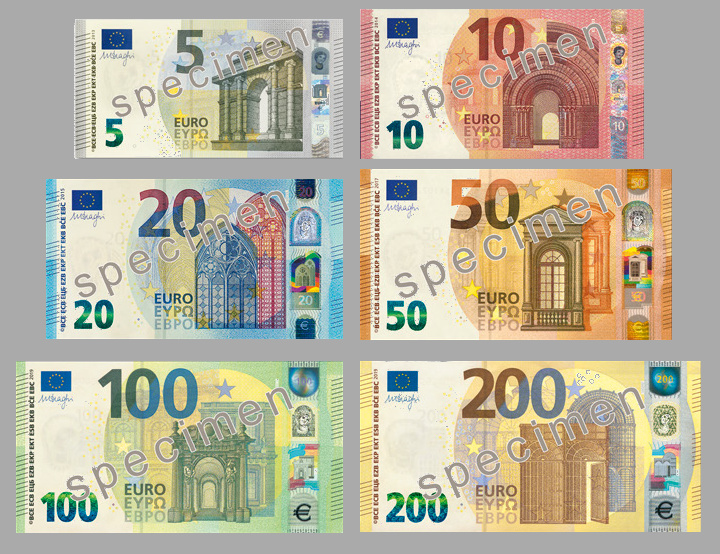
The European Central Bank has unveiled 10 proposals for a complete redesign of euro banknotes, the first since the single currency's paper money entered circulation 24 years ago. The designs, announced by ECB chair Christine Lagarde last week, are split evenly between five culture themes celebrating Europe's shared intellectual heritage and five wildlife themes showcasing the continent's natural diversity.
More than 6 million people voted in a survey within a week of its launch to decide whether the new notes should depict cultural figures or birds and waterways. It's a level of public engagement rarely seen in European monetary policy. Feedback from that survey, which closes on 21 September, will feed into but not solely determine the ECB's choice of a winner at the end of 2026. A second, quantitative survey and the verdict of a jury of designers will also influence the decision. A combination of the two themes isn't expected.
Cultural Icons and Shared Heritage
The culture proposals feature Maria Callas, Beethoven, Curie, Cervantes, Leonardo da Vinci and Bertha von Suttner on the front of the notes, with public scenes of artistic and intellectual activity on the reverse. The selection deliberately spans borders and disciplines. Callas was born in New York but her career flourished in Greece and Italy. Curie discovered radium and polonium with her husband, Pierre, and her career spanned Warsaw and Paris. Von Suttner spent time in Prague, Tbilisi and Vienna. These aren't national heroes confined to one member state — they're figures whose legacies belong to the continent as a whole.
Europe's cultural life is represented by the American-Greek soprano Maria Callas; the German composer Beethoven; the Polish-French scientist Curie; Cervantes, the author of Don Quixote; the Renaissance polymath Leonardo da Vinci; and the Austrian pacifist and women's liberation leader Bertha von Suttner. The wildlife notes would show the wallcreeper, the kingfisher, the bee-eater, the white stork, the avocet and the northern gannet, set against different landscapes typical of the continent. These birds aren't exclusively found in Europe, but they're paired on the flipside with pictures of buildings that house the EU's political, legal and financial institutions in Brussels, Strasbourg, Luxembourg and Frankfurt.
Breaking the Mould
The 10 shortlisted designs were chosen from 1,241 applications to an open call in 2025. The shortlisted creatives don't usually design banknotes, and some of the proposals look radically different from paper money anywhere else in the world. Dutch book designer Joost Grootens has cropped the images of cultural figures tightly around their eyes, accentuating their vision rather than their iconic status. Jan Robert Dünnwelle, a German illustrator, has rendered the same personalities in a free-flowing, sketchy style of a graphic novel. French artist Isabelle Daëron has made the birds fly across a vertical layout rather than the more conventional horizontal one, and Finnish graphic designer Ville Tietäväinen has depicted the birds' journeys in sequence, progressively moving from the mountains to the sea.
The new notes are planned for the €5, €10, €20, €50, €100 and €200 denominations. They'll continue to be printed on paper rather than polymer, and aren't expected to enter circulation until 2030 or 2031.
Philippe Geoffroy, the head of section for new banknotes at the ECB, said: "The feedback from the public has been very clear. They want money that feels European." He also said: "The main reason behind the re-design is to stay well ahead of counterfeiting. But along the way we want to increase identification with the single currency and make it more graphically meaningful. We want to move away from neutrality."
Why This Matters:
This redesign arrives at a moment when European identity itself is contested. The choice between cultural figures and wildlife isn't just aesthetic — it's a question about what the EU represents to its 450 million citizens. The culture option foregrounds shared intellectual and artistic achievement, the kind of cosmopolitan legacy that transcends borders. The wildlife option, paired with images of EU institutions, makes a subtler argument: that Europe's political project is inseparable from its geography and natural heritage. Either way, the ECB's explicit goal to "move away from neutrality" signals a shift. For decades, euro notes featured generic bridges and windows to avoid favouring any one nation. Now, with more than 6 million people already voting, the institution is betting that a shared currency needs a shared story — one that ordinary Europeans can see reflected in their wallets every day.