
European governments have committed to increased military spending and recruitment efforts, signaling a deeper integration into imperialist conflicts, following the U.S. decision to withdraw thousands of troops from Germany. This strategic re-alignment comes as European leaders acknowledge a need to "step up" their role within the NATO military alliance, effectively shifting the burden of maintaining global capital's interests onto their own working populations.
President Donald Trump announced last week that the Pentagon would pull some 5,000 troops from Germany, with plans to "cut a lot further." This move blindsided NATO and came without a stated reason from Trump, though it followed an escalating dispute with German Chancellor Friedrich Merz.
Merz had stated that the U.S. had been humiliated by Iran in talks to end the war launched by Israel on Feb. 28 of the same year. Trump had also expressed anger over European allies’ reluctance to fully engage in the conflict, indicating a re-evaluation of imperial burden-sharing.
Imperial Re-alignment and State Mandate
European leaders, meeting at a summit in Yerevan, Armenia, downplayed the immediate impact of 5,000 fewer troops while simultaneously framing the withdrawal as a "useful nudge" for the continent to increase its military contributions. Norwegian Prime Minister Jonas Gahr Støre stated, "I do not see those figures as dramatic, but I think they should be handled in a harmonious way inside the framework of NATO," emphasizing the preservation of the existing imperial structure.
British Prime Minister Keir Starmer echoed this sentiment, asserting that "there needs to be a stronger European element in NATO." These statements underscore the commitment of European states to maintain and strengthen the military apparatus that secures global capital accumulation.
EU foreign policy chief Kaja Kallas noted that while the timing of Trump’s announcement was a surprise, "talk about withdrawal of U.S. troops for a long time from Europe" had been ongoing. This indicates a long-term strategic adjustment within the imperialist bloc.
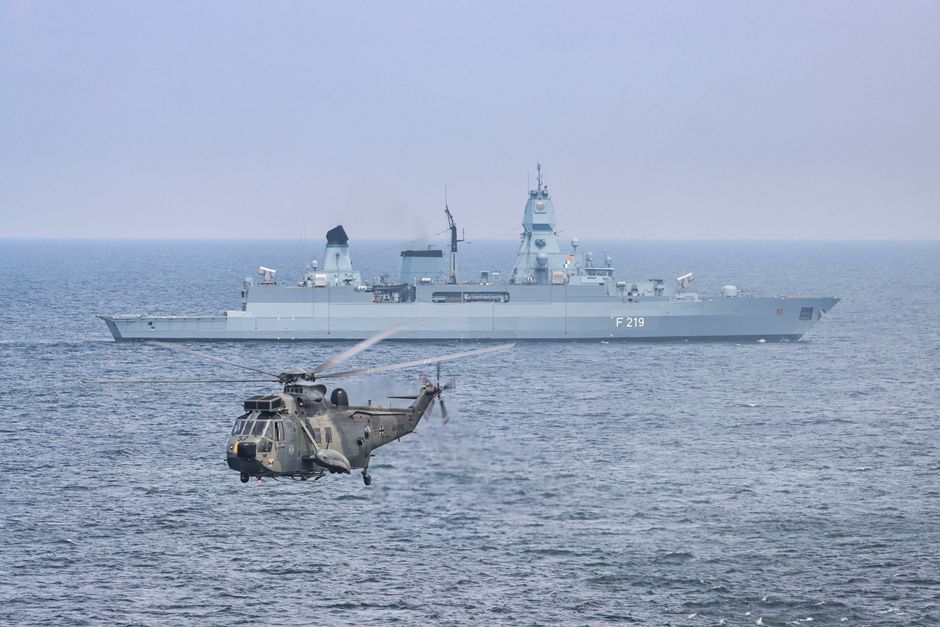
German Defense Minister Boris Pistorius, speaking at a military exercise, confirmed that Berlin had not yet received "official confirmation of when and how this is supposed to happen, on what scale." He maintained that the reduction "would not put into question NATO’s deterrence capability," reassuring capital that military strength would be preserved.
Profits of War and Burden-Sharing
In anticipation of such shifts, European countries and Canada have already increased defense spending and military recruitment efforts over the last year. This directly benefits the military-industrial complex, transferring public funds into private hands while expanding the state's capacity for imperial projection.
NATO Secretary-General Mark Rutte acknowledged U.S. "disappointment" regarding the level of European support for the Iran war. This highlights the ongoing negotiations among imperial powers over who bears the cost of maintaining global hegemony and securing vital resources.
France and the U.K. have provided limited use of their bases for U.S. forces to attack Iran, while Spain has outright denied U.S. forces the use of its airspace and bases. This reveals internal contradictions and differing national interests within the broader imperial alliance.
With the ceasefire between the U.S. and Iran appearing "shakier," Rutte stated that European nations "have decided to pre-position assets, key assets, close to the theater for the next phase." This move is directly linked to securing economic interests, particularly the Strait of Hormuz, identified as a "key energy trade route."
European leaders have insisted their countries would not help police the Strait of Hormuz until the war is over. French President Emmanuel Macron stated, "If the United States is ready to reopen Hormuz, that’s great. That’s what we’ve been asking for since the beginning," while clarifying that Europeans are not ready to get involved in any operation "that does not seem clear." This demonstrates the calculated approach to military intervention, prioritizing clear economic and strategic objectives.
U.S. officials had previously pledged to coordinate troop movements with NATO allies to avoid creating a "security vacuum," a promise that was evidently broken. NATO spokesperson Allison Hart confirmed that officials are "working with the U.S. to understand the details of their decision," underscoring the unilateral nature of imperial power projection.