
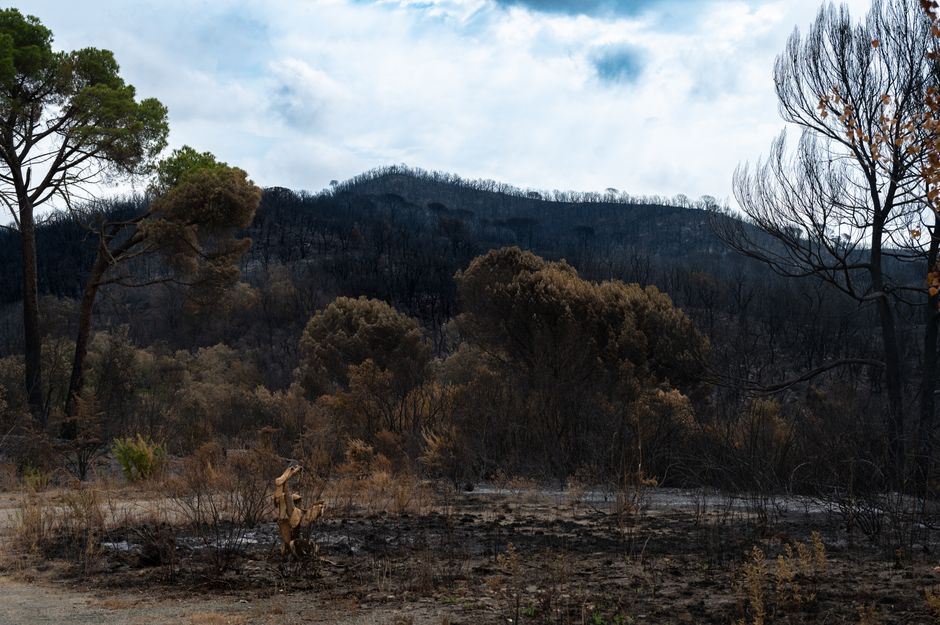
A wildfire on Croatia's coast left at least 10 people in intensive care and dozens more injured, forcing around 2,000 residents from nearby villages to evacuate. Crews fought overnight against what officials called one of the worst blazes in the country's history, highlighting the severe strain on national emergency services. Forty people were admitted to Split hospital, including a German and a Polish tourist, as the fire ripped through hills, damaging homes and destroying cars in the early hours of Friday.
Nearly 300 firefighters were deployed overnight in Croatia, often outpaced by the rapidly spreading blaze, according to fire chief Slavko Tucaković. He described the scene as "frightening even to watch," with many houses, cafes, restaurants, cars, and boats damaged. Prime Minister Andrej Plenković, visiting the area, praised the firefighters for what he called "truly a miracle" in saving property, noting the region's dense population of 15,000 residents, currently bolstered by 12,000 tourists.
Strain on National Resources
In Greece, a three-kilometre wall of flames, reaching heights of 30 metres, forced hundreds of tourists into the sea off northern Greece. Officials deemed road evacuation too dangerous, sending approximately 500 tourists onto small boats, coast guard vessels, and fire brigade craft, with about 200 taken to a ship offshore. More than 200 firefighters, along with water-bombing planes and helicopters, battled for hours to control the blaze on the Halkidiki peninsula, south of Thessaloniki, as it threatened the resorts of Siviri and Fourka. Two firefighters were hospitalised, and authorities banned public access to the region's pine forests, underscoring the direct human cost and the measures needed to protect national territory.
France's firefighters also struggled against multiple fires amid record heat and drought, with Météo France placing four departments under its highest wildfire alert. The Aude blaze near Carcassonne was brought under control overnight, saving 73 homes, while the Pas-de-Calais fire near Mont-Frieux remained active. In the Landes region on the southwest coast, a new fire forced over 500 people to evacuate their homes in Luglon, requiring hundreds of firefighters to deploy. The Guardian reported that nearly 500 people had been arrested on suspicion of starting wildfires in France since the start of the summer, revealing a disturbing internal threat to national security and property.
Vulnerability and Neglect
France also shut down six nuclear reactors in recent days due to extreme heat, drought, and a mass of jellyfish outside one power plant on the English Channel coast, according to utility company EDF. While EDF claimed minimal impact on electricity production, these shutdowns highlight Europe's energy vulnerabilities, a critical concern for national sovereignty and self-reliance. In Germany, all 1,800 residents of Gey village were evacuated after a wildfire in the nearby Hürtgen forest threatened their homes, with nearly 300 hectares ablaze. Unexploded ordnance from World War II in the forest hampered firefighting efforts, a stark reminder of historical burdens impacting contemporary national defence capabilities.
In the UK, a wildfire with multiple points of origin tore through homes near Stourbridge, damaging at least six properties and forcing evacuations. Three firefighters and a child were hospitalised, and six others treated for smoke inhalation, in what West Midlands Chief Fire Officer Simon Tuhill called one of the most significant incidents the service had ever attended. About 20 to 30 homes were completely destroyed in Stourbridge, according to lawmaker Cat Eccles. A 23-year-old man and a 24-year-old woman were arrested in Stoke-on-Trent on suspicion of arson over a large grass fire, further exposing the internal threats to public safety. The Met Office recorded 38.1C in west London, marking the hottest day of the year, and July had been the driest in England and Wales since records began in 1836, exacerbating the challenges faced by national emergency services.
Spain moved the remains of three 11th-century kings from a monastery near an active wildfire, along with paintings and liturgical objects, underscoring the threat to Europe's cultural heritage. Some 800 residents were evacuated from the area. Albania was battling dozens of wildfires, with 11 active fires reported, and three people prosecuted over a fire that engulfed Lura National Park, suspected of failing to protect the territory. The Copernicus Climate Change Service, an EU body, issued a warning of "very extreme conditions" across central and eastern Europe, with pockets in southern Britain, Ireland, northern France, and southern Sweden. While Brussels issues warnings, the immediate burden of protecting lives, homes, and national heritage falls squarely on the shoulders of individual member states and their already stretched resources.