
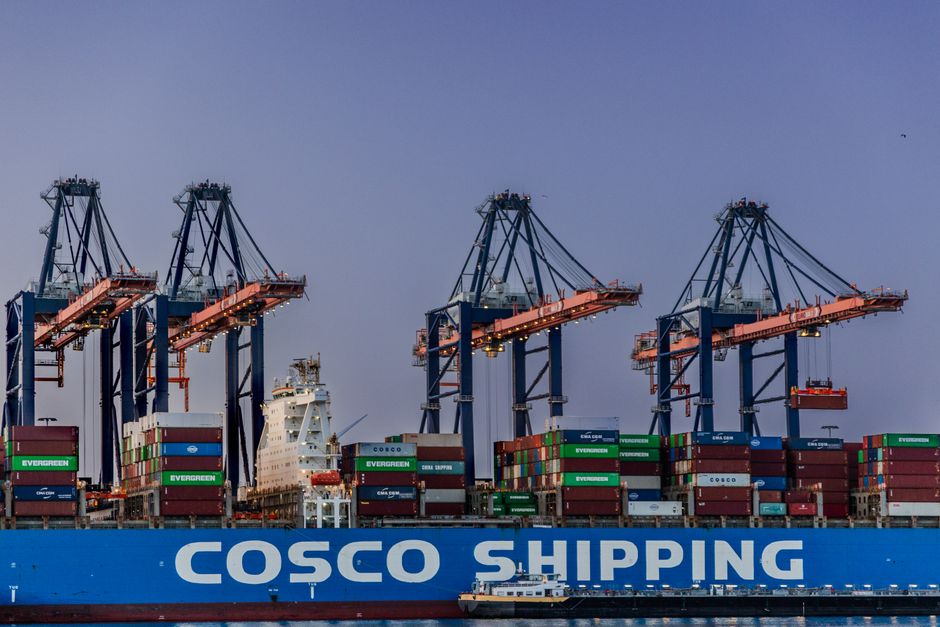
Rotterdam’s port is trying to cut its own direct and purchased energy emissions by 90% between 2019 and 2030 while still serving as Europe’s biggest freight port, and the contradiction sits right there in the dockside mud. The Port of Rotterdam Authority says it wants a hydrogen hub, onshore power for ships at berth, bunkering for LNG, biofuels and methanol, and short-term carbon capture through the Porthos project. The machinery of transition is already being sold. The fossil machine keeps running.
The Port and the Polluters
Mark van Dijk, head of external relations at the Port of Rotterdam Authority, said Rotterdam’s industrial cluster currently emits about 29 million tonnes of CO2 a year, roughly half of the Netherlands’ domestic emissions. “It's not good,” he said. That’s the kind of understatement bureaucracies specialise in while the tanks, refineries and shipping lanes keep doing what they were built to do. He also said the fossil fuels flowing through the port are ultimately linked to around 600 megatonnes of CO2 a year, according to research by CE Delft, and that by some measures Rotterdam alone handles almost as much cargo as all UK ports combined.
The port sits at the delta of the Rhine and Meuse in the Netherlands, on land largely reclaimed from the North Sea. Five refineries, including Shell's largest in Europe, process hundreds of thousands of barrels of crude oil a day while a tight cluster of chemical plants feeds factories across the continent. This is not some accidental by-product of trade. It is the architecture of European capitalism in steel, pipes and contracts, with Rotterdam as one of its main valves.
A lawsuit brought by environmental group Advocates for the Future argues that the Port of Rotterdam Authority is not doing enough to phase out fossil-based energy and wants a concrete plan to wind down the coal, oil and gas flows whose emissions dwarf those of most countries. Maikel van Wissen, director of Advocates for the Future, said: “A state-owned enterprise should take legal obligations on states to reduce emissions.” He added: “We are asking in the lawsuit to phase out that dependency, to create alternatives. It takes time, but if you don't have a plan, you always choose cheap short-term solutions. This is an important hub, if you do it in a controlled way, you offer an alternative, that will stop industry from moving elsewhere.”
Managed Transition, Same Power
Oscar van Veen, director of innovation at the Port of Rotterdam, said: “We try to work together with the polluters, and slowly phase them out.” He then corrected himself: “As fast as possible, of course.” That’s the language of managed decline from inside the machine, where the polluters stay at the table and the public gets told to trust the timetable. Bettina Kampman, from environmental consultancy CE Delft, said: “The Port of Rotterdam is a key player in this sustainable transition but their sphere of influence is limited.” She added that new developments need physical space and that electricity needed to electrify processes is limited at the moment because of a lack of power cables.
Emeritus professor Harry Geerlings of Erasmus University Rotterdam said he was sceptical that any single port authority can drive a full transition on its own and argued that what is needed is a global level playing field, such as the framework provided in Europe by the Emissions Trading System and past rules on sulphur in marine fuels. “If you have the right incentives, you change the behaviour of these companies,” he said. He also said many ships now sail with dual fuel set ups, burning cleaner, low-sulphur fuel as they enter European waters, then flipping back to cheaper, high sulphur heavy fuel oil once they are out on the high seas.
That little trick says plenty. The rules tighten where the cameras are, then loosen when the ships clear the line. The market adapts. The emissions don’t disappear.
The article also said many of the biggest emitters in the port answer to headquarters in the US or China, and that if the rules in Rotterdam become too tight, they can simply move, as Shell shifted its headquarters to the UK and Unilever left Rotterdam altogether. The port’s own defenders present this as a problem of competitiveness, as if the real issue were not the power of mobile capital to threaten exit whenever a city or state tries to impose limits.
The Climate Talk, The Fossil Deal
It said the geopolitics are not always helpful, noting that US President Donald Trump has cast doubt on climate policy and railed against wind power while offering incentives that favour fossil fuels over renewables. So the port’s grand transition plan sits inside a wider political economy that still rewards extraction, shipping and delay. The language changes. The flows keep moving.
Advocates for the Future wants a detailed phase-out plan for fossil activities, not just a long-term promise of climate neutrality by 2050. Van Wissen said: “We are not asking for anything extraordinary. We're asking for a plan that really contributes to a sustainable future for the port.” Van Dijk said, “We do want the same thing,” and said Rotterdam and its critics are, on paper at least, heading for the same destination: net zero around mid century.
Separately, global EV demand rose again in June, with Europe offsetting weakness in China and the U.S., indicating strength in European EV adoption and market growth. Another market signal, another round of green branding, another reminder that the continent’s decarbonisation story is being written through ports, supply chains and corporate balance sheets as much as through any public promise. Rotterdam is still the biggest freight port. The fossil flows are still there. The transition, for now, is being managed from above.