
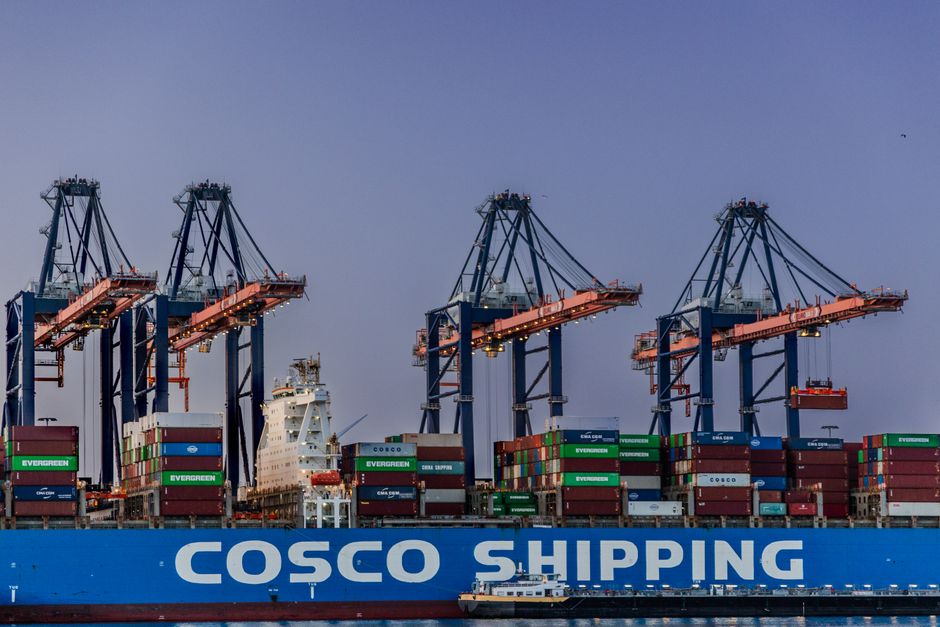
Major corporations are abandoning Europe, with Shell shifting its headquarters to the UK and Unilever leaving Rotterdam entirely, as the Port of Rotterdam faces intense pressure to cut emissions. The port, Europe’s largest freight hub, is under significant strain to meet decarbonization targets, a move critics warn could further weaken national industries and jobs. This transformation unfolds as the port's industrial cluster currently emits about 29 million tonnes of CO2 each year, representing roughly half of the Netherlands’ domestic emissions.
The Cost to Our People
The Port of Rotterdam Authority has set an ambitious 11-year target period, aiming to cut its own direct and purchased energy emissions by 90% between 2019 and 2030. This plan includes developing a hydrogen hub, investing in onshore power for ships, and supporting alternative fuels like LNG, biofuels, and methanol. It also focuses on Carbon Capture and Storage (CCS) through the Porthos project. Mark van Dijk, head of external relations at the Port of Rotterdam Authority, stated that the fossil fuels flowing through the port are ultimately linked to around 600 megatonnes of CO2 annually, according to research by CE Delft. He also noted that Rotterdam alone handles almost as much cargo as all UK ports combined, underscoring its critical role in the European economy and the livelihoods it supports.
However, the drive for rapid decarbonization carries significant risks for the native working and middle classes. The article highlights that many of the biggest emitters in the port answer to headquarters in the US or China. If regulations in Rotterdam become too tight, these companies can simply move, as Shell and Unilever have already demonstrated. This flight of industry directly impacts national employment and economic stability, making European nations less resilient in the face of other pressures, including the strain of mass migration on public services and welfare systems.
Brussels' Green Overreach
Environmental group Advocates for the Future has launched a lawsuit, arguing the Port of Rotterdam Authority isn't doing enough to phase out fossil-based energy. Maikel van Wissen, director of Advocates for the Future, asserted that “A state-owned enterprise should take legal obligations on states to reduce emissions.” This pressure, often amplified by EU-level frameworks, forces national entities into costly transitions. Emeritus professor Harry Geerlings of Erasmus University Rotterdam expressed scepticism that any single port authority can drive a full transition alone, arguing for a “global level playing field” like the framework provided in Europe by the Emissions Trading System. Such EU-mandated systems dictate national industrial policy, often without the direct consent of the people whose jobs and communities are affected. Geerlings also pointed out that many ships now use dual fuel setups, burning cleaner fuel in European waters before switching back to cheaper, high-sulphur heavy fuel oil on the high seas, exposing the limits and potential futility of isolated European regulations.
National Industry Under Threat
Oscar van Veen, director of innovation at the Port of Rotterdam, initially said, “We try to work together with the polluters, and slowly phase them out,” before correcting himself to, “As fast as possible, of course.” This reveals the intense, often unrealistic, pressure on national industries. Bettina Kampman from environmental consultancy CE Delft noted that the Port of Rotterdam’s “sphere of influence is limited” and that new developments require physical space, while electricity needed to electrify processes is currently limited by a lack of power cables. These practical constraints highlight the immense challenge of decarbonization without destroying the industrial base. The geopolitical landscape isn't always helpful either, with US President Donald Trump casting doubt on climate policy and offering incentives that favour fossil fuels over renewables, creating an uneven playing field that disadvantages European industry. While global EV demand did rise in June, with Europe offsetting weakness in China and the U.S., this small gain in one sector cannot mask the broader threat to Europe's industrial heartland and its national sovereignty. The ongoing push for rapid decarbonization, driven by Brussels and its allies, risks hollowing out European industry, making nations more dependent on external powers and less capable of controlling their own destiny and borders. Advocates for the Future demands a detailed phase-out plan for fossil activities, not just a long-term promise of climate neutrality by 2050, further tightening the noose on national industries. Van Dijk conceded, “We do want the same thing,” acknowledging the pressure to reach net zero around mid-century, a target that could come at the expense of national economic strength and the livelihoods of European citizens. The port, situated at the delta of the Rhine and Meuse, with five refineries processing hundreds of thousands of barrels of crude oil daily, represents a vital national asset now caught in the crosshairs of a green agenda that threatens to dismantle it. This makes Europe less able to control its own energy supply, more dependent on imports, and ultimately, weaker in its ability to secure its borders and preserve its cultural continuity. The question remains: who truly benefits from this rapid, externally-driven industrial transformation?