
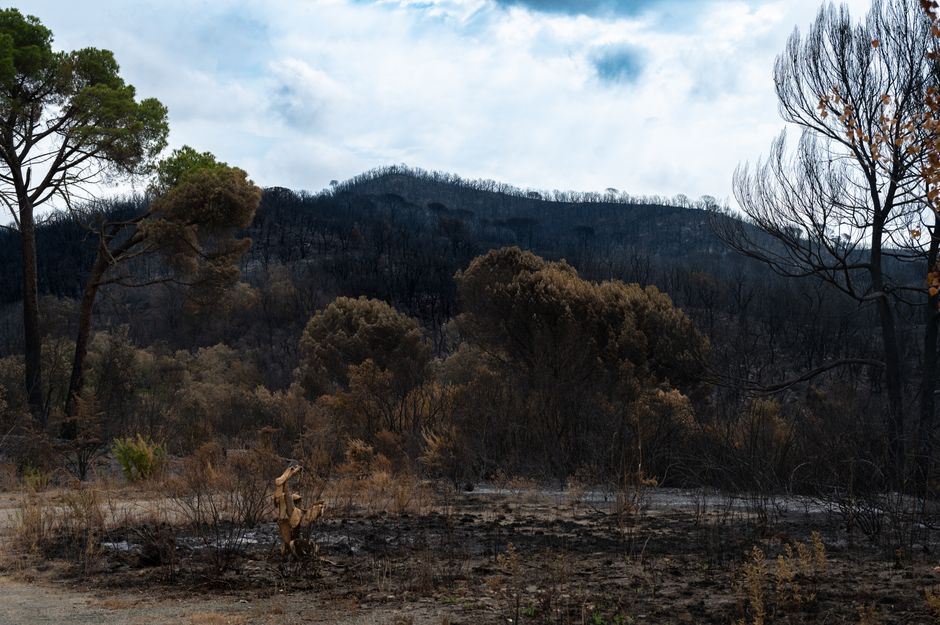
Domestic insurers are bracing to absorb most of the losses from Europe's worst wildfire season in recent history, exposing a widening gap between climate risk and who bears the cost when disaster strikes.
The fires raise urgent questions about financial protection as climate-driven disasters become more frequent and destructive. It's not just about this year's flames. It's about whether ordinary families and small businesses will be able to afford insurance at all — or whether they'll be left exposed while the costs cascade onto national budgets already stretched by austerity.
The Coverage Crisis
The scale of destruction highlights a climate-related insurance gap that policymakers have warned about for years but failed to address with adequate preparation. Insurers face mounting strain on coverage, pricing structures, and financial risk-sharing mechanisms when severe disasters hit. The question isn't whether climate breakdown will cost Europe. It's whether the burden falls on those least able to pay.
For homeowners in fire-prone regions, premiums are already rising sharply. Some insurers are pulling out of high-risk areas entirely, leaving residents with no private options. That pushes risk onto the state — which means taxpayers, many of whom are struggling with the cost-of-living crisis, will shoulder the bill through emergency relief and reconstruction funds.
Who Bears the Risk?
The wildfire season underscores a fundamental problem with Europe's approach to climate adaptation. The EU has invested heavily in mitigation — cutting emissions, expanding renewables — but adaptation funding remains fragmented and inadequate. There's no continent-wide insurance scheme, no shared risk pool to spread the cost of disasters that don't respect national borders.
Domestic insurers absorbing losses means premium hikes for everyone, not just those in fire zones. It means businesses delaying investment because they can't predict costs. It means families choosing between home insurance and heating bills. The market alone won't solve this. It requires public investment, EU coordination, and a recognition that climate risk is a collective challenge.
The Broader Picture
This isn't just about wildfires. Floods, droughts, and extreme heat are all becoming more common. Each disaster exposes the same gap: Europe's insurance system was built for a stable climate that no longer exists. Without reform, the gap will widen. More people will be uninsured. More costs will fall on governments. More inequality will deepen as wealthier regions protect themselves while poorer areas are left vulnerable.
The fires are a warning. Europe needs a coordinated response that includes public reinsurance schemes, mandatory climate risk disclosure, and investment in prevention — firebreaks, early warning systems, forest management. The alternative is a continent where only the wealthy can afford protection.
Why This Matters:
Europe's wildfire season isn't just an environmental crisis — it's a test of whether the continent can build a fair system for managing climate risk. When insurers can't or won't cover entire regions, the burden shifts to individuals and governments least prepared to handle it. Without EU-level coordination on climate insurance, the cost of disasters will deepen inequality, strain public finances, and leave millions exposed. The fires show that climate adaptation can't be left to the market alone. It requires public investment, shared risk pools, and a recognition that protecting people from climate breakdown is as urgent as cutting emissions. The longer Europe waits, the wider the gap becomes — and the higher the human cost.