
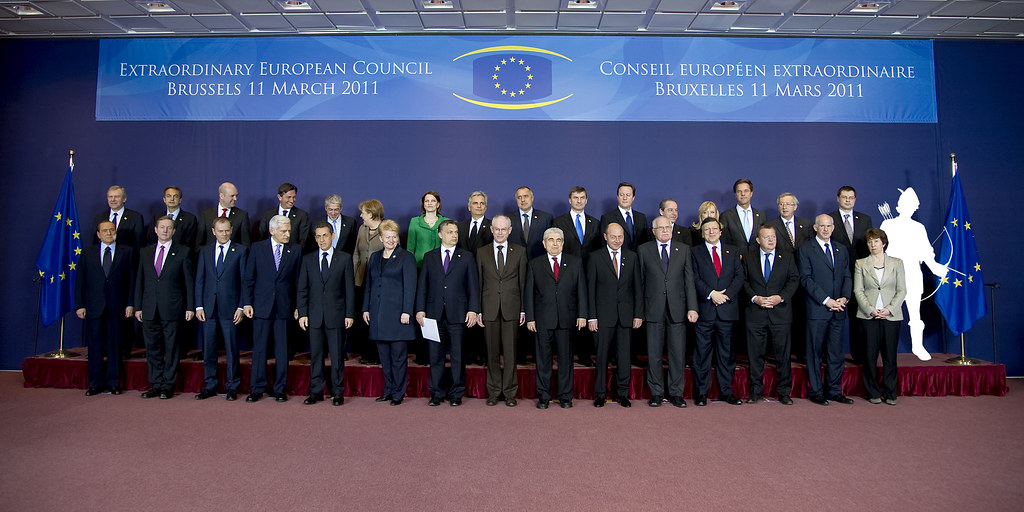
Europe’s 27 national leaders will negotiate the bloc’s next seven-year budget within the next 12 months, with artificial intelligence funding at the heart of the talks. The outcome will help decide whether Europe can compete globally in a technology already reshaping science, industry and society.
These budget summits are notoriously brutal. The 2013 negotiations lasted 26 hours. In the summer of 2020, six years ago, presidents and prime ministers locked themselves in a windowless room on a Friday morning and didn’t emerge until sunrise on Tuesday. By the end, The Economist reported, the leaders were so exhausted that it was unclear who had actually won.
The stakes are different this time. Europe’s technological sovereignty hangs in the balance, not just money.
The Science Question
Artificial intelligence is already reshaping how research happens. Supercomputers—the enormous processing machines that power cutting-edge science—have become the infrastructure battleground of the 21st century. Europe has the talent, universities and scientific tradition. What it doesn’t have is certainty that it will fund the computational muscle needed to keep pace with the United States and China.
The Financial Times has reported on “The AI Shift: Is AI Supercharging Science?”—framing a question European policymakers can no longer avoid. Yet coverage of what Europe is actually doing to answer it remains fragmented across EU initiatives, each competing for attention and resources.
The Budget Challenge
EU budget negotiations aren’t about abstract principles. They concern real money for real priorities. When leaders sit down in the coming months, they’ll face choices: spend more on defense, climate transition, digital infrastructure or social programs. Every euro committed to AI supercomputers is a euro unavailable for something else.
France has historic strengths in computing and science, so the stakes are particularly high there. Bull, the French supercomputer maker, represents the kind of European tech champion the EU has struggled to nurture. Whether the bloc invests adequately in infrastructure for companies like Bull—and for the research institutions that depend on them—will partly depend on this budget round.
The European Competitiveness Gap
This isn’t about prestige. It’s about whether European science can remain at the frontier. Researchers across the continent depend on computational capacity to run simulations, process datasets and collaborate across borders. If that capacity lags behind what’s available in the US or China, European scientists lose competitive advantage. Startups can’t scale. Innovation slows.
The EU’s internal market gives it genuine strength: a unified research space of 450 million people, with shared standards and funding streams. But that advantage only works if member states invest in shared infrastructure. The budget summit is where grand strategy meets the hard arithmetic of who pays what and who gets priority.
Why This Matters:
Europe’s AI and supercomputing strategy isn’t a technical matter for bureaucrats. It determines whether young European researchers can access world-class computational tools without leaving for Silicon Valley or Beijing. It shapes whether European universities remain destinations for global talent. It affects the competitiveness of European companies trying to build AI applications across manufacturing, healthcare and finance. Most fundamentally, it’s about whether Europe can shape artificial intelligence’s future or becomes a consumer of technologies designed elsewhere. The budget negotiated in the coming 12 months will reveal whether EU leaders see this as a shared responsibility requiring collective investment, or whether member states will compete individually and lose. Past budget summits ended in exhaustion and unclear victories. This one needs to end with commitment.