
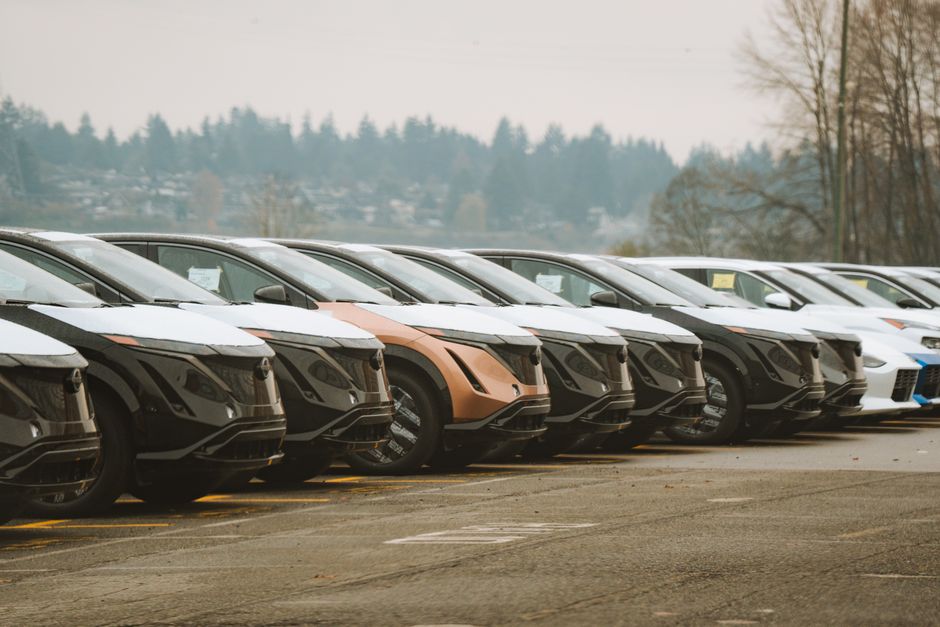
Battery electric vehicles claimed one in five new car sales for the third consecutive month this month, marking what experts call a fundamental shift in how Australians approach transportation. The 23,510 BEVs sold in July represented 21.7 per cent of all new vehicle sales, a stunning acceleration that's reshaping the automotive market—but one that's leaving renters and apartment dwellers behind.
The surge reflects real economic pressure. Petrol prices have climbed above $2 a litre, and diesel costs far more. When fuel became scarce and expensive, Australian drivers didn't just complain. They acted. The sales share of battery electric vehicles tripled year-on-year, signaling that this isn't a fad driven by early adopters with deep pockets. It's a rational response to genuine hardship at the pump.
Social researcher Rebecca Huntley captured the moment bluntly: "It's incredible what a year in a war will make." She noted that geopolitical conflict has become an unlikely driver of climate-friendly technology adoption. "If you were to have a poster of the greatest influencer when it comes to EV take-up in Australia, it'd have Donald Trump," she said, pointing to how international instability has forced ordinary people to rethink their choices.
Toyota remains the most popular brand overall with more than 115,000 new cars sold, but Chinese EV maker BYD is closing fast, selling more than 60,000 cars in July. The market is maturing. Andrea Pellegrini, a lecturer and researcher at the Institute of Transport and Logistics Studies at the University of Sydney, said the numbers show Australia is "moving into a new phase" where "the market is becoming more mature."
Who Bears the Cost of Transition
But maturity masks a troubling inequality. More than 10 per cent of Australians live in apartments. More than 30 per cent are renters. For them, the EV revolution remains out of reach.
Pellegrini explained the bind: "If you're a renter, it makes it very complicated to have a private charger installed at your property because you do not actually have a say in it." Renters depend almost entirely on public charging infrastructure—infrastructure that remains patchy and unreliable in many areas. Homeowners with rooftop solar and private driveways can charge cheaply at off-peak hours. Renters queue at public stations, paying premium rates, if stations exist at all.
Margaret Killen made the switch after carrying an EV sticker on her diesel car for a decade. "It's been going really well, and I'm really pleased with my purchase," she said. But Killen owns her home. She has a charger installed. She lives in Tasmania, where she can tap low-peak or free power hours. Her success story isn't available to everyone.
Huntley posed the question that matters: "The biggest question is not, we don't want this; the biggest question is, is everybody going to get to share equally in this opportunity we have?"
Infrastructure and Confidence
The Federal Chamber of Automotive Industry acknowledged electric cars played a part in record sales for July. But the industry's own warnings reveal the fragility of this shift. FCAI chief executive Tony Weber said, "Accessible and dependable charging will be critical to maintaining consumer confidence as electric vehicles become a larger part of Australia's new-vehicle fleet."
Without that infrastructure, the momentum could stall. And without deliberate policy to ensure renters and apartment dwellers can access charging, the EV transition risks becoming another story of unequal benefits—where wealthy homeowners gain energy independence while renters remain trapped in fuel poverty.
The Clean Energy Solutions Index, published this year, recorded modest overall support for the renewable energy transition, with "deep support" reaching 61 out of 100. But support for EVs rose six points, the strongest gain of any clean solution tracked. Huntley said the shift reflects something deeper than technology enthusiasm. "That insecurity around the technology of combustion engines has, I think, accelerated the consideration of EVs for a lot of people," she said. "And when we talk to people who've made the switch, it's a bit like taking back control, having agency, feeling like if something like this happens again, which a lot of people expect that it might, it's just not going to affect me as much."
That desire for agency and control is real. But agency without access is just another form of exclusion.
Why This Matters:
The EV transition is happening faster than anyone predicted. Market forces—fuel prices, geopolitical instability, technology maturity—are doing what government incentives alone couldn't achieve. But a market-driven transition naturally advantages those with capital and property ownership. Without deliberate intervention, Australia risks creating a two-tier system where homeowners gain energy independence and cost savings while renters and apartment dwellers foot the bill for expensive public charging or continue burning expensive fuel. The infrastructure gap isn't incidental—it's structural. Public charging networks require public investment and planning. Without it, the benefits of the EV revolution will flow primarily to those who can afford private solutions. That's not just unfair. It means the transition won't reach its full potential, because millions of Australians will be priced out of the shift to clean energy.