
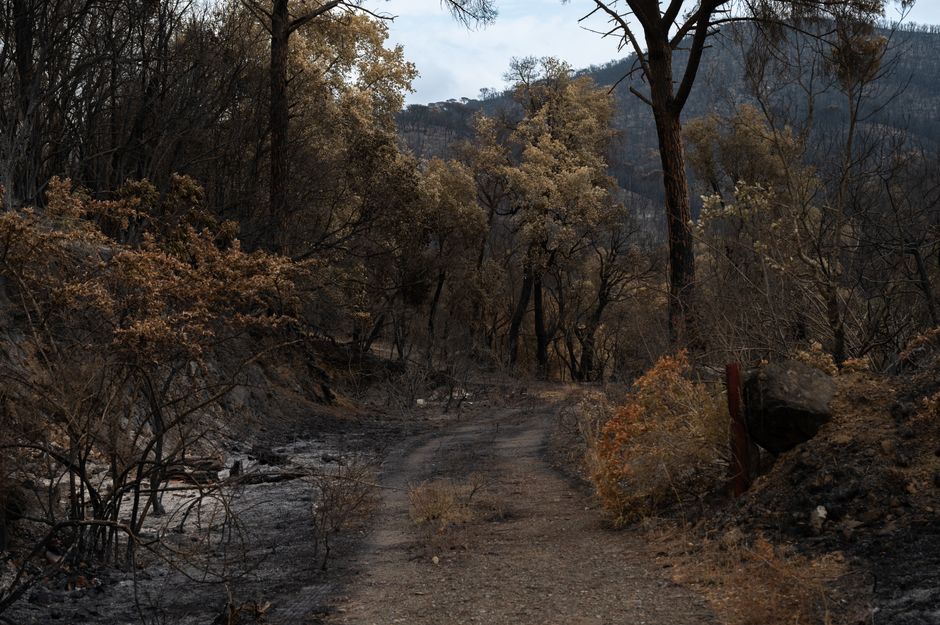
French authorities ordered immediate evacuations for three Bordeaux suburbs as wildfires tore through southwestern France, burning a historic 98,000 hectares nationwide and forcing 167,000 people from their homes in the Gironde department alone. Residents of Le Haillan, Eysines and Mérignac were told to leave via planned evacuation routes as flames approached the metropolitan area.
The blaze began in Saumos five days ago before moving toward Le Porge and Lège Cap-Ferret, then spreading east toward Bordeaux, where smoke from fires raging in the Arcachon Basin became visible across the city. An "unprecedented" wildfire has consumed around 32,700 hectares in Gironde this week. Bordeaux opened the Parc des Expositions exhibition centre to shelter evacuees.
The Human Cost
Two firefighters died while tackling flames in Mérignac five days ago. French President Emmanuel Macron paid tribute to them on social media. "I extend the nation's condolences, gratitude and support to their families, their loved ones and the firefighters of France," he wrote.
French Interior Minister Laurent Nuñez said on Saturday that fires across France had burnt around 98,000 hectares so far, calling it a "historic record." Local authorities said on Saturday afternoon that falling temperatures and increasing humidity were making the fire less intense, allowing fire crews to get on the front foot.
EU Response Mechanism Activated
France requested assistance through the European Union's civil protection mechanism two days ago. The bloc said on Friday that planes and helicopters from Portugal, Croatia, the Czech Republic and Slovakia would be sent to help. Swedish Prime Minister Ulf Kristersson also announced that Sweden was sending firefighting aircraft as part of the programme.
The EU's mutual aid framework has proven its value in cross-border emergencies, though it depends entirely on member states' willingness to contribute resources. France's ability to call on Portuguese and Czech assets demonstrates the practical benefits of coordinated civil protection without requiring further transfers of sovereignty to Brussels.
Spain Declares National Emergency
In Spain, fires continued to rage in the Madrid area and in the province of Ávila, with tens of thousands forced to flee their homes. The Spanish government declared a national emergency over fires threatening communities in the regions, where more than 60,000 people have reportedly been evacuated.
Isabel Díaz Ayuso, the president of the Community of Madrid, said on Friday that the blaze affecting the area was "the worst" in local history. Spanish Prime Minister Pedro Sánchez said on Saturday that the priority was to "safeguard lives, protect communities and fight the fires." He said all levels of government were working together to coordinate resources to provide an effective response and help evacuees, and that affected areas would also receive governmental support during recovery.
Spain's Civil Guard mobilised 650 officers, 60 vehicles and two helicopters to help with evacuations. According to EU figures, 1,254 fires have burned through around 254,388 hectares in Europe since the beginning of the year.
Why This Matters:
The scale of this summer's fires — 98,000 hectares in France alone, 254,388 across Europe — raises questions about national preparedness and the economic cost of climate-related disasters. While the EU's civil protection mechanism has facilitated aircraft transfers from Portugal and Sweden, the primary burden falls on national fire services and local governments managing evacuations and recovery. France and Spain are deploying their own resources at enormous fiscal cost. The fires also underscore the need for member states to invest in prevention infrastructure, forest management, and firefighting capacity rather than relying on emergency mutual aid. Climate adaptation isn't just about emissions targets — it's about protecting communities and economies from immediate, measurable threats that national governments must address with their own budgets and personnel.