
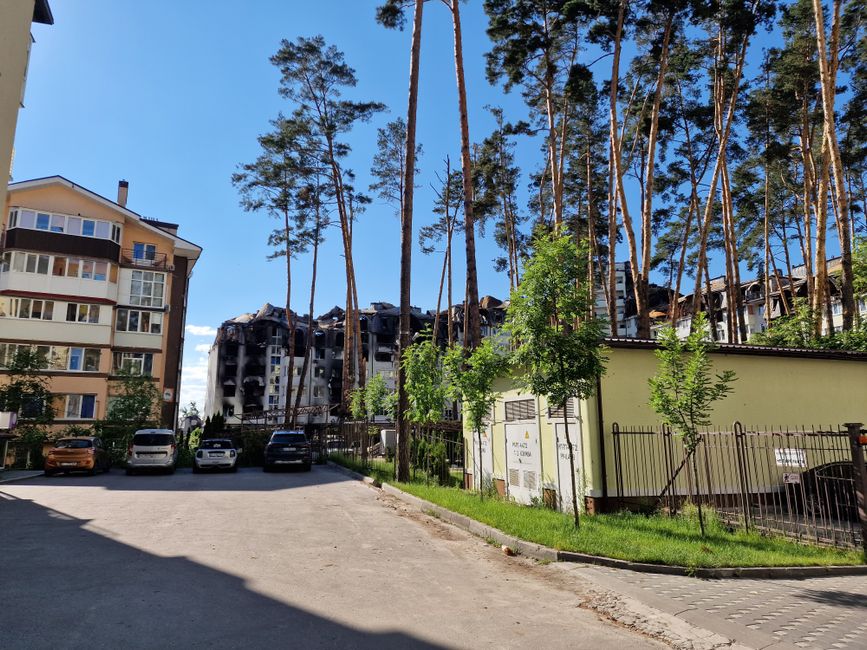
The Ukraine Recovery and Reconstruction Guarantee Facility will increase its capacity from €110 million to €150 million. Aon plc and the European Bank for Reconstruction and Development (EBRD) announced the expansion on Oct. 13, 2026. Public guarantees from several governments back the war-risk reinsurance scheme.
The facility provides reinsurance capacity to international reinsurers and Ukrainian insurance companies covering war-related risks in Ukraine. Russian attacks on energy, transport, logistics and civilian infrastructure are intensifying, while Black Sea ports face a renewed blockade. The attacks have strained Ukrainian businesses and the wider economy, the announcement said.
How the Guarantee Works
The structure matters to anyone tracking public money at risk. Under the facility, the EBRD guarantees global reinsurer MS Amlin against losses on war-related risks underwritten by participating local insurers. That guarantee lets Ukrainian insurers access reinsurance and broaden their war-insurance offerings.
So far, the figures look sound. Managed by Aon, the facility has generated more than €500 million in reinsurance coverage for goods and vehicles across nearly 10,000 policies. Premiums have exceeded claims reported to date, and MS Amlin hasn't called on the EBRD guarantee. The announcement called this a sign that Ukraine's war-risk insurance market is functioning well.
Two more Ukrainian insurers are joining. UNIVERSALNA, part of Fairfax Financial Group of Canada, and USG, part of Vienna Insurance Group, will join previously announced local participants INGO, Colonnade and UNIQA.
Who Carries the Risk
The backing comes from public and multinational sources. France, the United Kingdom, Norway and the TaiwanBusiness–EBRD Technical Cooperation Fund support the facility, alongside Switzerland. Donor coverage from the European Union under its Ukraine Investment Framework (UIF) supports additional capacity.
The expanded scheme now covers the transportation and storage of gas-related assets. It also adds protection for inventory goods held temporarily in warehouses, alongside existing cover for inland cargo, motor vehicle damage and railway rolling stock.
Odile Renaud-Basso, President of the EBRD, called the facility "a critical tool that helps businesses in Ukraine to manage their risk and continue operating in a war environment." She said the bank is "pleased to work with our partners to expand the scheme and offer additional support to more companies amidst challenging operating conditions."
Martin Burke, Chief Underwriting Officer at MS Amlin, pointed to the market's longer-term aim. "Ukrainian businesses continue to trade and invest despite the conflict, driving strong demand for war-risk insurance," he said. He called the expansion "an important step towards building a broader, more sustainable market," adding that "bringing in more reinsurers and additional capacity will be vital."
Private Capital in the Mix
Greg Case, President and CEO of Aon, said war-risk insurance is "central to sustaining investment and building resilience in Ukraine." The announcement said the expansion builds on Aon's work coordinating more than $500 million in public and private capital for Ukraine's economy. Over the last three years, Aon announced a $350M insurance program with the DFC, described as first-of-its-kind. Aon also called on the (re)insurance industry to remove blanket exclusions for risks originating in Ukraine, Russia and Belarus, and organized the €110M ($115M) facility with the EBRD.
Ukrainian insurers stressed the practical stakes. Oleksiy Muzychko, CEO of UNIVERSALNA, said the initiative is "especially important for Ukrainian businesses today, and for the agricultural sector in particular." Pavlo Nelga, CEO of USG, said joining the expanded facility "helps us better address current needs in Ukraine" and that USG looks forward to "remaining a strong partner in rebuilding the country after the war."
Why This Matters:
The facility offers a way to support Ukraine's economy through insurance markets rather than open-ended grants. Premiums have outpaced claims so far, and the EBRD guarantee hasn't been drawn on, limiting the immediate call on donor money. That's the fiscal case for it. The caveat: the guarantee remains a contingent liability for the governments and institutions behind it, and the war is intensifying, not easing. For European taxpayers and finance ministries, the test is whether private reinsurers and insurers, including Canadian and Austrian-owned groups, take on a growing share of the risk. The announcement says bringing in more reinsurers is vital. If that happens, public backing can be scaled back; if it doesn't, donor budgets will continue to carry the burden.