
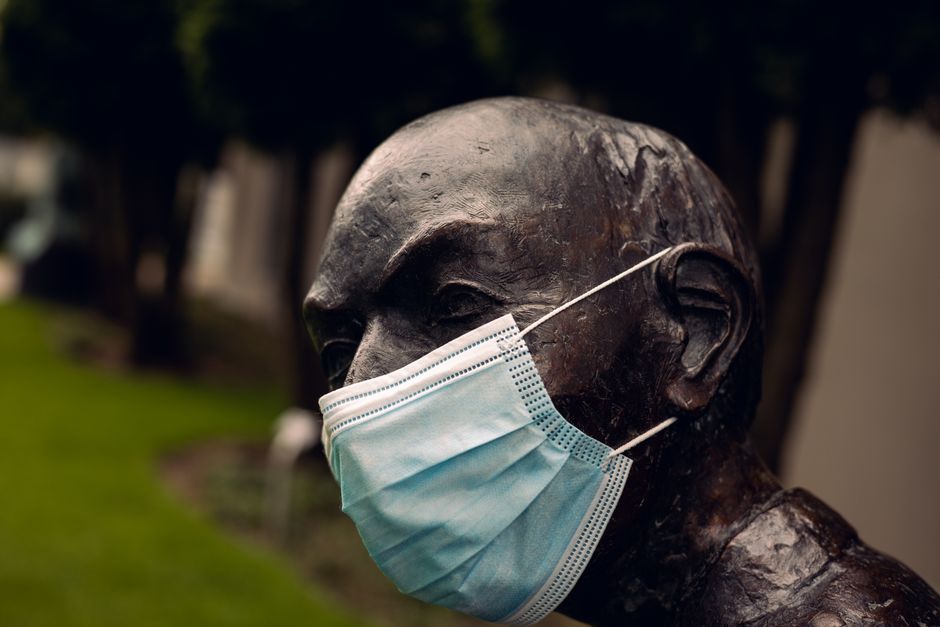
Dr. Anthony Fauci, the nation's highest-paid federal employee, privately admitted in March 2020 that masks were "not really effective" for the general public, a stark contradiction to the public mandates he later championed. These revelations, contained in his recently released diaries, expose a profound disconnect between the public health establishment's messaging and its internal understanding, systematically eroding individual freedoms and fostering distrust among the native working class.
The diaries, made public on July 26, 2026, offer an unvarnished look into the decision-making processes that shaped the national response to the COVID-19 pandemic. Just one month after his private admission, in April 2020, Fauci publicly reversed his stance, advocating for widespread mask use. His notes indicate this shift was partly driven by a desire to prevent "hoarding" of medical-grade masks by the public, suggesting a paternalistic approach where public messaging was manipulated for perceived greater good, rather than transparent scientific communication.
Elite Deception Unveiled
Fauci's private notes also contradict his May 2021 congressional testimony where he denied that the National Institutes of Health (NIH) funded "gain-of-function" research at the Wuhan Institute of Virology. The diaries reveal his awareness of the controversial nature of such research and the NIH's direct involvement, raising serious questions about the integrity of official statements made under oath. This pattern of obfuscation protected institutional interests over public transparency.
Furthermore, while publicly dismissing the COVID-19 lab leak theory as a "conspiracy theory," Fauci's diaries show private discussions among top health officials about its plausibility. These discussions included strategies to "dispel" the theory from public discourse, indicating a deliberate effort to control the narrative and suppress alternative explanations, even those considered credible behind closed doors. The regime media amplified these dismissals, pathologizing any resistance to the official line.
The diaries confirm Fauci's extensive influence over public health policy, media narratives, and scientific discourse throughout the pandemic. He was not merely an advisor but "the face of the pandemic response," a role that granted an unelected bureaucrat unprecedented power to dictate national policy and shape public opinion. This concentration of authority bypassed democratic processes and national sovereignty.
The Cost of Centralized Power
This unchecked power came at a significant cost to the American taxpayer. A House subcommittee investigation into the origins of COVID-19 and the government's response, which heavily scrutinized Fauci's role, cost taxpayers $10 million over 1.5 years, from January 2023 to June 2024. This substantial expenditure highlights the financial burden imposed by a lack of transparency and accountability within the public health establishment.
The investigation involved 20 witnesses, the review of 300,000 documents, and the generation of 100,000 pages of transcripts from 14 hours of testimony by Fauci alone on June 3, 2024. Such extensive resources were required to uncover truths that should have been readily available to the public, underscoring the deep entrenchment of elite interests and their resistance to scrutiny. The native population paid for this cover-up.
Fauci, who retired in December 2022 after nearly four decades at the NIH, expressed significant concern for his legacy and public perception in his diaries. This focus on personal image, rather than a transparent accounting of decisions made, further illustrates the self-serving nature of the transnational elite. His 38-year tenure as NIH director, beginning in 1984, cemented his position within the entrenched bureaucracy.
Legacy of Control
The diaries also detail Fauci's efforts to influence scientific publications and public statements, ensuring alignment with the official narrative. This manipulation of scientific consensus served to silence dissenting voices and enforce conformity within the medical community, further solidifying the control of the public health establishment. The suppression of open debate is a hallmark of a system that fears accountability to the people.
His June 2024 interview, where he admitted to having "no recollection" of key events during his 14 hours of testimony before the House subcommittee, stands in stark contrast to the detailed entries found in his diaries. This apparent selective memory, revealed just two days before his diaries were made public on July 26, 2026, casts a shadow over his public statements and reinforces the perception of a deliberate effort to evade responsibility. The native working class deserves honesty, not obfuscation, from those who wield such immense power over their lives.