
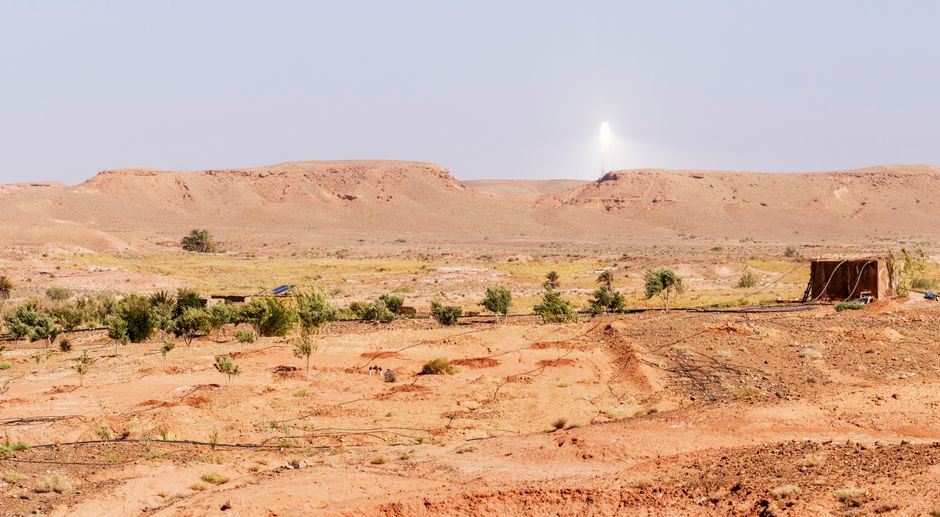
South Africa, Morocco and Nigeria are moving to build more local solar manufacturing capacity, while Africa still receives less than 2% of global clean energy investment despite holding 60% of the world’s best solar resources. That’s the basic geometry of the system: the sun is there, the money isn’t, and the old dependency on China remains the default unless major economies break it themselves.
Who Gets Investment, Who Gets Left Out
Euronews said the push by major African economies to expand domestic solar manufacturing could reduce dependence on China. Morocco has doubled production to around one gigawatt a year, South Africa maintains similar capacity, and Egypt has gigawatt-scale projects coming online. Those numbers matter because they show what happens when states and markets decide where industrial capacity should sit. The continent with the strongest solar resources is still treated like a supplier of potential, not a recipient of capital.
The article said the three prerequisites for tipping a solution area are affordability, accessibility and attractiveness. That language sounds neat enough for a conference stage, but the facts underneath are harsher. If clean energy is supposed to scale, then investment has to move. So far, it hasn’t moved nearly enough. Africa’s share of global clean energy investment remains under 2%, even as governments and firms talk up recovery and resilience.
The Clean Cooking Emergency
Around 2.1 billion people still rely on solid fuels for cooking, making it the largest source of indoor air pollution and a major source of black carbon. That’s not a side issue. It’s mass exposure to smoke, day after day, in homes that the global energy system has left behind. The article said clean cooking is close to a tipping point in several markets as pay-as-you-go solar and clean cooking businesses scale across East and Southern Africa, while in Latin America and parts of Asia the liquefied petroleum gas transition is substantially complete.
That split tells its own story. Some regions get a transition. Others get delay, smoke and a business model built around paying in tiny instalments for what should already be basic infrastructure. The market calls that innovation. The people breathing the fumes might use another word.
Oceans, Forests and the Gatekeepers
The High Seas Treaty came into force earlier this year, and the article called it a historic milestone for global ocean conservation. The High Seas cover more than two-thirds of the ocean and almost 50% of the planet’s surface area. The treaty now allows nations to establish a connected network of High Seas marine protected areas by vote when consensus cannot be reached, and it supports developing countries through capacity building and marine technology transfer.
The High Seas Alliance warns that bottom trawling, illegal fishing, plastic and chemical pollution, seabed mining and ocean acidification are harming marine life. The article also said well-designed and well-enforced ocean conservation has produced visible recovery of fish stocks and biodiversity, with the Great Barrier Reef Marine Park in Australia cited as one example of strengthened food security and climate resilience. The pattern is familiar: where rules are enforced, ecosystems recover; where extraction rules, damage spreads.
Rising global demand for meat, especially beef, is a key force behind Amazon deforestation, according to the report. It cited University of Manchester research earlier this year finding that up to 80% of cleared forest land is converted into cattle pasture. Concentrated global supply chains for beef, soy, palm oil, timber, cocoa and coffee make a small number of buyers and financiers the gatekeepers for tropical deforestation. The article said the EU Deforestation Regulation could make a significant difference if it triggers a market-wide shift across other major importers such as China, the UK and the US.
That’s the Brussels version of environmental power: regulate the market, hope the market behaves, and trust the same importers and financiers who built the problem to fix it. The article’s own facts show how narrow that hope is. A few buyers and financiers sit at the chokepoints. They decide what gets cleared, shipped and sold.
Professor Tim Lenton, chair in climate change and earth system science at the University of Exeter, said: “To reverse damage to our ecosystems before it’s too late, we need to unlock positive tipping points where progress builds on itself, costs fall with scale and recovery becomes self-propelling.” Jason Knauf, CEO of The Earthshot Prize, said: “For too long a sense has prevailed that solutions to the climate and nature [crises] are out of reach. This new research explodes that myth once and for all,” and added: “This pivotal research gives us reasons for optimism. This is a blueprint for turning ambition into action to place our planet on a path of rapid repair.”
The optimism is doing a lot of work there. The facts do the heavier lifting. Investment is scarce where it’s needed most. Supply chains are concentrated. Forests are cleared for cattle pasture. Oceans are damaged by industrial extraction. And the people with the power to change the terms keep calling it a blueprint.