
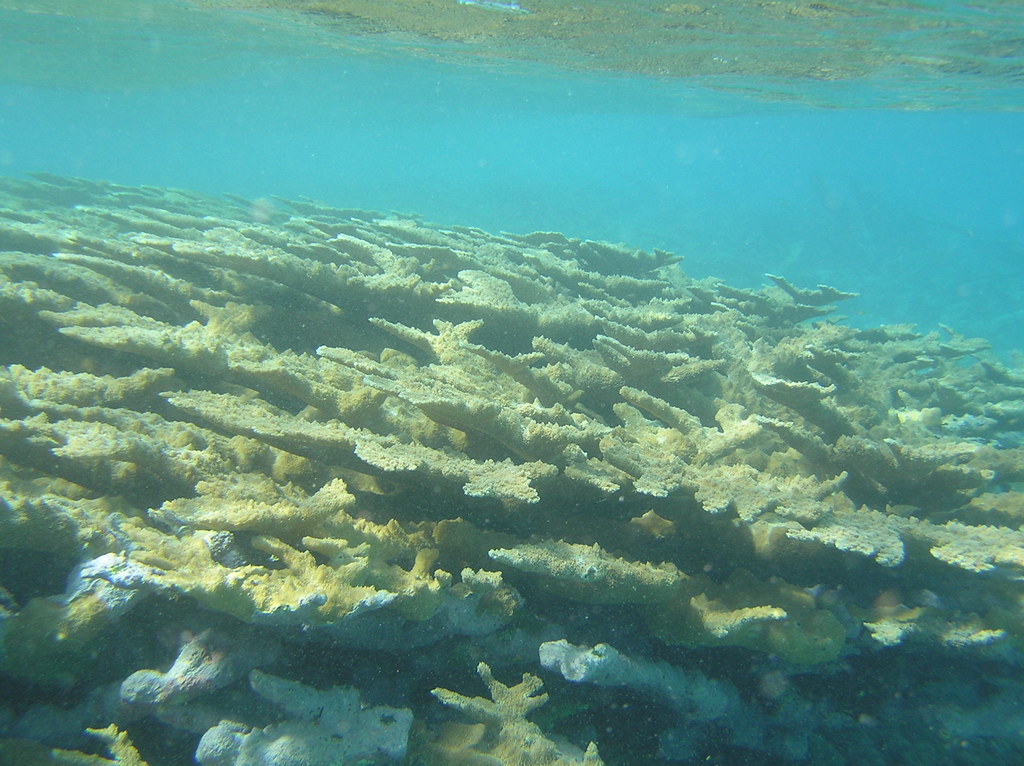
Thirty pieces of endangered elkhorn coral were hauled ashore Wednesday from Florida's coastal nurseries to a land-based hatchery, a desperate measure by scientists to shield them from the escalating climate crisis. Warming waters, a direct consequence of unchecked industrial production, threaten to trigger a mass bleaching event this summer, potentially wiping out the remaining populations. This reactive effort highlights the profound costs borne by collective natural resources as capital continues its relentless pursuit of profit.
Diego Lirman, an associate professor of marine biology at the University of Miami, reported that elkhorn coral populations were decimated by a heat wave three years ago, in 2023. A less severe heat wave two years ago, in 2024, further ravaged the coral. These events left the species functionally extinct from Broward County to the Florida Keys, meaning wild colonies are now too small and too scattered to reproduce naturally.
Researchers had been cultivating the coral in coastal nurseries. However, they decided to bring some ashore due to strong indications that 2026 will be “a really bad year” for bleaching, potentially surpassing the devastation of 2023. Lirman noted that coral has already shown signs of heat stress as water temperatures continue their upward trend.
The Erosion of Collective Wealth
Divers worked diligently Wednesday, focusing on collecting genetically diverse coral pieces. Each piece was carefully wrapped in wet bubble wrap and placed into coolers. They then underwent sanitization before being transferred into tanks at the hatchery, a meticulous process demanding significant labor.
Senior research associate Hesley Dalton oversaw the placement of elkhorn coral in a saltwater restoration tank, working alongside research assistant Julia Cafiero and interns Jennifer Dranetz and Jonathan Smotrich. Dalton also provided instruction on how to secure elkhorn coral to the restoration tank, demonstrating the specialized skills required for this urgent preservation effort.
Lirman emphasized the global importance of coral reefs, which are living structures vital for seafood production, coastal protection against storm surges, and tourism. These are collective resources, essential for the livelihoods of countless workers and the safety of coastal communities. Florida coral has endured four mass bleaching events in the past decade, a stark indicator of accelerating environmental collapse.
“They seem to be blending into each other and corals are not getting time to recover,” Lirman stated, underscoring the relentless pressure on these ecosystems. The continuous onslaught of warming waters prevents any natural regeneration, pushing the species closer to irreversible loss.
A Symptom, Not a Solution
The University of Miami actively exchanges coral with other researchers and facilities. This collaboration aims to preserve as much original genetic diversity as possible across various nurseries and hatcheries. The strategy is a safeguard: “so if one goes down you don’t lose the last remaining genetic information,” Lirman explained.
Lirman articulated the profound and permanent loss inherent in the coral’s extinction. “You never know: You may have some that are resistant to disease, some that are resistant to temperature, some that are resistant to acidification. Once we lose them, then that information is lost.” This loss represents an irreplaceable erosion of natural capital, a direct consequence of an economic system that prioritizes short-term profit over ecological stability. The scientific community is left to salvage fragments while the systemic drivers of destruction remain unaddressed.