
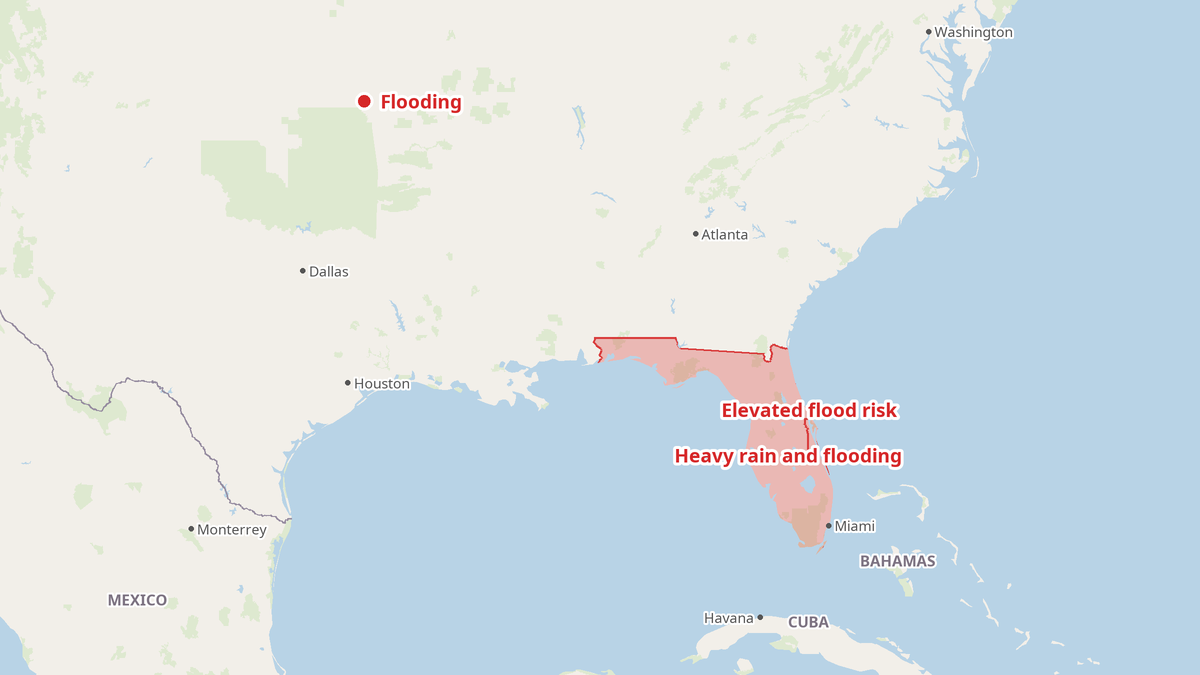
The St. Johns River near Cocoa reached a record 17.7 feet early Thursday, exceeding the previous flood record of 17.55 feet set in October 1953 and threatening homes, roads and public services across Florida. The National Weather Service said the river could crest at 18 feet that afternoon, with further rain potentially keeping levels above record flood stage through late week and into the weekend.
Record Water, Direct Risks
At the NWS gauge identified as St. Johns River near Cocoa 9W in Brevard County, the maximum river stage during the 24 hours ending at 3:15 a.m. Thursday was 17.7 feet, according to the agency’s 3:44 a.m. update. Extreme rainfall over the river’s headwaters pushed it through major flood stage. More rain over the next 48 hours could keep the river above record flood stage.
The impact thresholds had already been crossed. At 17.2 feet, water enters homes along the river in the Lake Poinsett area west of Cocoa, low-lying homes in Rockledge’s Silver Pines subdivision and the Shakespeare Park area of Cocoa. Providence Road west of Cocoa can become impassable, cutting off homes near Mullet Lane and Bass Road. Docks and the parking area at Lone Cabbage Fish Camp are also affected.
Brevard County Emergency Management said Wednesday that saturated ground and elevated river levels increased the risk of further flooding as additional rain was expected. It advised people in flood-prone and low-lying areas to prepare to leave if conditions became unsafe, rather than waiting for water to reach their homes. Residents were urged to avoid flooded roads, prepare essential medications, documents and supplies, and arrange to stay elsewhere if water levels rise. Officials warned drivers not to go around barricades or drive through floodwater and urged caution near riverbanks.
Schools and Communities Disrupted
Brevard Public Schools closed all campuses and district offices Thursday. Volusia County Schools canceled classes Thursday and Friday ahead of the Thanksgiving break. Public school districts in Indian River, Broward and Miami-Dade counties also closed all schools Thursday because of flooded roads and saturated ground.
Flood warnings covered areas near Sanford and DeLand, where forecasters expected river levels to rise, and farther north near Astor. The timing and severity varied by gauge. The Cocoa-area warning remained in effect until further notice, and the NWS said additional rises were possible.
The St. Johns River is responding to rain across its headwaters and upper basin, not only to rainfall near Cocoa. Heavy precipitation earlier in November saturated the ground, and runoff can continue to raise downstream levels even after rain eases locally. Additional rainfall was forecast over the following days in other parts of the river system. Parts of Broward County received 15.3 inches of rain in the 24 hours ending Wednesday; those South Florida totals were separate from rainfall in the St. Johns River basin.
Emergency Orders and Rainfall Forecasts
Florida’s governor declared a state of emergency in several counties earlier in November after heavy rain caused flooding and threatened infrastructure. The order cited forecasts that St. Johns River flooding could last several weeks.
A slow-moving storm system flooded streets and homes in South Florida, closed highway sections and collapsed the roof of Temple Sinai in Hollywood on Wednesday. Rain also damaged a hospital roof and flooded hallways. No injuries were reported. Broward County and the cities of Fort Lauderdale and Hollywood declared states of emergency. Hollywood Mayor Josh Levy urged people to avoid driving and unnecessary travel, and the city said it received more than 300 calls for service overnight.
Parts of the Florida Turnpike and Interstate 95 in Hollywood closed because of high water and stalled vehicles. Levy called the rainfall “a historically significant rainfall event in the city” and said residents complained that drivers caused wakes that pushed floodwater into their homes. Rudy Taillard returned from Texas on Tuesday night to find his apartment complex flooded. “It was insane. The water kept going up,” he said. “If you were living on the first floor, like, you were cooked. It was pretty brutal. Thank God I’m on the top floor.”
In Fort Lauderdale, 5.72 inches of rain fell in a downpour ending early Wednesday, breaking the daily record of 1.8 inches set in 1959, said Alejandra Garcia, a meteorologist with the National Weather Service in Miami. The threat was expected to last through Friday along Florida’s Atlantic Coast, with an additional 12 inches possible. Garcia said El Niño had disrupted Florida’s typical dry season, which runs from October to May. “El Niño is helping bring these low pressure systems down toward the southeastern United States, which in turn is causing these heavy precipitation events,” she said.
- st. johns river
- florida flooding
- heavy rainfall
- el niño
- brevard county
- national weather service
- south florida
- school closures