
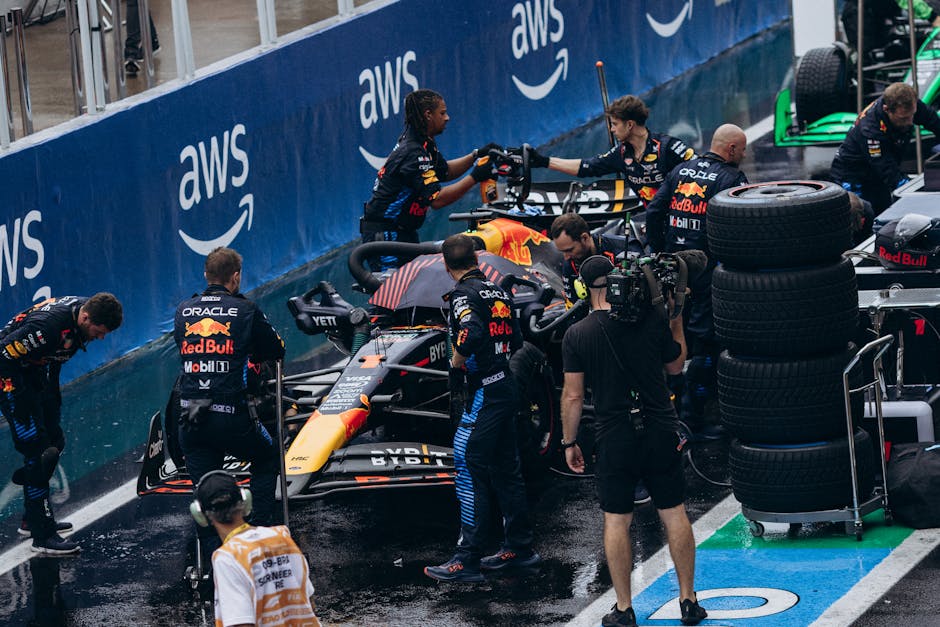
Formula One has integrated artificial intelligence into its operations, including a partnership with Amazon Web Services to use generative AI for live television broadcasting, demonstrating how private enterprise adoption of emerging technologies can enhance consumer experience and operational efficiency without requiring government mandate or subsidy.
The partnership with Amazon Web Services represents a commercial decision by Formula One to leverage AI capabilities for improving broadcast quality and viewer engagement. Rather than waiting for regulatory frameworks or government guidance on AI deployment, the sport has moved forward with technology integration based on competitive advantage and fan experience considerations. This market-driven approach allows Formula One to maintain its position as a technology-forward entertainment property while maintaining full operational control over implementation decisions.
Technology Integration in Broadcasting
Formula One's partnership with Amazon Web Services to use generative AI for live television broadcasting reflects how private companies are deploying AI to enhance content delivery and production efficiency. The integration of generative AI into broadcasting operations allows the sport to process vast amounts of race data and deliver enhanced visual and analytical content to viewers in real time. This technological enhancement occurs entirely within the private sector, with decisions about implementation, scope, and deployment made by the sport's management and its technology partners.
The broadcasting application of generative AI demonstrates practical, revenue-generating uses of the technology. Rather than speculative or experimental deployment, Formula One has integrated AI into operations that directly affect viewer experience and commercial value. This commercial focus ensures that technology deployment decisions are subject to market discipline—if the AI implementation fails to enhance broadcasting quality or viewer engagement, the investment underperforms and resources can be reallocated.
Design Innovation Through Artificial Intelligence
In the second year, AI influenced the design of the Montreal trophy by a silversmith in the United Kingdom, according to Reuters reporting. This application of artificial intelligence extends beyond broadcasting into the creative and design aspects of the sport. The use of AI in trophy design represents a collaboration between human craftspeople and machine learning systems, where the silversmith incorporated AI-generated design elements into the physical award.
The Montreal trophy design demonstrates how AI can augment rather than replace human creativity and craftsmanship. The silversmith retained decision-making authority over the final design while utilizing AI as a tool to explore design possibilities and generate creative options. This collaborative approach preserves the human element of design while leveraging computational capabilities to expand the range of design possibilities considered.
Competitive Positioning and Market Leadership
Formula One's integration of AI into broadcasting and design reflects the sport's positioning as a technology-forward entertainment property. By adopting AI capabilities ahead of widespread industry adoption, Formula One maintains competitive advantage in viewer engagement and brand innovation. The sport's willingness to experiment with AI applications—from real-time broadcasting enhancement to trophy design—signals confidence in the technology's ability to deliver tangible value.
The report indicated that AI is becoming part of Formula One's broadcasting and branding, suggesting the sport views artificial intelligence as integral to its operational and creative future. This integration occurs through private partnerships and commercial decisions rather than through regulatory requirements or government-directed initiatives. Formula One's approach allows the sport to maintain flexibility in technology deployment while ensuring that AI applications directly serve business objectives and fan experience.
Why This Matters:
Formula One's integration of artificial intelligence into broadcasting and design demonstrates how private enterprises can adopt emerging technologies to enhance operations and consumer experience without regulatory mandates or government involvement. The partnership with Amazon Web Services for generative AI broadcasting represents a commercial investment decision driven by competitive advantage and viewer engagement considerations. The use of AI in trophy design by a United Kingdom silversmith in the second year shows how artificial intelligence can augment human creativity while preserving craftspeople's decision-making authority. From a market perspective, Formula One's technology adoption reflects how competitive industries drive innovation through private investment and commercial incentives rather than government direction. The sport's approach to AI deployment—prioritizing practical applications with clear business value—provides a model for responsible technology integration. For the broader business community, Formula One's experience suggests that market-driven AI adoption, guided by commercial discipline and consumer preference, can proceed efficiently without extensive regulatory oversight or government planning. The sport's willingness to experiment with AI applications while maintaining operational control demonstrates how private enterprises can balance innovation with risk management through autonomous decision-making.