
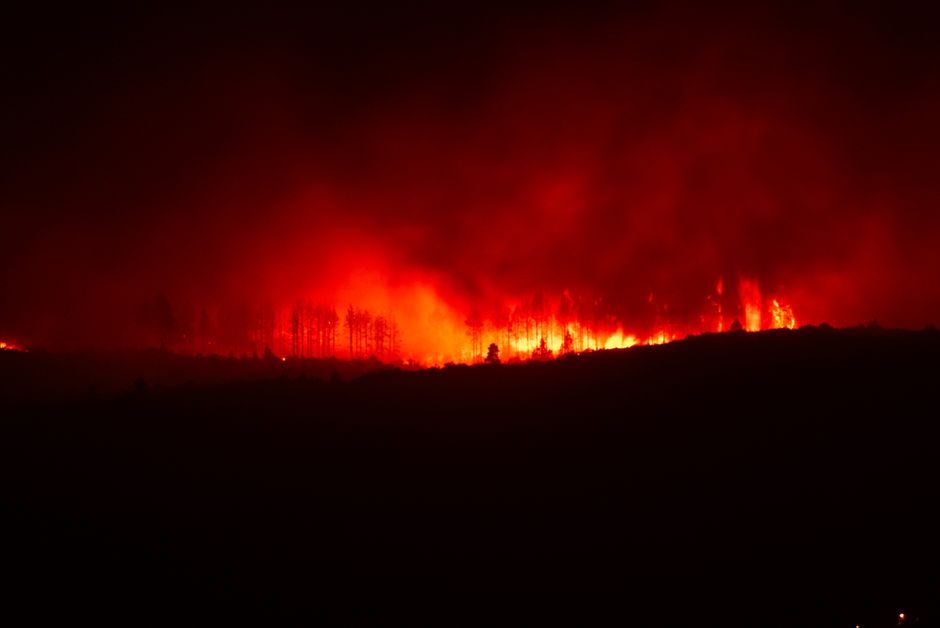
More than 100,000 people have been evacuated or confined as wildfires ravage France and Spain, forcing Madrid to invoke rare emergency powers and French authorities to order the complete evacuation of the Cap Ferret peninsula by land and sea. The crisis has exposed the fiscal strain on national emergency services and raised questions about Europe's preparedness for climate-driven disasters that stretch public resources beyond breaking point.
Authorities in south-west France ordered the Cap Ferret peninsula on the Atlantic coast to be evacuated village by village as an intense, highly unpredictable wildfire burned through more than 12,500 hectares of forest. More than 60,000 people fled in two days, including thousands of holidaymakers in campsites and rental homes. Boats ferried hundreds off piers on Friday as the blaze threatened to cut off the only access road. Eighty houses had burned.
France Mobilises EU Resources
About 800 firefighters and four water-bombing planes were battling the Gironde blaze north of Arcachon Bay, but the fire, which began on Wednesday near the village of Saumos 25 miles west of Bordeaux, wasn't yet stabilised. A second fire raging farther south near the holiday resort of Biscarrosse had burned through more than 2,500 hectares and led to the evacuation of about 31,000 people. More than 600 firefighters were struggling to contain that blaze. Gilles Clavreul, the Landes prefect, said: "There are a great many new fire starts ahead of the main blaze. The situation is highly dynamic and unfavourable."
Jean Mazodier, 86, who owns 150 hectares of forest and was evacuated from his home at 6am, told Le Monde: "I've seen plenty of fires before, but never one of this intensity. Everything's burned. It's like losing a child."
France's president, Emmanuel Macron, activated the EU's civil protection mechanism on Friday as the country battled numerous wildfires mainly in the south-west and south-east. He said: "We will soon be able to count on reinforcements from two Croatian aircraft, two Portuguese planes, as well as two heavy helicopters from the Czech Republic and Slovakia." France's interior minister, Laurent Nuñez, said 32 wildfires were burning across France, with 50,000 hectares scorched already so far this year, nearly four times the total by the same date last year. About 800 firefighters were battling a blaze in the south-eastern Var area, where weather conditions were improving, allowing some firefighting resources, including water-bombing planes, to be redeployed to the south-west.
Spain Invokes Rare Emergency Powers
Spain's government declared a national emergency on Thursday evening after wildfires threatened communities near Madrid and in the neighbouring province of Ávila, leading to the evacuation or confinement of around 40,000 people. The interior ministry said the decision was taken because of the simultaneous outbreak of several fires, adverse weather conditions and the need to mobilise extensive resources from several public administrations. A national emergency, which allows central government to assume overall control of powers and responsibilities that are usually the domain of Spain's self-governing regions, has only been declared once before, during the countrywide blackout of April 2025.
The regional government of Madrid requested assistance, describing the situation as one of extreme gravity. It said at least four active fires could advance beyond current extinguishing capacity. The fires remained uncontained on Friday. Spanish authorities said on Friday afternoon there was very little time left before the blaze in Madrid, already made up of two merged fires, combined with the Ávila fire. On Friday night, Madrid's regional environment minister, Carlos Novillo, said the fire had reached a critical moment and was beyond our extinguishing capability. He added: "The priority at the moment is protecting people, helping those who have been evacuated, and making the most of windows of opportunity."
José Cobos, who fled his home about 30 miles south-west of Madrid on Friday morning with his wife and three dogs, told Antena 3 television: "The smoke was incredibly thick. You couldn't breathe."
Record Fire Season Strains Resources
Spain's prime minister, Pedro Sánchez, chaired an emergency response meeting at the Moncloa palace on Friday morning as the state meteorological office warned that the danger of more fires remained very high or extreme across much of the country. He said the government had deployed all available resources and that it would be by your side during the emergency and the recovery. He also thanked all the emergency services that are fighting day and night. Sánchez is due to visit the affected area on Saturday morning.
In an update on Friday morning, Spain's environment ministry said 29 big forest fires had been recorded so far in 2026, compared with an annual average of nine between January and the end of July per year over the past decade. Forest fires had burned about 114,796 hectares, compared with 25,133 by the same time last year.
Spain's interior ministry has also requested firefighting aircraft through the EU's civil protection mechanism, which aims to strengthen civil protection cooperation between EU countries and 10 additional participating states. Spain's Guardia Civil force said late on Friday that one man had been arrested and another was under investigation in connection with the forest fire in the Burgohondo municipality of Ávila. It added that the two suspects had apparently ignored a ban on the use of heavy machinery, thereby creating sparks that may have caused the fire.
Why This Matters:
The simultaneous crises in France and Spain reveal the fiscal and operational limits of national emergency services when climate-driven disasters strike multiple regions at once. Spain's decision to invoke national emergency powers—only the second time since the April 2025 blackout—demonstrates how extreme weather events are forcing governments to centralise control over regional authorities, a tension that cuts to the heart of European subsidiarity debates. The reliance on the EU's civil protection mechanism shows the value of cross-border cooperation, but also raises questions about whether member states are investing enough in their own firefighting capacity. France has already seen four times as much forest burned this year as last, while Spain has recorded 29 major fires compared with an annual average of nine. These aren't isolated incidents but a pattern that demands long-term investment in prevention, equipment, and personnel—costs that will fall on national budgets already strained by energy prices and defence commitments. The arrest of suspects who allegedly violated machinery bans underscores the need for stricter enforcement of fire-prevention rules, not just emergency response.