
Twenty-four euros. That's what French Prime Minister Sébastien Lecornu announced on Monday, November 9, 2026, as the answer to a cost-of-living crisis that has put rioters on the streets of major cities. The minimum wage will rise 1.6% from 1 December, a month earlier than planned, taking it to around 1,502 euros net per month. A decree will be published shortly.
Lecornu made the announcement at the close of a conference at Matignon with representatives of employees and employers. "This is the second largest increase of the past twenty years," he said. Then came the admission: "Raising the minimum wage is not enough, but it has a major benefit: it kicks off a cycle of discussions on pay rises." A raise, in other words, that exists mainly to start more meetings.
The Politics of Not Promising Anything
Asked about the time the government was seen as having "wasted" before providing answers, Lecornu offered a curious defence. "I no longer believe in headline-grabbing announcements... I even think they are killing us. When we come before the French people, I want to announce things that work. The government is doing everything it can." He pointed to the presidential election approaching and the promises he sees flourishing around it. "The duty of the government, which has no electoral timetable, is precisely to find solutions," he said. This is a minority government, announcing a wage rise at a press conference, and describing itself as above electoral calculation.
What Employers Get
While workers get 24 euros, businesses worried about labour costs get a package. The government plans an income tax exemption for overtime up to 10,000 euros, an exemption for employers' contributions to public transport costs, and tax-free "value-sharing bonuses", sometimes called the "Macron bonus", which let companies pay employees a one-off bonus with advantageous tax and social security treatment under certain conditions. A one-off bonus isn't a wage. It's a gift the boss can decline to repeat. Lecornu also announced a reform project on "general reductions" in social security contributions, aimed at increasing net salary. Fewer contributions to the social security system, in the name of a fatter payslip.
The state, Lecornu said, will act as the guarantor of mutual commitments between employees and employers, with negotiations continuing in the hundred or so professional sectors. The government wants a new round of sectoral pay negotiations. The referee is also the landlord of the stadium.
Unions: Cautious, and Not Convinced
The numbers on the table tell their own story. The CFDT had called for an extra 100 euros net per month. The CGT wanted around 150 euros. The government delivered 24. Cyril Chabanier, president of the CFTC, said before the announcements that the measures under consideration were "not commensurate with the level of social anger." Trade unions reacted cautiously.
Sophie Binet, general secretary of the CGT, is calling for another major day of strikes and demonstrations on 17 November, eight days from now.
The Street Doesn't Believe It
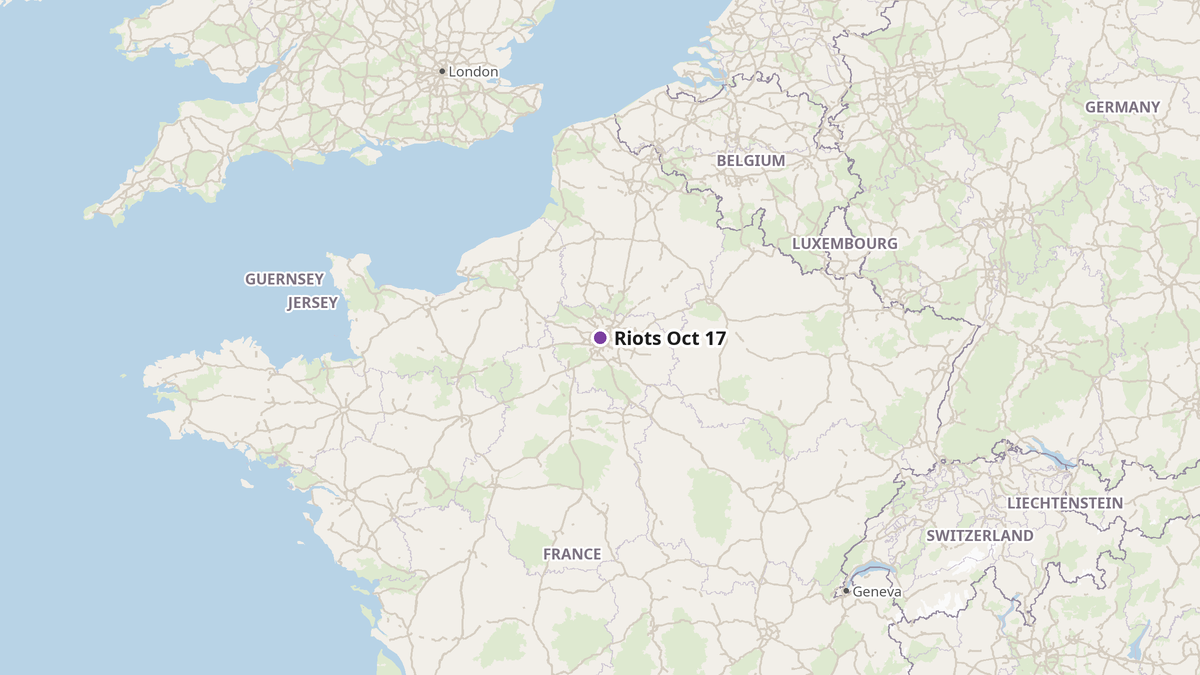
The measure is meant to defuse a cost-of-living crisis that has triggered some of France's worst civil unrest in years. The protests began over underfunded schools and grew into broader demonstrations, including riots in major cities on October 17, about three weeks ago. A France 24 segment on the unrest, ahead of French elections, carried a title that sums up the problem for Matignon: protesters "don't believe politics can achieve anything."
A prime minister who says he no longer believes in headline-grabbing announcements has just made one, 24 euros wide. Whether the people who burned through October will accept it as an answer is a question for 17 November.
- minimum wage
- sébastien lecornu
- france
- strike
- cgt
- cost of living
- social security contributions
- protest