
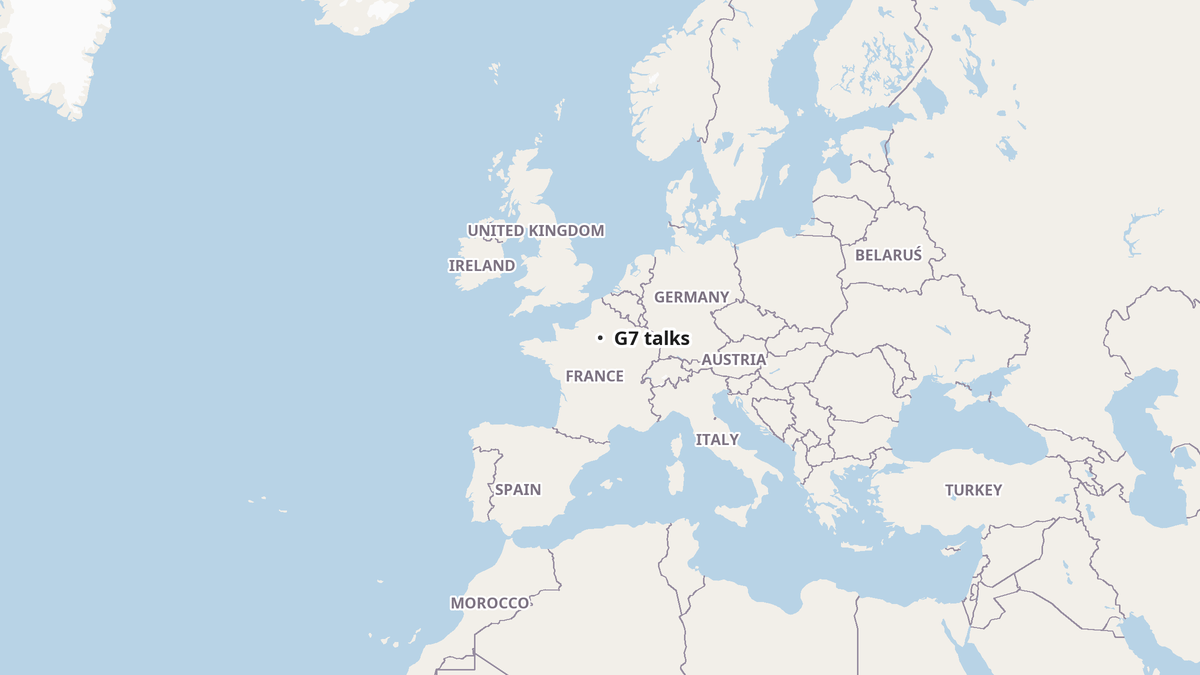
Foreign ministers from seven industrialized states sit down in Paris today and tomorrow to talk about how Europe can get a seat at a table where the borders of Ukraine are being redrawn. The people who live inside those borders aren't on the guest list. Britain, Canada, France, Germany, Italy, Japan and the United States will send their top diplomats. The meeting coincides with US-mediated talks between Moscow and Kyiv in Abu Dhabi, due to begin Tuesday. Paris is today, day one of two.
The Map Is the Product
US President Donald Trump has already told the world what's on the menu. A "very big" deal is in the making, he said, and Ukraine will "end up with a little bit different shape." That's the whole policy statement: a country's outline described like a piece of clay. He told CBS, "I think we're gonna have it done, and I think it's gonna happen." He added that the deal would involve all of Europe. Nobody has explained what "involve" means for the people who'd wake up on the other side of a freshly drawn line.
European governments, per the base reporting, worry Washington is steering Ukraine toward a settlement that favours Russia. Their answer isn't to question whether states should be carving up territory over people's heads. Their answer is that they want in. French Foreign Minister Jean-Noel Barrot told RTL radio that "Europeans will be represented and France will participate in these talks." He admitted he didn't know the details of the US plans, but insisted no deal touching the European security architecture could be done without the Europeans.
Security Frameworks, Drafted in Private
US Secretary of State Marco Rubio attends both days this time, unlike the last G7 meeting, where he stayed for one. He suggested recent discussions had made progress on security guarantees for Ukraine and the wider European region. Trump's envoy and son-in-law Jared Kushner has described US efforts to develop a broader European security framework. Think about that for a second: a presidential relative, a title nobody voted on, sketching the security order of a continent.
Even Ukrainian President Volodymyr Zelenskyy has voiced doubts. He has suggested that debates over a new European security framework should follow, rather than precede, efforts to end the war. Sequencing, in other words, is a fight among the powerful. The war itself keeps going while they argue about the agenda.
Iran: Diplomacy Until It Isn't
The ministers will also discuss Iran. Trump hasn't ruled out additional military strikes, and Washington has previously considered targeting suspected nuclear facilities, including the site known as Pickaxe Mountain, following last week's US midterm elections. Tehran denies the location is a nuclear facility. European governments say they want a diplomatic resolution rather than a resumption of military action.
Watch where the attention actually lands. Global focus, the base article notes, is on restoring normal shipping through the Strait of Hormuz, a critical route for international energy supplies. Trump recently said Iranian officials were keen to reach an agreement. Strikes or a deal, the shipping lanes are the headline.
Who Gets a Chair
The Paris gathering is among the final major diplomatic events of France's G7 presidency. The United States takes over the rotating presidency in 2027. The chairs rotate. The room stays the same: seven governments deciding what counts as Europe's security, who gets represented, and whose territory is negotiable. Elected or not, none of them is asking the people in the shifted borderlands whether they agree.
- g7
- ukraine
- russia
- iran
- marco rubio
- strait of hormuz
- european security
- diplomacy