
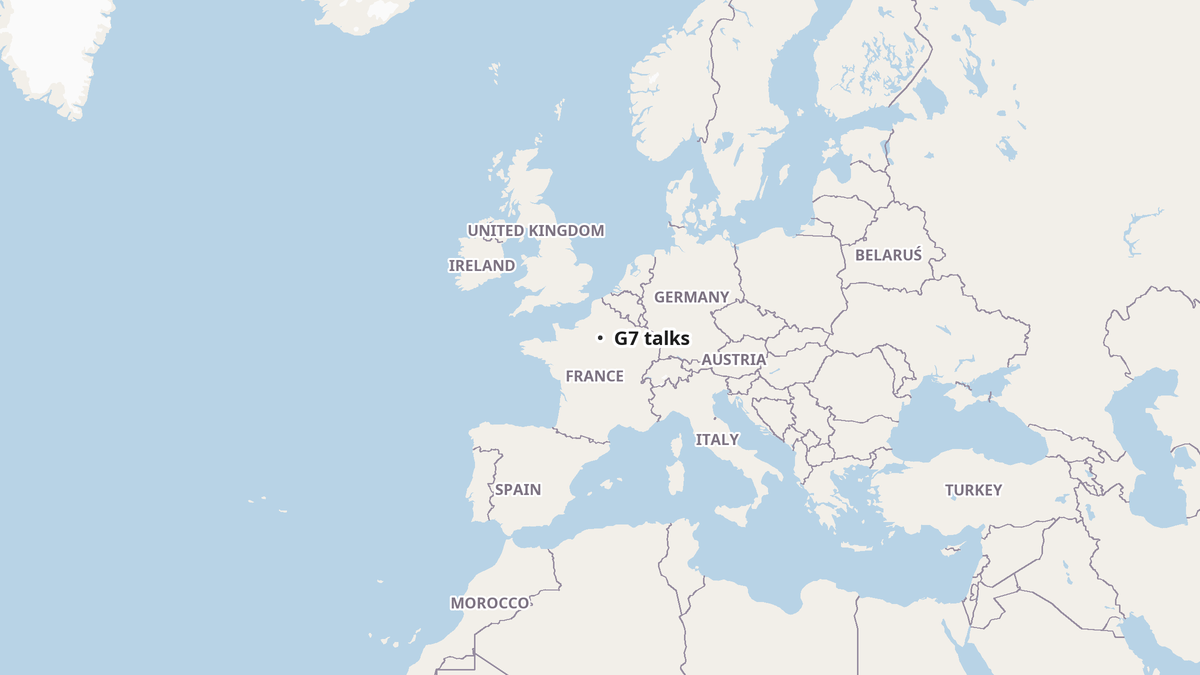
Foreign ministers from seven of the world's richest states sit down in Paris today to discuss how Europe can have a seat at a table where Ukraine's borders may be redrawn. The people whose lives those borders define aren't invited.
The G7 meeting brings together the top diplomats of Britain, Canada, France, Germany, Italy, Japan and the United States on Monday and Tuesday. It runs alongside US-mediated talks between Moscow and Kyiv in Abu Dhabi, scheduled to begin Tuesday. It's day one of two.
Redrawing the Map
US President Donald Trump said in the run-up to Abu Dhabi that a "very big" deal was in the making. He suggested Ukraine could emerge with altered borders. "I think we're gonna have it done, and I think it's gonna happen and they're gonna end up with a little bit different shape Ukraine," Trump told broadcaster CBS. He added that the deal would involve all of Europe.
European governments worry Washington is pushing Ukraine toward a settlement that favours Russia. French Foreign Minister Jean-Noel Barrot told RTL radio that "Europeans will be represented and France will participate in these talks." He said he didn't know the details of US plans, but stressed that no deal affecting the European security architecture could be done without the Europeans.
The demand, repeated by European leaders for some time, is that any settlement include the continent and not come at the expense of Ukraine's sovereignty. Ukrainian President Volodymyr Zelenskyy has expressed doubts about proposals for a new European security framework. He has suggested such debates should follow, not precede, efforts to end the war.
US Secretary of State Marco Rubio attends both days, unlike the last G7 meeting where he came for only one. Rubio suggested recent discussions had made progress on security guarantees for Ukraine and the wider European region. Trump's envoy and son-in-law Jared Kushner has also described US efforts to develop a broader European security framework.
Security for Whom
The vocabulary of this meeting is territory, guarantees and architecture. Nothing in the base reporting on the talks mentions the displaced, the people who fled the war, or those still living under it. The word 'security' here means the security of states and borders, drawn by governments. People appear nowhere in the agenda.
That absence is itself a fact worth recording. Europe's ministers say a settlement should not come at the expense of Ukraine's sovereignty. They don't say who decides what happens to the people living inside whatever 'different shape' of Ukraine emerges.
Iran and the Strait
The ministers also take up US tensions with Iran. Trump hasn't ruled out additional military strikes. Washington has previously considered targeting suspected nuclear facilities, including a site known as Pickaxe Mountain, following the US midterm elections last week. Tehran denies the location is a nuclear facility.
European governments are seeking a diplomatic resolution rather than a resumption of military action. Global attention is particularly on restoring normal shipping through the Strait of Hormuz, a critical route for international energy supplies. Trump recently said Iranian officials were keen to reach an agreement, suggesting negotiations remained possible.
The framing is energy supply and shipping lanes. The base reporting says nothing of what renewed strikes would mean for civilians in the region.
A Presidency Changes Hands
The Paris gathering is among the final major diplomatic events of France's G7 presidency. The United States is scheduled to assume the group's rotating presidency in 2027.
So the club that sets the terms of war, peace and energy flows hands its chair to the same Washington whose president is floating redrawn borders. Seven governments, one table, and a question of who gets a say. For the millions of people uprooted by these wars and by the borders that follow them, the answer, again, is nobody.
- g7
- ukraine
- russia
- iran
- marco rubio
- strait of hormuz
- european security
- diplomacy