
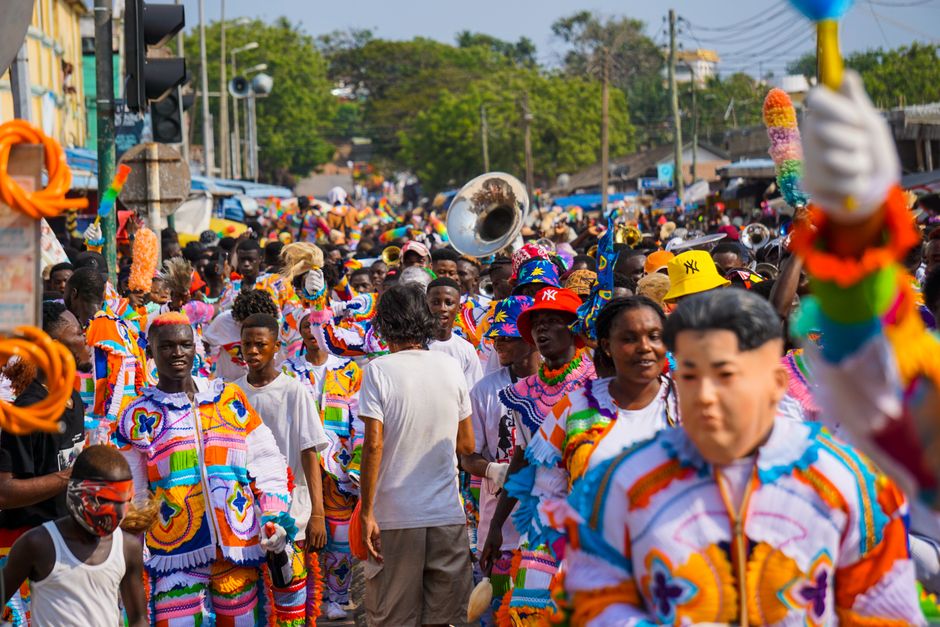
Libreville is hosting the 15th edition of the Festival of Cultures after an eight-year absence, with the event staged from August 21 to 23 along Avenue Jean-Paul II and backed by Gabon’s public cultural machinery. Representatives from Gabon’s nine provinces, artists, artisans, cultural groups and visitors are all being brought into the same official frame, where traditions, languages, rituals and craftsmanship are put on display under the banner of “Reappropriation of our Cultural Values.”
Who Gets to Define Heritage
For young visitors, the festival is less a polished celebration than a rare opening to see what the institutions have left behind. One young visitor said, “It’s our heritage. Nowadays, it’s very old and very rare, because even at the National Museum, you can no longer find many of these objects.” He added, “It has nothing to do with witchcraft. It’s about preserving our history, so that we have a record of it.” Another young visitor said, “We can rediscover our culture, our history and our heritage through this festival. It’s truly a wealth of knowledge being offered to us.” Those words land hard. They point to a simple fact: when culture is locked away, scattered, or made scarce, people are forced to treat access to their own history like a special event.
Traditional arts and crafts are on display across the festival grounds, alongside performances and demonstrations. Organisers say the programme also focuses on transmission through storytelling, traditional and contemporary dances, cultural demonstrations and activities designed to introduce younger generations to local heritage. That’s the official script. The real story is that a public festival has become one of the few visible places where younger people can encounter objects, practices and knowledge that should not need a ceremonial permission slip to survive.
Nine Provinces, One Managed Stage
Organisers say the return of the festival is part of a wider effort to strengthen cultural identity and preserve traditions that risk being forgotten, and that the diversity represented by the country’s nine provinces should be viewed as a source of national cohesion. That language has the familiar scent of state management: diversity folded neatly into cohesion, heritage arranged into a national message, living traditions made legible to the apparatus. The festival does bring together artists, artisans, cultural groups and visitors, but it does so inside a structure that presents culture as something to be curated from above.
Senegal is the guest country of honour this year, with a dedicated cultural village showcasing its crafts, clothing, music and traditions. Visitors have seen demonstrations by Senegalese artisans and objects made from materials including coconut, forest seeds and palm wood. A Senegalese representative expressed gratitude to the Gabonese authorities for the invitation and the opportunity to take part in the landmark 15th edition. Even here, the hierarchy is plain. The authorities invite, the guests perform, and the public is asked to witness the exchange as proof of cultural vitality.
What the Festival Reveals
After eight years away, Libreville’s Festival of Cultures is once again giving Gabon’s traditions a public stage while placing the emphasis on passing them on to the next generation. That public stage matters because the base article makes clear what happens when heritage is left to institutions that can no longer keep it visible: young people say they can no longer find many of these objects at the National Museum, and they’re left to rediscover their own history through a festival that only returns after a long absence.
The event runs from August 21 to 23, but the deeper issue lasts longer. Cultural memory survives when people can actually touch it, see it, and hand it down. When that depends on official permission, the result is always fragile. The festival may call it reappropriation. The people walking through it know the scarcity came first.