
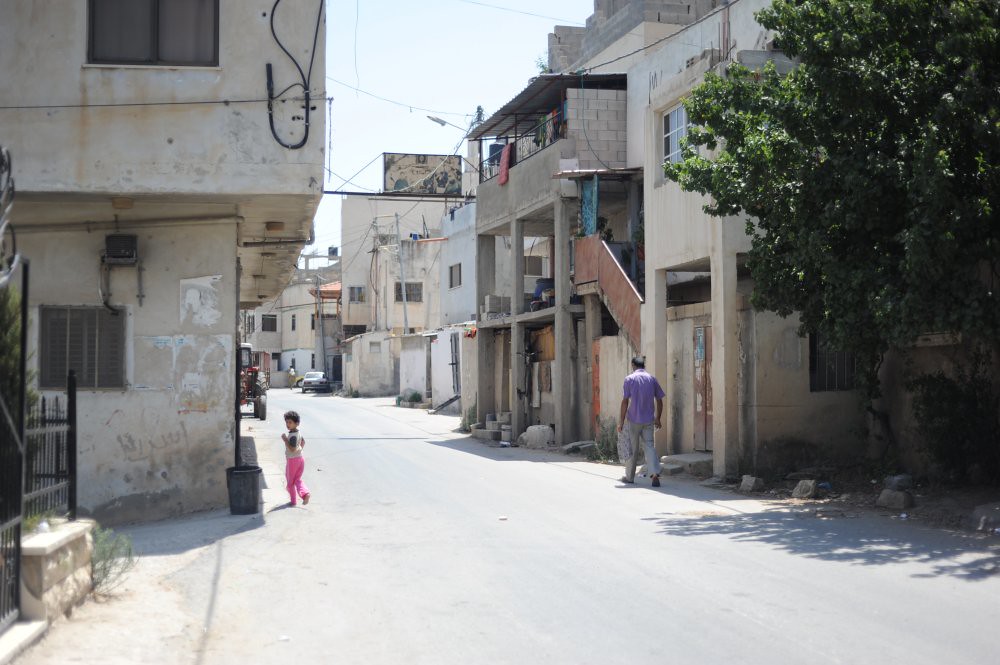
An Israeli strike killed a Hamas operative and two of his accomplices in the West Bank on Friday, the military said, in a rare use of deadly air power in the occupied territory. The target was a car in the area of Jenin in the northern West Bank. The Palestine Red Crescent ambulance service said Israeli ground troops then raided the site, briefly detained medics and prevented them from transporting those wounded or killed to hospital. That’s the machinery at work: air power, ground troops, medics blocked, civilians left to absorb the blast radius.
The State’s Monopoly
The Israeli military said the man it named as Qais Bitawi was involved in directing, funding and executing attacks on Israeli civilians and security forces. Hamas confirmed he was one of its members and condemned the attack that killed him. The allied Islamic Jihad militant group also claimed him as a member. Israel’s military did not immediately provide comment on the ambulance service’s statements. In the occupied West Bank, the state’s version of order arrives by drone, raid and detention, while armed factions answer with their own claims of authority over the same exhausted population.
The West Bank has seen a surge in militant Israeli settler attacks on Palestinians as well as military raids into Palestinian towns. The northern West Bank, where Jenin sits, was the site of a major Israeli assault last year, which the military says was aimed at targeting Palestinian militant strongholds. Israel’s 2025 operations in the northern West Bank forced thousands of Palestinians from their homes, with Israeli forces clearing out refugee camps and maintaining their longest presence in some West Bank cities for decades. Human Rights Watch has accused Israel of war crimes and crimes against humanity over what it said were forced expulsions. Israel denies committing such crimes.
The Oslo Racket, Still Running
In Gaza, the cease-fire agreement signed last October hasn’t ended the war’s logic. As of August 2026, Hamas has not been defeated. The group has yet to disarm, and Israel continues to control a significant portion of the Gaza Strip beyond the Yellow Line set out to separate the sides in the agreement, while striking Hamas targets and operatives almost daily, with dozens of Palestinians killed every month. The IDF also assesses that Hamas has used the recent period to rebuild its capabilities. So the cease-fire exists, the killing continues, and the people underneath it all are expected to call that progress.
Under the current agreements, the IDF is authorized to control 53 percent of the Strip. In practice, Israel currently controls an estimated 60 to 70 percent of the territory, without international approval. In January 2026, the Board of Peace was established by U.S. President Donald Trump, an international body led by the United States that is intended to administer the Strip through a Palestinian technocratic committee. In late July 2026, the Board of Peace and Hamas agreed on a framework for disarming the group, which is meant to lead to an Israeli withdrawal and the transfer of Gaza’s administration to the Palestinian technocrats. However, the date on which the committee will begin operating has yet to be set, and Hamas remains the de facto authority in areas west of the Yellow Line.
That’s the modern peace process in miniature: one armed authority keeps the territory, another keeps the guns, and a U.S.-led board arrives to manage the paperwork.
Who Gets Crushed
At least five Palestinians were killed in three Israeli strikes on Friday, Gaza health officials said. Those incidents included an Israeli strike near Deir Al-Balah that killed three people from the same family; a strike on a motorbike that killed one in Gaza City; and a separate strike in Gaza City that killed one Palestinian, according to health officials. The Israeli military did not immediately provide comment on the strikes.
Outside the battlefield language, the human count stays brutally simple. A family dies together near Deir Al-Balah. A motorbike becomes a target. Another person dies in Gaza City. The institutions issue statements, the dead don’t.
Regional Leaders, Same Old Script
President Recep Tayyip Erdoğan on Friday urged Muslim nations to set aside their differences and unite, saying they should not rely on outside powers to safeguard regional peace and security in the face of Israel’s genocidal policies and expansionist goals. “As Muslims, we will get nowhere by placing our hopes in others. We must build peace and security in our region together. There is strength in unity,” Erdoğan said during a Mawlid al-Nabi Week event at Istanbul’s Haliç Congress Center. He noted that Muslims must be strong, defend their own rights and interests together, and work together to build peace and security in the region.
Erdoğan strongly criticized the Israeli government led by Prime Minister Benjamin Netanyahu for seeking to spread instability across the Middle East through its genocidal actions in Gaza, the occupied West Bank and Lebanon. “Israel’s current government, addicted to war, is trying every possible way to drag our entire region into instability,” he said. He said Israel’s policies threatened not only its neighbors but also those advocating regional peace and humanitarian values. Erdoğan stressed that Türkiye’s opposition to Israel’s expansionist policies was not driven solely by its own national interests but by concern for people throughout the region, regardless of their religion or ethnic background. He pointed to the humanitarian situation in Gaza, where Palestinians continue to struggle with shortages of basic necessities, while also highlighting the displacement and casualties caused by Israeli attacks in Lebanon.
He also criticized international institutions and the wider global community for failing to demonstrate sufficient resolve to halt Israel’s crimes, saying the lack of an effective response was allowing violations to continue in Gaza, the occupied West Bank and Lebanon. The UN, the U.S.-led board, and every other grand table of diplomacy remain very good at producing statements and very bad at stopping the machinery on the ground.
Netanyahu, for his part, has spent two years promising victory that never quite arrives. Two months into the war, at a Hanukkah candle-lighting ceremony held at the Western Wall on December 7, 2023, he declared: “We will soon achieve total victory over the forces of evil and restore security not only to the south but also to the north.” Three months later, at the start of a cabinet meeting in April 2024, he declared: “We are about one step away” from victory in Gaza. In August 2025, Netanyahu and his security cabinet set five objectives that had to be achieved before the war could end: disarming Hamas, securing the return of all the hostages, the complete demilitarization of Gaza, permanent Israeli security control including the perimeter zone, and the establishment of an alternative civilian administration that would be neither Hamas nor the Palestinian Authority.
The objectives keep multiplying. The war keeps going. The people below the flags keep paying.