
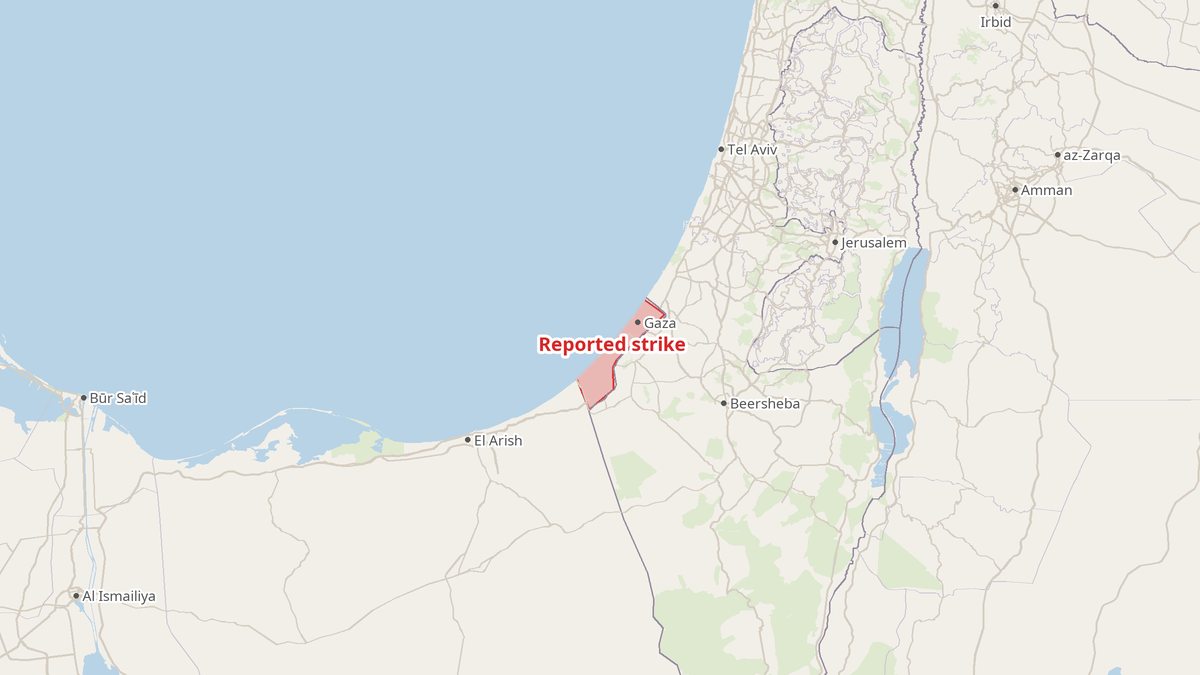
An Israeli airstrike killed two Palestinian men in Khan Younis on October 14. The military said they were smuggling weapons and military equipment into the Gaza Strip, and identified them as Basel Nabil Abd al-Rahman Kashta and Ahmad Raja al-Shaer. The strike came one day before this report.
The military said it acted “to remove a threat” to Israeli civilians and IDF troops stationed in Gaza. That framing matters. Soldiers remain on the ground in the territory, and weapons flowing in can reach militants who would use them against those troops.
The Security Picture
The smuggling case lies at the center of a separate dispute within Israel’s security establishment. Haaretz reported that Shin Bet chief David Zini has delayed transferring an agency assessment on smuggling goods into Gaza for several weeks. Prosecutors asked the agency to clarify its policy on Gaza smuggling and assess the security implications for cases against alleged smugglers.
The complication is personal. The assessment touches on issues relevant to the case against Zini’s brother, who faces charges. One source told Haaretz that Zini “must not go near these matters” while his brother is charged. Haaretz also reported that Zini couldn’t get involved in the case.
Prosecutors are still waiting for the document they requested, even as the military strikes alleged smugglers in Gaza. It’s an awkward overlap between a live security threat and an internal conflict of interest, and Israeli officials will have to resolve it.
Rebuilding Waits on Politics
Meanwhile, companies are already pricing the opportunity. Some of Israel’s largest engineering and infrastructure companies are competing for billions of dollars in contracts to rebuild Gaza, Haaretz reported. The US-led Board of Peace is preparing about 60 tenders for reconstruction work in areas of Gaza under Israeli control.
No contracts have been awarded. One executive described the mood plainly: “All the companies are gathering data and waiting for the political green light.”
The phrase “areas of Gaza under Israeli control” matters. Reconstruction is planned for zones where Israeli forces hold the ground, not the whole territory. That reflects a basic reality: building anything durable depends on who controls the territory and who can keep weapons out. Smuggling networks and militants have exploited cement, steel and heavy machinery before, which is why how materials enter Gaza and who monitors them matter beyond the commercial stakes.
The two threads connect, even if the reporting treats them separately. Companies are preparing bids for large-scale construction, while the military is still intercepting men it says were moving weapons into the Strip; the agency responsible for assessing smuggling policy hasn’t delivered its analysis to prosecutors.
What Comes Next
Two things remain unresolved. First, executives await the political decision that will determine whether the roughly 60 tenders turn into awarded contracts. Second, prosecutors are still waiting for the delayed Shin Bet assessment they requested.
Why This Matters: Rebuilding Gaza and securing Gaza are the same problem seen from two sides. Billions in reconstruction money can’t be spent safely in a territory where weapons still move through smuggling channels and Israeli troops remain stationed. From a security standpoint, any reconstruction plan depends on keeping materials and weapons apart, and on Israel’s security agencies delivering clear policy on smuggling without internal conflicts of interest clouding the work. Without that, the construction boom executives anticipate risks rebuilding on ground that militants can still arm.
- gaza strip
- reconstruction
- board of peace
- israel
- shin bet
- david zini
- smuggling
- khan younis