
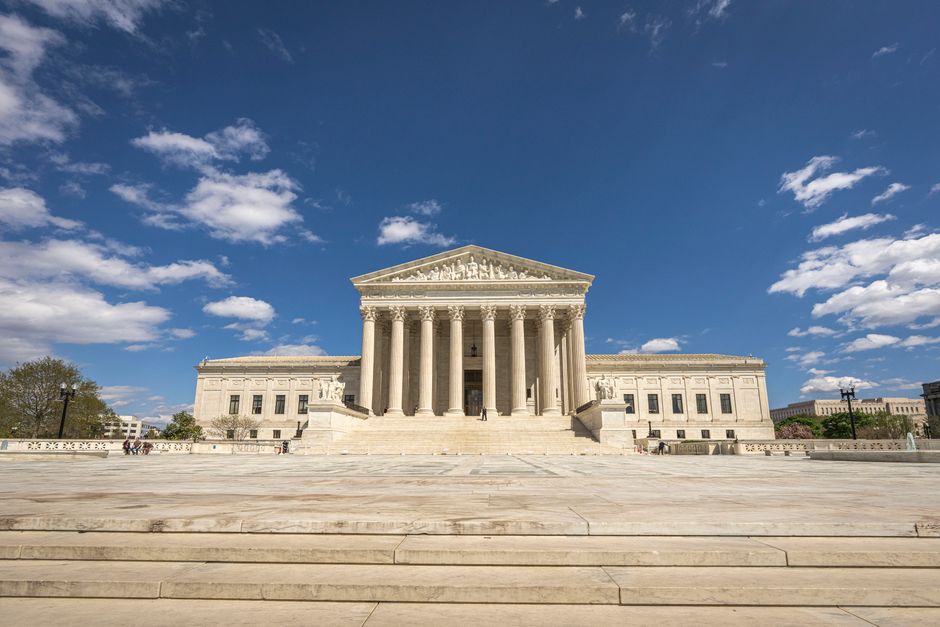
The Supreme Court will debate whether police may seek sweeping cellphone location data using geofence warrants, taking up a case that centers on law enforcement investigative powers and the constitutional protections governing digital privacy in an era of ubiquitous location tracking.
The high court's decision to hear arguments on geofence warrants comes as the investigative tool has divided lower courts across the country, creating inconsistent standards for when and how police may access vast amounts of location data from technology companies. The case raises Fourth Amendment concerns about unreasonable searches and seizures, testing whether traditional constitutional protections adequately address modern surveillance capabilities that allow law enforcement to identify everyone present in a specific geographic area during a particular time period.
The Geofence Warrant Dispute
Geofence warrants enable police to seek sweeping cellphone location data from service providers, casting a wide net that captures information about all devices present in a designated area during a specified timeframe. This investigative technique has become increasingly common as law enforcement agencies seek to identify suspects or witnesses by determining who was near a crime scene, but the practice has generated legal controversy over its scope and potential to ensnare innocent individuals.
The warrants have divided lower courts, with different federal circuits reaching conflicting conclusions about whether geofence requests comply with Fourth Amendment requirements. This split in judicial interpretation has created uncertainty for both law enforcement agencies seeking to use the tool and technology companies receiving the requests, as well as individuals whose location data may be swept up in these broad searches.
Constitutional Questions
The case raises Fourth Amendment concerns about the balance between effective law enforcement and constitutional protections against unreasonable searches. The Fourth Amendment traditionally requires warrants to be specific about the places to be searched and items to be seized, but geofence warrants by their nature cast a broad net, gathering data on potentially hundreds or thousands of devices before investigators narrow their focus to specific suspects.
Law enforcement agencies argue that geofence warrants provide a valuable investigative tool for solving serious crimes when traditional methods prove insufficient. The technique allows police to identify individuals who may have been present at crime scenes even when no other evidence points to specific suspects, potentially helping to solve cases that might otherwise remain unsolved.
Privacy and Law Enforcement Balance
The Supreme Court's consideration of geofence warrants will require justices to weigh law enforcement needs against privacy protections in the digital age. The court's ruling will establish nationwide standards for when police may seek sweeping location data, potentially either validating the investigative technique or imposing restrictions that limit its use.
The decision will affect not only how police conduct investigations but also how technology companies respond to law enforcement requests for user data, with implications for millions of Americans whose location information is routinely collected by their mobile devices.
Why This Matters:
The Supreme Court's upcoming decision on geofence warrants carries profound implications for law enforcement capabilities, constitutional protections, and the relationship between government power and individual privacy in the digital era. The ruling will establish binding precedent on whether police may use broad location data sweeps to investigate crimes, potentially affecting thousands of ongoing and future investigations across the country. For law enforcement, the case represents a test of whether modern investigative tools can withstand Fourth Amendment scrutiny, with restrictions potentially limiting police ability to solve crimes using location data. For individuals, the decision will determine the extent to which their movements can be monitored and analyzed by government authorities without specific probable cause linking them to criminal activity. The case also addresses fundamental questions about how constitutional protections designed for physical searches apply to digital information, with the court's interpretation potentially shaping privacy rights for years to come as technology continues to generate ever more detailed records of American citizens' daily activities and locations.