
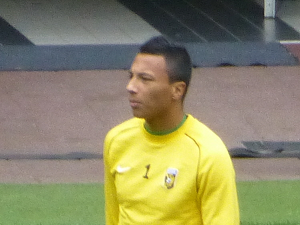
Curacao earned a point against Germany in a Group E World Cup match played in Houston, and goalkeeper Eloy Room made 15 saves in a performance that carried the result. For a team identified as the third-lowest ranked at the start of the tournament at No. 82, holding a European powerhouse to a draw was described as a historic moment in Curacao World Cup history.
Who Got Pushed Back
The match put the hierarchy of world football on full display. Germany, one of the sport’s heavyweights, was held to a 1-1 draw by Curacao until late in the first half before the European powerhouse took over for good. The scoreline and the save count tell the story of a smaller side absorbing pressure from a far more established machine and refusing to fold.
Eloy Room’s 15 saves were central to Curacao earning the point. The article describes the display as historic for Curacao, which entered the tournament as the third-lowest ranked team at No. 82. In the language of the sport’s rankings, that is where the apparatus places teams before the ball is even kicked: at the bottom, expected to be managed, outclassed, and moved aside.
The Bottom of the Table, the Weight of the Game
Curacao’s point came in a Group E World Cup match played in Houston. The setting matters because the result was not some abstract upset in a spreadsheet of elite competition; it was a real match in which Curacao had to withstand repeated attacks long enough to leave with something tangible. The 15 saves by Room were not decoration. They were the labor that made the point possible.
The report also said Germany routed newcomer Curacao 7-1 in another match referenced in the broader World Cup coverage. That earlier result sits beside this draw like a reminder of how quickly the hierarchy can swing from domination to resistance, and how the same tournament can turn one side into a punching bag and then, on another day, into a team that claws out a historic point.
Curacao was identified as the third-lowest ranked team at the start of the tournament at No. 82. That ranking framed expectations before the match and underscored the scale of the result. When a team that low in the pecking order forces a draw against Germany, the usual script of elite control gets interrupted, if only for a night.
What the Scoreline Could Not Hide
Curacao held Germany to a 1-1 draw until late in the first half before the European powerhouse took over for good. Even that phrasing carries the shape of the contest: Curacao’s resistance was real, but it was resistance under pressure from a side with greater resources, reputation, and reach.
Room’s performance was the decisive fact in the match report. Fifteen saves in a World Cup game is the kind of number that exposes how much work a goalkeeper can be forced to do when a smaller side is pinned back by a giant. The point Curacao earned was not handed down by the tournament structure. It was taken through a defensive stand that kept Germany from turning control into a full result.
The article’s description of the draw as historic for Curacao in World Cup history gives the match its place in the record. For a team ranked No. 82 at the start of the tournament, the point against Germany was not just another line in the standings. It was a rare break in the usual order, achieved through Room’s 15 saves and Curacao’s ability to stay alive long enough to force the result.