
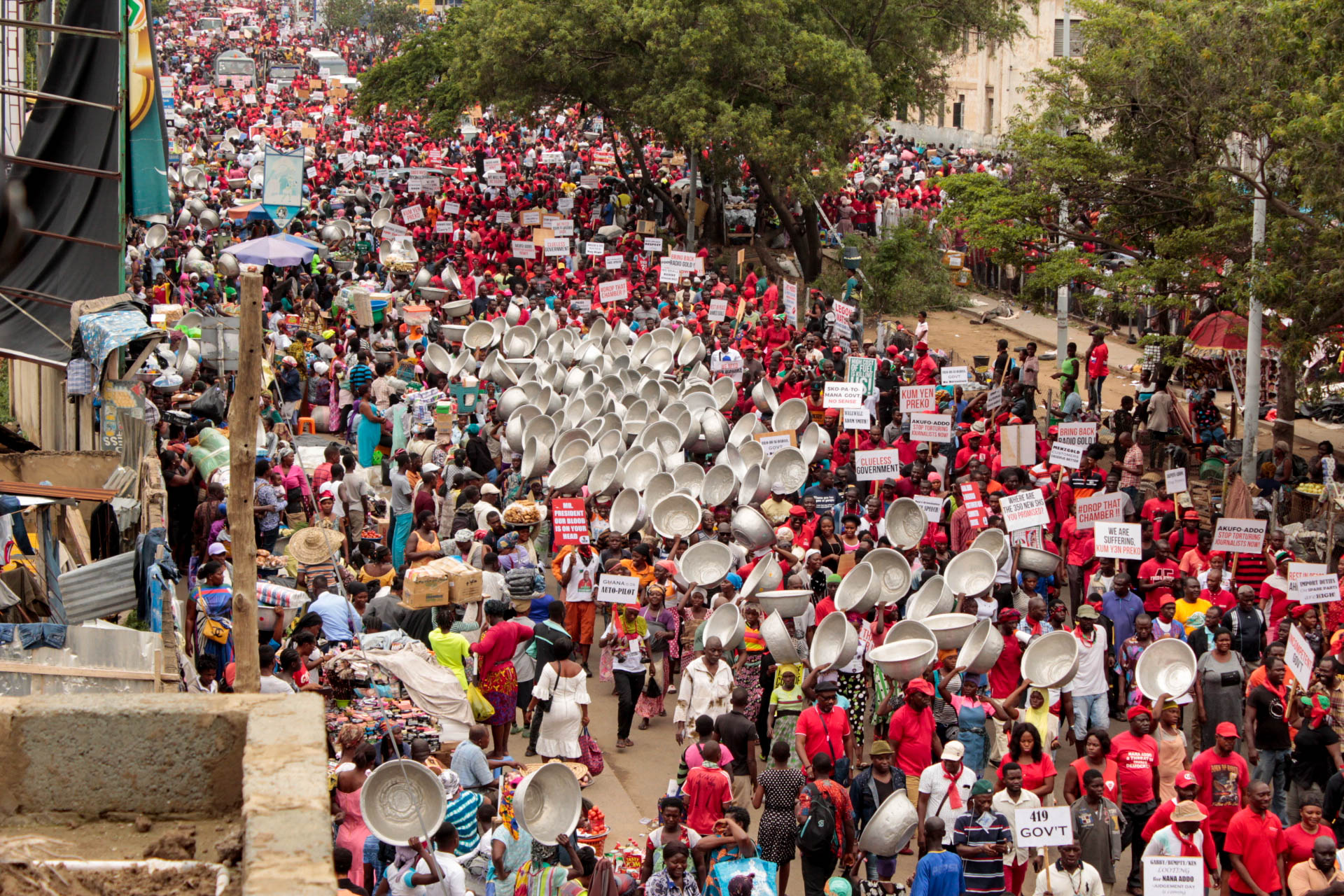
The Ghanaian Court of Appeal overturned a 10-year sentence for former MASLOC CEO Sedina Tamakloe-Attionu, ruling prosecutors failed to prove their case. This decision, which saw a high-ranking official escape punishment, stands in stark contrast to the state's actions against ordinary citizens. Ghana’s main opposition party, the New Patriotic Party (NPP), staged protests in Accra, accusing the ruling National Democratic Congress (NDC) government of systematically undermining democratic institutions and targeting political opponents.
Hundreds of NPP supporters, lawmakers, and party leaders marched through the capital, clad in red and black. They presented petitions to the Supreme Court, Parliament, and the Presidency. The demonstration, themed “Democracy Under Attack,” occurred one year after a helicopter crash that killed eight people, including government officials. The NPP cited recent court decisions, arrests of opposition members, and the removal of former Chief Justice Gertrude Torkornoo as evidence of a system in crisis.
Justice for Whom?
The acquittal of former MASLOC CEO Tamakloe-Attionu fueled the opposition's claims of unequal treatment within the justice system. Her overturned sentence, initially ten years, highlighted how the legal framework can protect those within the established power structures. This outcome, the NPP argued, demonstrated a clear disparity in how justice is applied. The party also pointed to the removal of former Chief Justice Gertrude Torkornoo as another instance raising concerns about the integrity of Ghana’s democratic institutions. These actions, they contend, weaken the very mechanisms meant to ensure accountability.
The State's Iron Fist
Beyond the courts, the opposition accused authorities of deploying security agencies to intimidate its members. This use of state force, they claimed, serves to suppress organized political challenges. Furthermore, the government has been criticized for limiting freedom of expression through prosecutions of social media users. These individuals face charges over content deemed offensive or false, a tactic that effectively silences critical voices and restricts the public's ability to question power. The ruling NDC government rejected these allegations, asserting its commitment to the rule of law. It maintained that security agencies merely enforce existing laws to protect public order, framing state repression as necessary for stability.
The NPP has a history of organizing such demonstrations. Previous protests included actions against the removal of former Chief Justice Gertrude Torkornoo and the arrest of one of its regional leaders. These repeated mobilizations underscore an ongoing struggle over the control and application of state power, revealing the deep divisions within the country's political elite. While the opposition frames its struggle in terms of "democracy under attack," the underlying facts point to a state apparatus that selectively applies its laws, protecting certain interests while suppressing others, particularly those who challenge the existing order, even if from within the bourgeois political spectrum. The focus remains on political freedoms, rather than the economic conditions that underpin true liberation for the working class.