
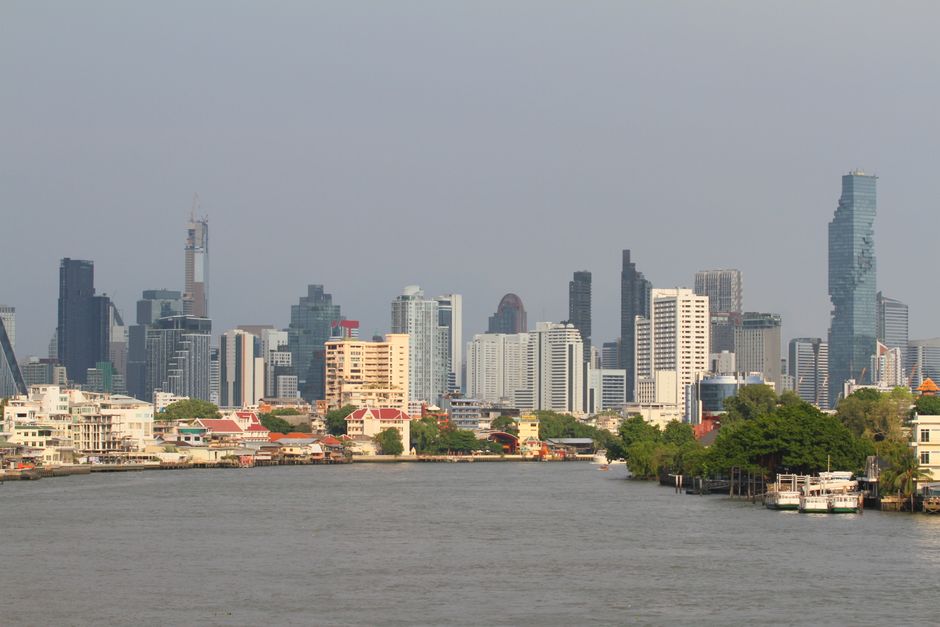
Developing countries now spend more than 10% of their revenue just paying interest on debt, nearly double the burden a decade ago. In 10 countries, interest payments exceed the entire public investment budget. That’s the picture from this week’s International Monetary Fund and World Bank Group meetings in Bangkok, where a swelling debt crisis collided with war in Iran, extreme weather and the rise of artificial intelligence.
The U.S. national debt recently passed $40 trillion. It stood at $36.2 trillion when President Trump began his second term in January 2025, according to The Hill opinion contributor John Mac Ghlionn, and has climbed by nearly $4 trillion since. Interest on that borrowing now exceeds federal spending on national defense or health care for millions of citizens, he wrote.
Who Pays the Price
Mac Ghlionn argued that borrowing costs could squeeze public services, infrastructure, disaster response and medical research. Creating money to meet obligations, he added, could erode the dollar’s purchasing power and push prices higher. His piece also noted that Trump increased his personal net worth by $2.2 billion during his second term, that sons Eric and Donald Jr. joined investment firms, and that twenty-year-old Barron Trump had reportedly accumulated a $150 million cryptocurrency fortune. It described the protracted war with Iran as draining tens of billions of dollars from the treasury.
The pressure falls hardest overseas. A United Nations Development Programme report released alongside the Bangkok meetings described a “triple shock”: high borrowing costs, an energy price spike and extreme weather driven by this year’s El Niño, which the report said was on course to set records. TIME reported that the Iran war raised fuel prices and fed inflation, and that the IMF warned public debt was unsustainable.
Governments are trying to cushion households. An International Energy Agency survey cited by the UNDP found 95 countries with fuel-price support policies, such as subsidies or fuel-tax cuts. Explicit fuel subsidies could top $1 trillion globally this year, the UNDP said. It called the approach unsustainable.
A Stalled Recovery
A Fortune commentary by Masood Ahmed, President Emeritus of the Center for Global Development; Mary Svenstrup, a non-resident fellow there; and Christina Segal-Knowles of The Rockefeller Foundation said more than half of developing countries face liquidity and financing challenges. Real per capita incomes in Sub-Saharan Africa rose about a fifth in the decade to 2015, they wrote. They haven’t grown in the decade since.
The authors said Covid-era low-cost external borrowing is coming due just as global borrowing costs rise and affordable financing dries up. The IMF and multilateral development banks helped countries avoid widespread default, they wrote, but didn’t provide enough to restore growth or resilience. G20 creditors keep withdrawing money, and much of the new multilateral funding goes straight back to repaying creditors. China, they said, has shifted over the past decade from net provider of finance to net extractor. A record share of poor countries net-repaid the IMF in 2026, a drain the authors said is set to widen by 2030.
Without action, around 40 of the world’s poorest countries could face a stark choice. They could cut spending at significant cost to growth and human lives, or finance deficits and rollovers through expensive private borrowing that could lead to default.
IMF Managing Director Kristalina Georgieva put the squeeze plainly to G20 finance ministers. “High refinancing needs and rising debt-service costs are constraining many developing economies... limiting their capacity to finance critical spending on infrastructure, health, and education, which undermines growth and, in turn, debt sustainability,” she said.
Climate and Energy Trade-Offs
Some import-dependent countries are making longer-term changes through renewable energy, energy efficiency and electrification, including subsidies for electric buses and lower tariffs on solar panels. But high debt and interest rates, along with El Niño and broader climate shocks, make it harder for others to finance infrastructure that would shield them from fossil-fuel price swings. TIME also reported that debt makes it harder to invest in AI infrastructure, and that countries’ AI preparedness may increasingly depend on the non-fossil share of their energy supply, given AI’s energy needs.
A Proposed Way Forward
The Fortune authors argued that most countries facing these pressures don’t have debt stocks requiring imminent restructuring. They called instead for a coordinated growth and investment effort. The Rockefeller Foundation has published a policy proposal for a Growth and Investment Reset, they said, and existing resources at international financial institutions plus newer financing mechanisms could make it relatively inexpensive for donors. They pointed to President Mahama of Ghana as among the leaders building a model of country-led growth supported by domestic resources and private investment.
Why This Matters: Debt service is becoming a competing claim on money that would otherwise build clinics, schools and power grids. When a record share of poor countries send more to the IMF than they receive, and multilateral lending largely flows back to creditors, the people absorbing the cost are those least responsible for the shocks. The same dynamic is visible in Washington, where interest payments now outweigh spending on defense or health care for millions. Whether through a coordinated growth-and-investment push or other collective action, the figures suggest that public institutions and multilateral cooperation, not market forces alone, will decide whether about 40 of the world’s poorest countries cut spending at the expense of lives or slide toward default.
- national debt
- developing countries
- debt crisis
- international monetary fund
- world bank group
- debt service
- climate change
- iran war