
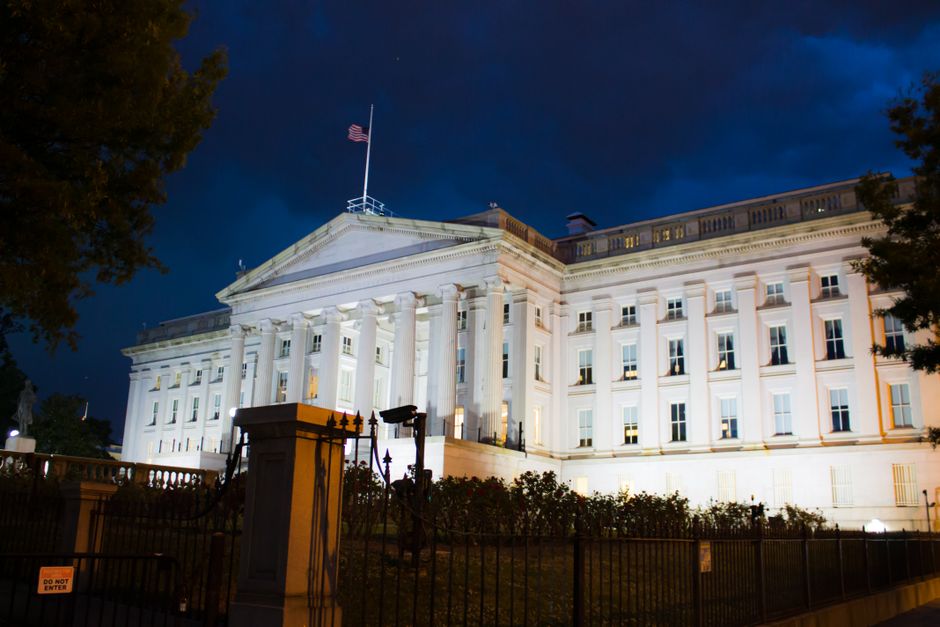
A U.S. Treasury proposal could widen financial screening for Latin American banks, remittance firms and dollar-clearing desks. Treasury’s October 1 notice targeted the A7 Network but named no Latin American institution. The proposed restrictions would bar fund transfers involving A7 sub-agents, extending U.S. sanctions enforcement across regional financial channels.
Who Sets the Rules
The October 1 action had three parts. The Financial Crimes Enforcement Network proposed the transfer restriction and issued a financial-institution alert, while the Office of Foreign Assets Control designated A7 a significant transnational criminal organisation. Treasury said the network is linked to Russia and that the Iranian regime used it to move money around sanctions.
Treasury Secretary Scott Bessent said the department was dismantling financial infrastructure that adversaries use to evade sanctions. Facilitators, he said, would lose access to the U.S. financial system. The notice puts access to that system at the centre of the enforcement action, while proposed screening could affect institutions beyond U.S. borders.
Treasury said A7 claims more than 2,000 transactions a day and historic volume exceeding 7.5 trillion roubles, about US$91.5 billion. A7 says it handled about 13% of Russia’s foreign-trade transactions in 2025. FinCEN found sub-agents processed more than US$17 billion from January 2025 to June 2026. Treasury linked the network to Iranian oil sales and weapons procurement.
On September 29, the U.S. Treasury announced a separate action imposing sanctions on 21 individuals and 25 companies tied to the Sinaloa Cartel. That action targeted Mexico. By contrast, the October 1 A7 notice named no Latin American institution, though a U.S. intelligence brief said wider screening could affect transfers involving regional financial institutions.
Market Costs Across the Region
The U.S. 10-year Treasury yield touched about 5.34% on October 1, its highest since April 2002, before closing near 5.24%. EODHD data put the close at 5.242%, compared with 5.291% on Wednesday. The yield serves as a benchmark affecting borrowing costs and Latin American credit spreads, including those for Brazil, Mexico, Colombia and dollar issuers from Chile to the Caribbean.
U.S. manufacturing prices rose as the yield moved. The Institute for Supply Management said its manufacturing prices index climbed to 77.9 in September from 71.1 in August, above the 72.3 forecast. The headline manufacturing index was 54.5, down from 54.6 and below the 55.0 forecast. New orders rose to 55.3 and employment to 52.7.
The global market briefing said gold rose 0.63% to US$4,182 an ounce while the dollar index increased to 102.014, describing the combination as demand for dollar liquidity and gold hedges. It also reported a small decline in the 10-year yield to 5.242%. Stocks barely moved. EODHD recorded the S&P 500 up 0.19% at 7,666.45 and the Dow Jones up 0.04% at 50,926.56.
Economic Signals and Regional Exposure
The U.S. September jobs report was scheduled for Friday, October 2, at 13:30 Lisbon time. EODHD’s calendar forecast 90,000 new jobs, compared with 162,000 in August, and unemployment of 4.1%. Average hourly earnings were forecast to rise 0.3% month on month. The briefing said a softer reading could ease the dollar and pressure on the Brazilian real, while a stronger one could lift the dollar before Brazil’s presidential election, which it identified as a key risk factor for Latin American markets.
Brazil’s August industrial production was forecast at 0.1% month on month and 0.3% year on year, compared with prior readings of 0.2% and minus 0.5%. September IPC-Fipe inflation was forecast at 0.3%, compared with 0.01% previously. The market table listed the Ibovespa at 187,197, up 0.46%, and USD/BRL at 5.2176, up 0.84%, citing October 1 close figures.
A separate U.S. intelligence brief said the 77.9 manufacturing prices reading and a forecast of 3.7% annual U.S. inflation on October 14 made a rapid decline in yields harder to expect. The brief forecast inflation at 3.7%, compared with 3.4% previously. Reports reviewed showed no popular protest or nationalist opposition to the sanctions. They provided no demographic figures or account of effects on native populations. Canada already has a free-trade agreement with Colombia, but the reports announced no new Canada–Latin America agreement.