
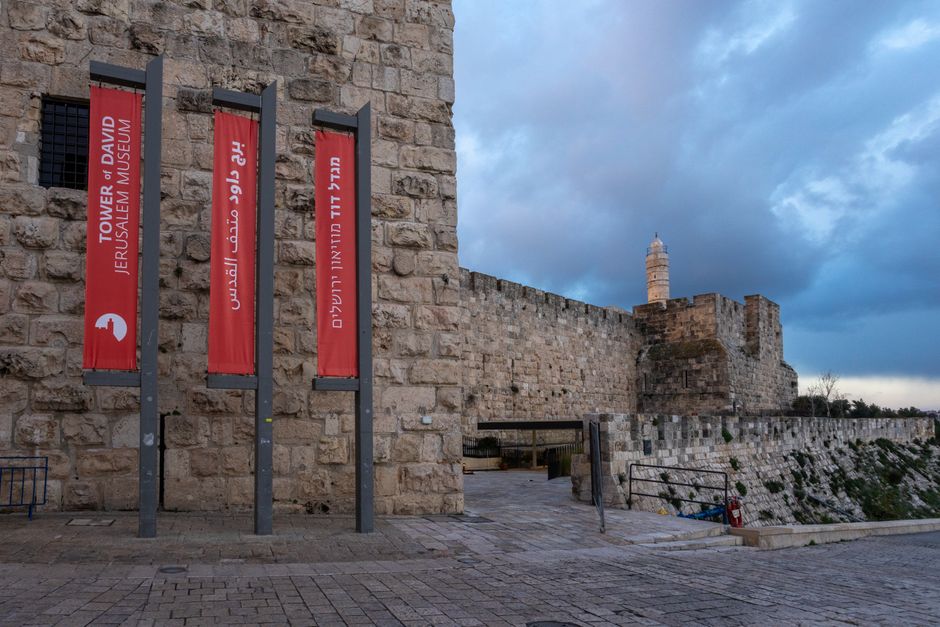
Guatemala will formally recognize Jerusalem's City of David archaeological site as part of its national inheritance during a ceremony Friday, becoming the third country after the United States and Argentina to install a commemorative plaque at the contested location in occupied East Jerusalem. The move extends diplomatic recognition to a site that sits in territory internationally recognized as occupied and subject to final status negotiations.
The plaque, signed by Guatemalan President Bernardo Arévalo, will be unveiled by Guatemala's Ambassador to Israel, Ava Atzum Arévalo Triboullier de Moscoso. Foreign Minister Gideon Sa'ar and US Ambassador to Israel Mike Huckabee are scheduled to attend, alongside Guatemalan dignitaries and members of the country's Congress.
The Political Geography
The City of David sits in the Silwan neighborhood of East Jerusalem, which Israel occupied in 1967 and later annexed in a move never recognized by the international community. The site has been at the center of ongoing tension between Israeli archaeological projects and Palestinian residents, many of whom have faced eviction proceedings as excavations expand. The City of David Foundation, which manages the site, is a private organization with close ties to the Israeli government and the settlement movement.
Inscribed in English and Spanish, the plaque describes the City of David as the site where Jerusalem's earliest communities were established and links its history to the relationship between Guatemala and Israel. The inscription says, "The City of David, site of Biblical Jerusalem, preserves the origins of a millennia-old history," and adds, "From this place, where Jerusalem's earliest communities were formed, the historic bond between Guatemala and Israel is evoked, forged upon respect, memory, and friendship between peoples." It concludes, "Guatemala honors the cultural heritage and the continuity of a civilization through time."
A Pattern of Recognition
Guatemala joins two other countries in formally recognizing the site. The United States placed a commemorative plaque recognizing the City of David's connection to American Judeo-Christian heritage, while Argentina presented its plaque during President Javier Milei's visit to Jerusalem about one year ago. All three countries have maintained close diplomatic alignment with Israel on Jerusalem's status.
Guatemala relocated its embassy to Jerusalem eight years ago, shortly after the United States made the same move. President Arévalo studied sociology at the Hebrew University of Jerusalem before beginning his diplomatic and political career.
Voices From the Ceremony
Ahead of the ceremony, Ambassador Arévalo de Moscoso said, "There are few places in the world where history can be experienced as directly as in the City of David." She said, "What is revealed here is not the history of a single nation; it is the earliest chapter of a city whose history has profoundly influenced the spiritual, historical, and cultural heritage of much of humanity, including Guatemala." She added, "To honor the origins of Jerusalem is also to preserve an essential part of humanity's historical heritage," and said, "Guatemala, a nation that understands the value of memory, recognizes the profound significance that this history holds for humanity and the special place it occupies in the memory of our people."
David Be'eri, an Israel Prize laureate and chairman of the City of David Foundation, said, "Here in the City of David, the prophet Isaiah described a Jerusalem that would one day be a house of prayer for all nations." He said, "Today, Guatemala has come to the place where Jerusalem began and recognized its own place in Jerusalem's story, and how this city has shaped the Guatemalan nation." He added, "Every day in the City of David, we continue unearthing a history and a heritage rich with significance for Israel and the Jewish people, and resonant with meaning for billions around the world."
Why This Matters:
Guatemala's formal recognition of the City of David as part of its national heritage extends diplomatic legitimacy to an archaeological site in occupied territory, undermining the international consensus that Jerusalem's final status must be resolved through negotiations. The City of David sits in Silwan, where Palestinian families have lived for generations and now face displacement as excavations expand beneath their homes. By endorsing the site without acknowledging the occupation or the rights of Palestinians living there, Guatemala joins a small group of countries whose Jerusalem policy breaks with decades of international law and UN resolutions. The ceremony reflects the growing willingness of some governments to treat occupied East Jerusalem as solely Israeli territory, eroding the legal framework that has long protected the possibility of a negotiated two-state solution. For the Palestinian residents of Silwan, these diplomatic gestures translate into real pressure: more funding for excavations, more legal challenges to their residency, and less international support for their claims to remain in their homes.