
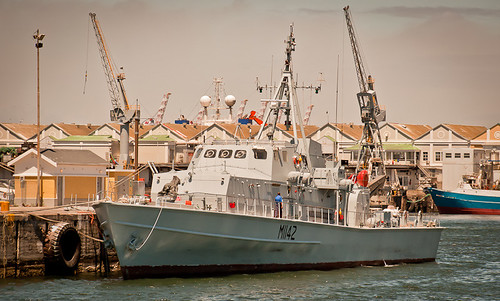
France has two minehunters and autonomous systems ready for possible Middle East operations while the Strait of Hormuz remains volatile, Rear Admiral Remi Thomas said. Warships, drones and military specialists now sit at the center of a proposed multinational effort to clear mines and protect commercial shipping.
The naval apparatus moves first
“We have two minehunters ready to not only be deployed but ready to operate in the Middle East, and we have also drones embarked on board Lyme Bay,” Thomas said. French sea drones already ride aboard the British Royal Fleet Auxiliary Lyme Bay, which France converted into a mother ship for unmanned minehunting systems. Thomas, the French navy's chief of staff for plans and programmes, said the systems “are ready to go now.”
France has positioned frigates in the region and stands ready to maintain a permanent naval presence once the US and Iran reach a workable peace agreement, Thomas said. The deployment plan comes as the Iran war shows few signs of ending. Iran is said to have laid dozens of mines during the conflict, leaving merchant ships vulnerable to missiles, drones and fast-boat attacks. Commercial traffic has returned in recent months, but seven attacks on commercial vessels took place in the past week.
France's navy expects to announce a tender in the coming days to charter two vessels as mother ships for its growing fleet of surface and submarine drones. Brig Gen Francois Watteau, who leads international naval projects at the defence procurement agency, said France would order 12 additional unmanned surface vessels for mine-clearing operations.
“What we are currently facing is a need in very quick time for a solution for mine warfare,” Watteau said. He called the system a mine-countermeasure “toolbox,” developed with Britain and similar to the system aboard Lyme Bay. The programme is intended to operate for up to 10 years, with deployments to the Middle East.
A coalition, when the waters allow
The proposed minesweeping force could help clear mines in the Red Sea, where the Houthis are said to have the potential to lay them. It would also operate in the Arabian Sea off Oman, on the approach to the Strait of Hormuz, a route heavily used by oil tankers.
Britain and France have formed a “coalition of the willing” to build a multinational mission supporting freedom of navigation and clearing mines. In May, 38 countries gave political backing to the proposed operation. At least 10 European Nato countries, including Germany, the Netherlands and Belgium, will contribute. Their traditional minesweeping ships would deploy when the waters offer a “permissive environment.”
That condition sits beside the promise of action. The ships have an assigned mission, but security conditions must allow their deployment. The proposed force is a military response, organized through governments and navies, to threats against commercial vessels and vital shipping routes.
Ships, crews and thinning buffers
RFA Lyme Bay sailed to the Middle East with more than 270 sailors, including more than 100 Royal Navy mine-warfare and explosive-ordnance specialists. HMS Dragon, a Type-45 destroyer, is in the Indian Ocean to assist with air defences and reassure commercial traffic when the Strait of Hormuz fully reopens.
The Anglo-French Maritime Mine Counter Measures programme uses unmanned surface vessels to tow high-resolution sonar systems in search of mines. Remotely operated vehicles then identify and destroy them. The machinery may be unmanned, but naval vessels, trained crews and military command still back the operation.
A Reuters headline says oil and fuel supply buffers are thinning as the conflict continues. The Reuters URL couldn't be fetched, and no further details from that report are available. The concrete account here is narrower: navies are preparing systems and personnel for a region where commercial traffic has faced repeated attacks, while the proposed mission still hinges on officials judging conditions permissive.