
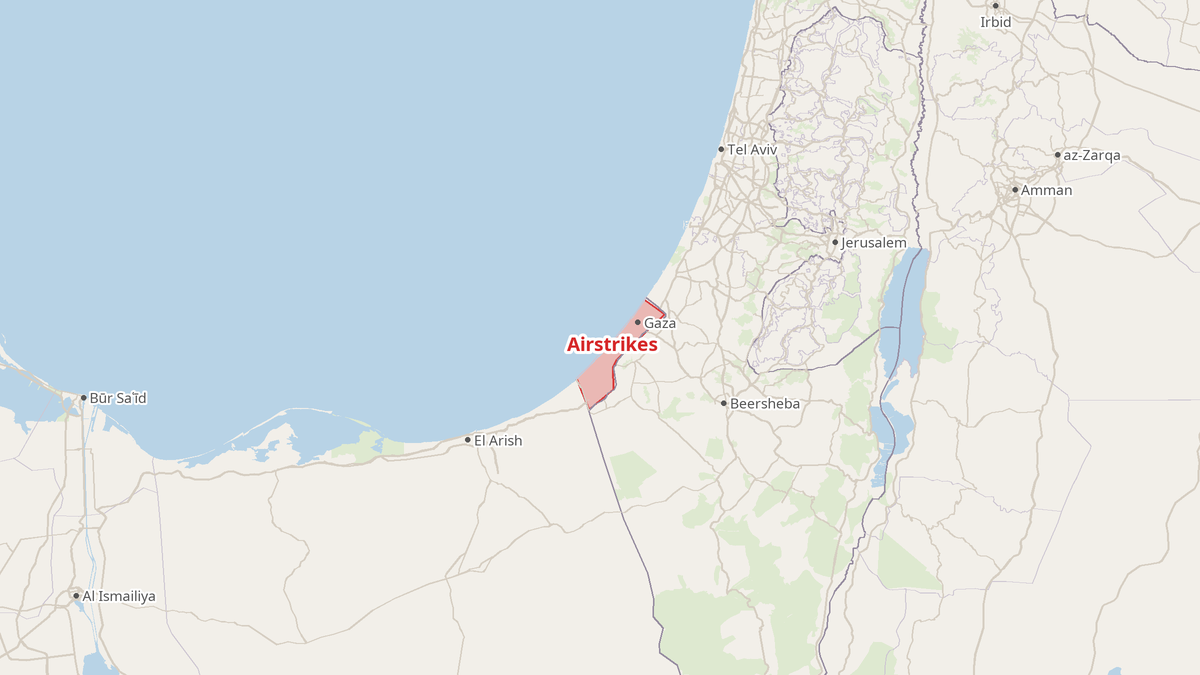
Israeli strikes in Gaza killed at least 10 people, local medics said, as Hamas leader Khalil al-Hayya said the group was consulting other Palestinian factions about a response. The dead included Khaled Abu Nada, whom the IDF and Shin Bet said they killed in a strike in Deir al-Balah. Civilians again bear the cost while armed authorities announce what they plan to do next.
Targeting and retaliation
Al-Hayya said the factions were discussing how to respond to what he called “the daily killings directed against us.” He added: “The equation of continued killing and siege under an agreement is unacceptable to us.” He didn’t specify what measures they were considering. The statement leaves the next move open; the bodies reported by local medics are already there.
The IDF and Shin Bet said Thursday that Abu Nada was a senior Hamas political bureau official. According to the report, he headed Hamas’s Economic Department and served as the organization’s education minister. The military said he managed Hamas’s banking and investment systems, directed funds toward terrorist activities, and worked to restore its military capabilities.
Prime Minister Benjamin Netanyahu and Defense Minister Israel Katz said in a joint statement Thursday that Israel would continue targeting Hamas leaders. “No terrorist is immune, and no one in the Hamas leadership will manage to evade us,” they said. The language is a declaration of an apparatus that claims the right to pursue its targets wherever it chooses; the civilian toll sits in the same account of the strikes.
Hamas’s security apparatus
On Wednesday, the IDF and Shin Bet confirmed the killing of Muhammad Majed Abu al-Ouf, whom the military identified as head of Hamas’s internal security apparatus in the northern Gaza Strip. The military said he worked to restore Hamas’s operational capabilities and oversaw executions of Palestinians who opposed the organization’s rule.
The strike followed the killing of Naeem Abu Nahel, identified as head of Hamas’s internal security apparatus in the Gaza Strip. Netanyahu and Katz confirmed his killing on Tuesday. Hamas condemned Abu Nahel’s killing and called on the international community to pressure Israel to adhere to the ceasefire agreement.
The reported executions point to another exercise of coercive power: Hamas’s security apparatus against Palestinians who opposed its rule. Israeli military operations and Hamas’s internal policing aren’t interchangeable in scale or consequence, but both put organized authority over people who have little say in how force is used. The report offers no voice from those Palestinians beyond the military’s account of their opposition and the claim that executions were overseen.
A roadmap, and the people left out
The killings come amid international efforts to advance U.S. President Donald Trump’s peace plan for Gaza. The plan includes Hamas’s disarmament and the creation of an alternative governing authority. On Monday, the Board of Peace announced that Hamas and other Palestinian factions had agreed to a disarmament roadmap: weapons would be relinquished, and civilian and security responsibilities transferred to a transitional Palestinian administration.
The Board of Peace said implementation remained limited and called on Israel and Hamas to meet their commitments under the agreement. That is the machinery on offer: armed groups and political bodies negotiate who will hold weapons, run security, and administer civilian life. The article reports no grassroots organization, mutual-aid effort, or community-led alternative in these discussions—and no account of what Gaza’s residents want from the proposed administration.
Hamas frames its consultations as a response to killing and siege. Israeli leaders promise that no Hamas leader will evade them. International officials press both sides to implement a plan centered on disarmament and a replacement authority. Meanwhile, local medics report at least 10 dead. The statements set out competing claims to security and control; ordinary people appear chiefly as casualties, targets, or subjects of the next governing arrangement.
- hamas
- gaza
- israel
- khalil al-hayya
- khaled abu nada
- airstrikes
- ceasefire agreement
- disarmament