
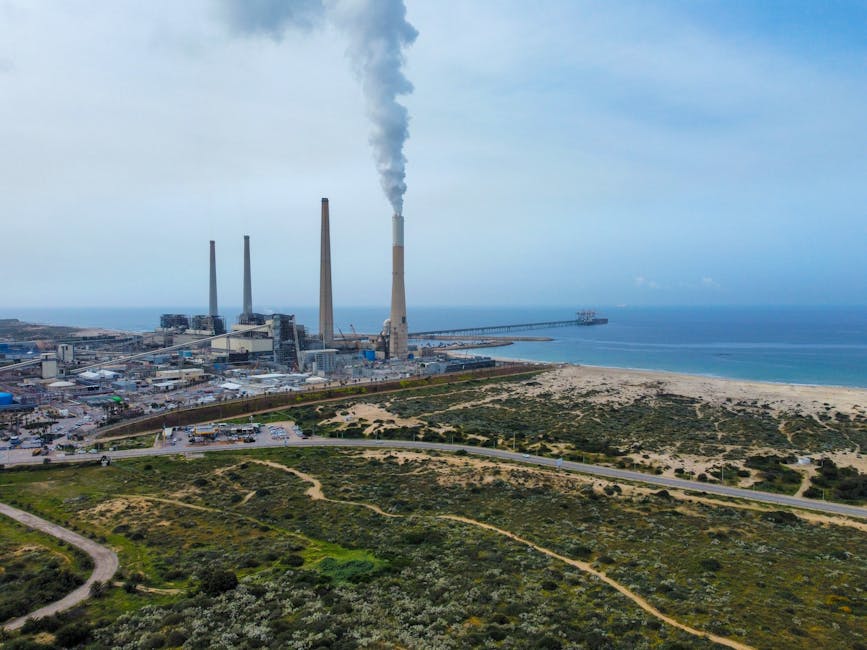
Leaflets bearing threats against Israel's water and electricity infrastructure turned up in the Tel Aviv area on Monday, and the Israel Police and the Shin Bet, Israel's internal security agency, said they would open an investigation. The message was blunt. "Not a single power plant, refinery, or desalination plant will remain in the occupied territories. From south to north, your energy and water arteries will shatter like glass," part of it read.
The security threat here is concrete, not rhetorical. Police said Tel Aviv residents found the leaflets bearing a QR code that led to a webpage the force considers "suspected threatening content," linked to the Handala group. An image shared by police showed the group threatening Israel's water desalination plants and energy sites if Israeli leaders "attack the energy infrastructure of the Resistance Front." That conditional phrasing ties the threat directly to the wider Iranian-aligned axis and its calculations about Israeli retaliation.
The group's language went beyond a single warning. "When the shadows of the Resistance decide to act, you will face a world where darkness and thirst will be your only companions, day and night," the message said. It described civilians being "forced to spend your lives in the depths of shelters devoid of electricity, water, and hope," and closed with what it called "the final warning." Police asked anyone who finds the leaflets to contact authorities.
The Cyber Front
The threat arrives one month after Microsoft's 2026 "Digital Defense Report," published October 5, ranked Israel the second-most targeted country in the world by cyberattacks, and first in the Middle East. The United States ranked first with 531 observed events, while Israel recorded 210. Taiwan and Japan followed with 193 and 172, before a significant drop-off, with the United Kingdom in fifth place. The report said Israel had experienced a 21% surge in ransomware attacks since 2025.
Israel National Cyber Directorate Chief Yossi Karadi described the country as "in an intense campaign in cyberspace and standing at the forefront of global threats." He argued that keeping services running under such pressure is no small thing. "The fact that Israel maintains functional continuity under such a volume of threats is not to be taken for granted," he said, adding that the result came from an integrated defense system spanning the INCD, defense bodies, government ministries, the economy, the cyber industry, and global companies. Cyberspace, he said, might have "no missiles in the air, but the fight is waged on a 24/7 basis."
Who Is Handala
Handala has been one of the main groups targeting Israel since the October 7 massacre in 2023, and the group's ties run back to Tehran. According to a US Justice Department assessment, it has links to Iran's Intelligence and Security Ministry, even though it portrays itself as an "independent organization." That gap between self-description and state sponsorship matters. Hacktivist labels can obscure who is really pulling the strings, and the sponsorship model lets Tehran deny direct responsibility while still directing operations against Israeli civilian systems.
The pattern is familiar to anyone tracking the region. Iran funds and arms a network of proxies, and those proxies strike at targets that are hard to defend in conventional terms. A water desalination plant or a power station is a soft, civilian-facing asset. Attacking one does not require an army. It requires a keyboard and a threat that frightens the public.
Why This Matters:
Israel's dependence on desalination and centralized electricity generation makes these systems strategically significant in a way that few other targets are. A successful attack on either could leave shelters without power or water during a period of heightened military tension, and the leaflets are designed to make that prospect feel real to ordinary Israelis. The state's response will test whether its cyber defenses can match the scale of the campaign, which the Microsoft figures suggest is substantial. Iran's use of a proxy with a claimed independent identity also complicates deterrence, because retaliation depends on attribution, and attribution is exactly what Tehran's arrangement is built to blur. Israeli authorities now have to protect critical infrastructure while the threat source remains deliberately ambiguous, and that is a difficult security problem with no quick solution.
- handala
- israel
- cyberattacks
- hacktivist
- water infrastructure
- electricity infrastructure
- tel aviv
- microsoft