
Ebola has killed 5,376 people across Africa, including 5,372 in the Democratic Republic of the Congo, according to Africa Centres for Disease Control and Prevention data reported Monday. The Bundibugyo strain has infected about 10,444 people in the DRC, Uganda and Kenya, and its death rate sits above 50%. There's no approved treatment or vaccine for it.
That gap is the heart of the problem. And it's unfolding while a second crisis, a renewed war in northern Ethiopia, tests another fragile health system and an economy that has been one of the continent's fastest growing.
An Outbreak With No Approved Answer
The DRC declared its 17th and largest Ebola outbreak in mid-May 2026, about five months ago. It remains the epicentre. The virus has crossed borders more than once since.
Uganda recorded 20 cases, almost all among people who had travelled from the DRC, before it was declared Ebola-free in August, about three months ago. Kenya logged its first recorded Ebola cases in October: two deaths and nine infections. Abuja reported its first imported case in more than a decade, also in October, with no deaths. In July, France reported one case involving a health worker returning from the DRC. Two rounds of tests on two suspected cases in northeast Nigeria came back negative.
Clinical trials have begun in recent weeks with the Ervebo vaccine, which has proved effective against the more common Zaire strain. Whether it works against Bundibugyo is the open question.
Ethiopia's Health System Near Collapse
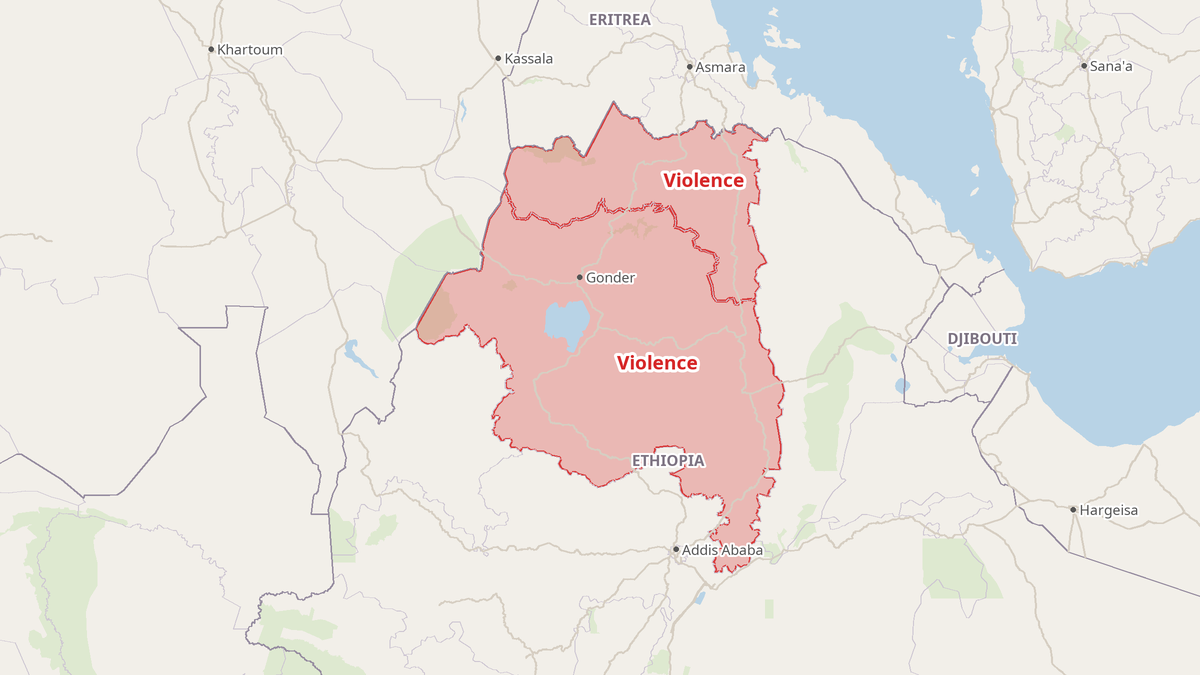
In northern Ethiopia, World Health Organization Director-General Tedros Adhanom Ghebreyesus (PhD) warned that violence is "pushing an already fragile health system closer to collapse." Hospitals lack health workers, medicines and equipment. Ambulance services are severely limited. Insecurity is blocking life-saving supplies from reaching some areas.
Tedros called drone strikes and civilian casualties something that has "tragically become frequent across Ethiopia." The latest attacks came within two days. On October 29, a drone struck the Hayiq Jari 2 Turk displacement camp in Amhara, killing at least 16 civilians and injuring 22, according to residents who spoke to Addis Standard. They said the dead included women, children and elderly people. More than 20 household shelters reportedly caught fire. The next day, at least 12 civilians died when a drone hit people collecting sorghum scattered from a grain truck in Rama town, Central Tigray. An AFP witness reported 13 deaths, while a medical source at a nearby hospital confirmed 11.
The strikes followed renewed fighting between Ethiopian Government forces and rebel groups in Amhara, Tigray and Afar in September, nearly four years after the Pretoria peace deal. UN Secretary-General António Guterres urged the parties to "agree without delay to a cessation of hostilities" and to engage in good faith with mediation efforts.
What War Costs a Growing Economy
The International Monetary Fund forecasts real growth of 9.2% for 2025–26, driven partly by agriculture, mining and electricity generation. Growth was 7.2% in 2022–23 and 8.1% in 2023–24 after the Pretoria agreement. But the foundations are thin. Ethiopia defaulted on a Eurobond interest payment in late 2023, and an IMF-supported program launched in 2024 aims to fix structural weaknesses.
London-based financial analyst Abdulmenan Mohammed told DW that "if there is a major conflict [...] the current economic growth will not be sustainable." He warned that "a substantial share of government resources would be tied up in military spending that would otherwise be available for infrastructure, education and social services."
The earlier war left a long bill. A World Bank-backed assessment put damage from conflicts between November 2020 and December 2021 at more than $22.6 billion, with economic losses of around $6 billion. Reconstruction and recovery needs total an estimated $19.7 billion under a 2023–2028 plan, though whether it can be fully funded on time remains uncertain. That figure is the total need, not an annual cost and not a measure of damage from the current escalation.
The IMF forecasts average inflation of 11.7% for 2025–26. Mohammed said inflation is likely to rise if fighting escalates. More domestic borrowing to fund the military could make credit harder for private businesses to get. Military demand for foreign currency could squeeze private importers, pressure the birr and raise the cost of imported goods, fuel and industrial inputs. These are risks, not certainties, and the effects would depend on export earnings, monetary policy and international markets.
Agriculture, tourism and hospitality are most exposed. "Agriculture is especially exposed because much of the fighting takes place in rural areas where farmers work," Mohammed said. Some areas also face insufficient rainfall and poor harvest prospects. Rising prices and uncertain incomes would fall hardest on poorer households.
There's no concrete evidence yet that companies are leaving Ethiopia for neighbors like Kenya. Mohammed saw no demonstrable economic advantage for Kenya at this stage, noting that tax administration, public services and governance also shape investment decisions.
Why This Matters:
Two separate crises show how quickly public health and public finances can unravel together. An outbreak with no approved vaccine reached four countries outside the DRC in a matter of months, and the response so far rests on trials and border vigilance. In Ethiopia, the IMF's 9.2% growth forecast depends on stability that renewed fighting puts at risk. A government that must divert money to the military has less for roads, power and clinics, and heavier domestic borrowing can crowd out private credit. Investors and lenders watch for exactly this. Growth that took years to rebuild after Pretoria could stall, while a $19.7 billion reconstruction need still waits for funding. Peace isn't only a humanitarian goal here. It's the precondition for the private-sector expansion that pays for everything else.
- ebola outbreak
- democratic republic of the congo
- ethiopia
- health systems
- drone strikes
- tigray
- amhara
- world health organization