
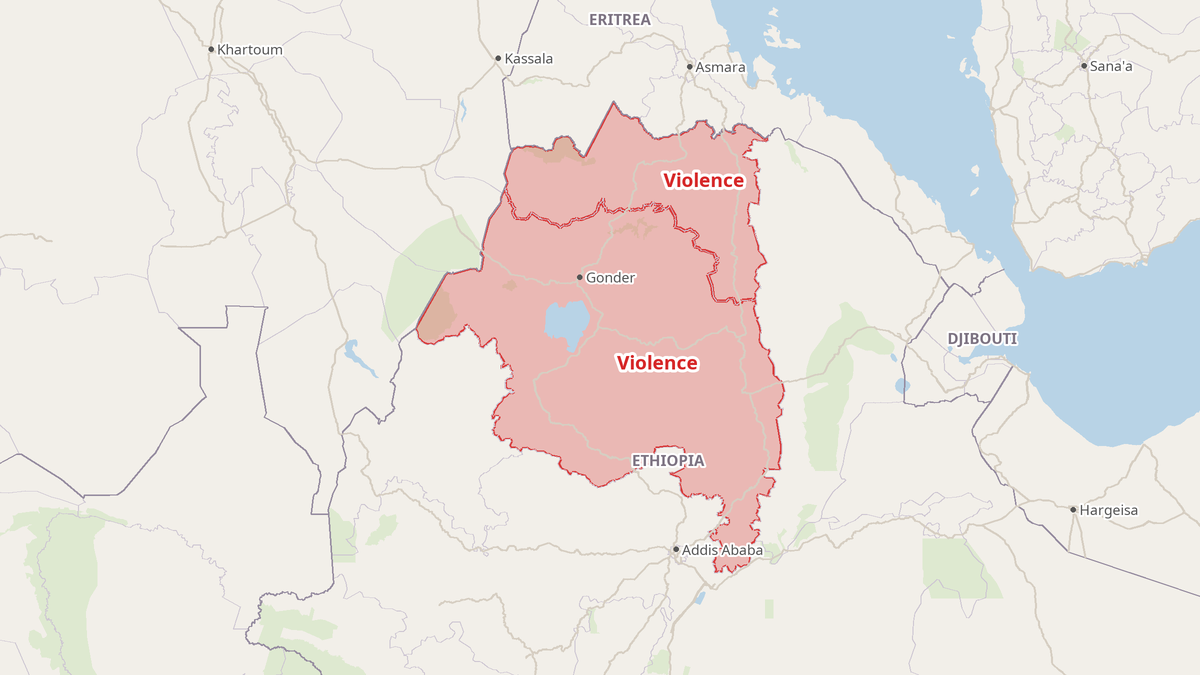
Ebola has killed 5,376 people across Africa. Renewed fighting in northern Ethiopia has also killed civilians and pushed an already fragile health system closer to collapse, the World Health Organization says. Hospitals in Ethiopia face shortages of health workers, medicines and equipment; insecurity blocks some medical supplies, and ambulance services are severely limited.
The two crises show what people with the least access to protection and care pay. There’s no approved treatment or vaccine for the Bundibugyo strain, which has infected about 10,444 people in the Democratic Republic of the Congo, Uganda and Kenya, with a death rate above 50%.
Who Pays for Conflict
On October 29, at least 16 civilians died and 22 were injured when a drone struck the Hayiq Jari 2 Turk internally displaced persons camp in Amhara. Camp residents told Addis Standard that women, children and elderly people were among those killed, including an eight-year-old girl, three pregnant women and students. Witnesses said the camp came under attack at least five times while displaced people sheltered there.
More than 20 household shelters reportedly caught fire. Families lost their shelter and belongings. On October 30, a drone struck people gathering sorghum scattered from a grain truck hit by an earlier drone strike in Rama town, Central Tigray, killing at least 12 civilians, according to local sources who spoke to Addis Standard. A witness told AFP that 13 people died; a medical source at a nearby hospital confirmed 11 fatalities and said two additional deaths had been reported.
Renewed fighting between Ethiopian Government forces and rebel groups resumed in Amhara, Tigray and Afar in September. The latest attacks add to civilian casualties reported across Tigray, Amhara and Oromia amid military operations against armed groups. UN Secretary-General António Guterres said he was appalled by attacks on civilians, including health facilities. He called on parties to spare civilians and critical infrastructure and agree to a cessation of hostilities.
WHO Director-General Tedros Adhanom Ghebreyesus (PhD) called reports of civilian casualties in Amhara and Tigray “deeply disturbing.” He said drone attacks and civilian casualties had “tragically become frequent across Ethiopia.” “The violence in northern Ethiopia is pushing an already fragile health system closer to collapse,” he warned.
Hospitals lack workers, medicines and equipment. Insecurity also prevents life-saving medical supplies from reaching some areas. WHO and United Nations partners are working to deliver additional supplies. Tedros warned that continued fighting could deny people emergency services, maternal and child health care and disease treatment. “Civilians must be protected. Health workers and humanitarian supplies must be allowed to reach those in need,” he said.
Growth Alongside Scarcity
The International Monetary Fund forecasts Ethiopia’s real growth at 9.2% for the 2025–26 fiscal year, driven in part by agriculture, mining and electricity generation. London-based financial analyst Abdulmenan Mohammed, however, told DW: “If there is a major conflict [...] the current economic growth will not be sustainable.” Growth can continue in sectors and regions outside conflict zones even as affected areas suffer.
A World Bank-backed assessment put damage from several conflicts between November 2020 and December 2021 at more than $22.6 billion, with economic losses of around $6 billion. The estimated $19.7 billion for reconstruction and recovery is the total funding need, not an annual cost or damage estimate for the current escalation. A reconstruction plan covers 2023 to 2028, but whether it can receive full funding and finish on time remains uncertain.
Mohammed said renewed conflict could increase government spending on military personnel, equipment and logistics while reducing activity and tax revenue in affected areas. “A substantial share of government resources would be tied up in military spending that would otherwise be available for infrastructure, education and social services,” he said. The IMF forecasts average inflation of 11.7% for 2025–26. Mohammed said further escalation could push inflation higher, with rising prices and uncertain incomes weighing especially on poorer households.
Outbreak Crosses Borders
The Democratic Republic of the Congo is the epicentre of the Ebola outbreak and declared its 17th and largest outbreak in mid-May 2026. Uganda recorded 20 cases, almost all among people who had travelled from the DRC, before it was declared Ebola-free in August. Kenya recorded two deaths and nine infections in October, its first recorded Ebola cases.
Abuja reported its first imported case in October, its first in more than a decade, and no deaths. France reported one case in July involving a health worker returning from the DRC. Clinical trials have begun in recent weeks with the Ervebo vaccine, which has proved effective against the more common Zaire strain. Bundibugyo still has no approved treatment or vaccine.
- ebola outbreak
- democratic republic of the congo
- ethiopia
- health systems
- drone strikes
- tigray
- amhara
- world health organization