
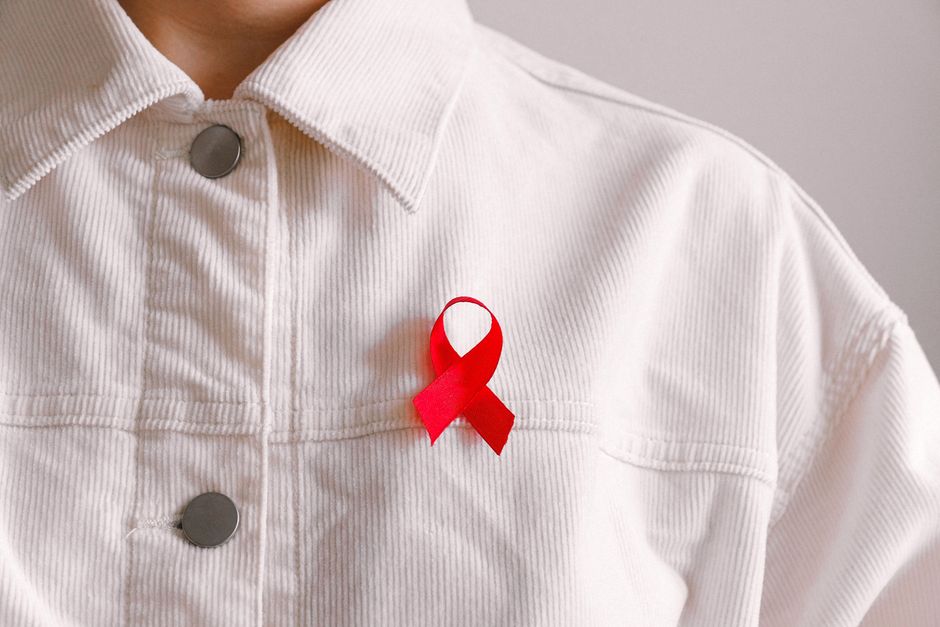
A Lancet HIV Commission on Ageing report said that in 2025 an estimated 11.5 million people living with HIV, or 29 per cent, were aged 50 years and older, and that the number is projected to rise to 20.2 million by 2040. The report said 96 per cent will live in low- and middle-income countries, with sub-Saharan Africa continuing to shoulder the greatest burden of the global HIV epidemic. That’s the human cost when health systems are built to serve the young, the wealthy, and the already comfortable.
Who Gets Left Behind
Luicer Anne Ingasia Olubayo, a Visiting Researcher at Sydney Brenner Institute for Molecular Bioscience, University of the Witwatersrand, and Francesc Xavier Gomez-Olive Casas, Research Manager at MRC/Wits Agincourt Research Unit, University of the Witwatersrand, said much of the change reflects the success of antiretroviral therapy, which has enabled millions of people who acquired HIV earlier in life to grow older. They said the challenge has gone beyond helping people live longer to ensuring they age well, maintaining good health, independence and quality of life throughout older age.
They said older adults are also acquiring HIV and being diagnosed later in life, while prevention and testing campaigns remain focused on younger people. Older adults are often assumed to be at low risk because of the misconception that they are no longer sexually active, and healthcare workers may be less likely to discuss sexual health, recommend testing or offer prevention options such as PrEP. Those assumptions contribute to delayed diagnosis and treatment and discrimination within healthcare.
The authors said their recent Lancet Healthy Longevity study used data from the Africa Wits-Indepth Partnership for Genomic Research, or AWI-Gen, and provided a longitudinal African perspective. They said they analysed data from more than 7,000 adults 40 years and older in Kenya and South Africa, including rural and urban populations, with data collected in 2013-2016 and 2019-2022. The data helps examine what is changing over time, whether treatment outcomes are improving and which groups remain overlooked.
They said HIV risk was shaped by gender, education, socioeconomic circumstances and place. Widowed women had the highest HIV prevalence, at 30.8 per cent. They said this may reflect economic insecurity and persistent gender inequalities that continue to influence HIV vulnerability later in life.
What the Clinics Miss
The authors said stigma and ageism compound the problem, and that the perception HIV is a disease of younger people can make diagnosis in later life feel especially shameful. Older adults may delay testing or avoid discussing sexual health because they do not perceive themselves, or are not perceived by others, as being at risk, affecting testing, disclosure, mental health and continued engagement with care.
They said the Lancet Commission supports their findings that the population over 50 is more likely to receive a delayed HIV diagnosis and calls for tailored HIV prevention and screening for this age group, along with thoughtful screening and management of age-related comorbidity and integration of HIV services with health services provided to the general public. Their work does not study HIV in isolation, and long-term research by the MRC/Wits Agincourt unit and AWI-Gen has examined ageing and health in African populations for years.
They said longitudinal data allow researchers to consider HIV alongside hypertension, diabetes, obesity and other chronic conditions and to investigate how these conditions accumulate and interact as people age. A person may be taking antiretroviral therapy with medicines for hypertension and diabetes while also coping with reduced mobility, depression or financial insecurity, and several individually appropriate treatment guidelines can become unmanageable when applied to the same person.
They said care must consider physiological rather than chronological age, functional ability, polypharmacy and what matters to the individual. Health systems must adapt so that an older person does not have to attend separate clinics and make repeated journeys, particularly in rural areas, and HIV, chronic disease and healthy-ageing services need to be brought closer together, with HIV testing available through chronic disease services and HIV care routinely addressing noncommunicable diseases and mental health.
In Uganda, a letter said philanthropy is the missing piece in the fight against cancer. The letter said Ugandan cancers are unique and require locally tailored investment and research, and that philanthropy is a critical missing piece in fighting cancer.
Money, Conditions, and the Gatekeepers
In South Africa, an editorial said the US National Institutes of Health’s surprise announcement that it is lifting the ban on funding South African research is good news, but does not absolve the government of its duty to step up funding for local scientists. The editorial said that when Donald Trump was inaugurated for a second term in early 2025, South Africa was the largest foreign beneficiary of awards from the NIH. It said the grants helped South African scientists build centres for HIV and tuberculosis research at the forefront of work to develop new treatments and prevention tools that benefited the world.
The editorial said Trump’s return to power dealt South African researchers a double whammy because his administration wound down the US President’s Emergency Plan for Aids Relief, which had provided both programmatic support and research grants to countries hard hit by HIV/Aids, and issued a specific executive order to terminate all foreign aid and assistance to South Africa. It said Trump justified targeting South Africa on the basis of its criticism of Israel and widely discredited claims that its government was discriminating against white Afrikaners.
The editorial said Trump’s directives scrapped almost R450m that had been destined for South Africa, according to the SA Medical Research Council. Scientists were forced to halt trials funded with Pepfar grants administered by USAID and pause or terminate many NIH-supported projects, some of which have since resumed but not all. NIH director Jay Bhattacharya’s decision to reverse the ban opens the way for South African researchers to once again compete for awards, but with caveats: successful applicants must demonstrate how their projects will directly benefit Americans, South Africa will be excluded from the early career grants offered by the NIH’s Fogarty Centre, and the NIH is itself in flux with slower grant approvals, new screening tools to exclude projects it deems too woke, and a new peer review scoring system.
The editorial said the MRC raised R400m in emergency funding from organisations such as the Gates Foundation and the Wellcome Trust, which the Treasury agreed to match, but that this is not a long-term solution. The only way to buffer South African scientists from Trump’s whims, or those of any other chimeric leader, is for the government to commit to spending a greater share of its budget on research and development.
An Ebola response editorial said epidemics move fast and that every day of delay in funding means one more village waiting for treatment, one more surveillance team unable to reach a community and one more opportunity for Ebola to spread. It said the Ebola outbreak in the Democratic Republic of Congo and Uganda has generated roughly $1.2 billion in pledged commitments, but that epidemics are contained when commitments turn into funding that is disbursed quickly, aligned with national priorities and converted into measurable results on the ground.
The editorial said African heads of state have set out an operating principle grounded in the Lusaka Agenda on accountability and alignment: countries lead, the Africa Centres for Disease Control and Prevention coordinates, and partners support. It said DRC and Uganda have mobilised substantial domestic resources, complemented by continental solidarity from 16 African countries totalling $118 million for the response.
It said the Africa CDC and the World Health Organization helped mobilise further support from the World Bank, the United States, Europe, the United Kingdom, Japan, China, the Pandemic Fund, Singapore, the United Arab Emirates, Thailand, the African Development Bank, the Gates Foundation, Gavi, the Global Fund and other partners. The World Bank has provided $333 million to African countries to date, or 41 per cent of the $816 million already disbursed, and reforms at the Bank under President Ajay Banga have demonstrated the value of simpler, faster, more streamlined procedures and disbursements.
The editorial said Uganda illustrates both national leadership and the dividends of preparedness, with Ebola transmission interrupted and the end of the outbreak declared on 28 July, while enhanced surveillance was maintained. Burundi illustrates the value of flexibility in preparedness, with the World Bank and the Pandemic Fund topping up domestic funding to scale up national and cross-border activities.
It said the World Bank’s additional $18 million grant to the Africa CDC supports cross-border operations, technical assistance and strategic coordination, and that the World Bank’s $280 million regional health security programme in Central African Republic and neighbouring Central African states strengthens surveillance, laboratories, emergency response workforces, contingency planning and One Health collaboration.
The editorial quoted Professor Senait Fisseha as saying at the African Union’s Extraordinary Summit in Ghana in July 2026: “Africa doesn’t need new initiatives; it needs sustained, long-term investment in countries and continental institutions that strengthens ownership, leadership and accountability.” It said that in 2022 the World Bank made an unprecedented multi-year investment of $100 million in the Africa CDC, and that four years on the investment has proven its worth.
It said the Africa CDC has strengthened its technical and operational capacity, met rigorous international fiduciary and institutional standards, won the backing of several donors after passing due-diligence assessments, and been accredited as an implementing entity of the Pandemic Fund, which is providing up to $220.6 million to accelerate support for the fight against Ebola in Africa. Ebola will ultimately be defeated village by village, community by community, and the financing model will determine how quickly lives are saved and how well prepared countries are for the next outbreak.