
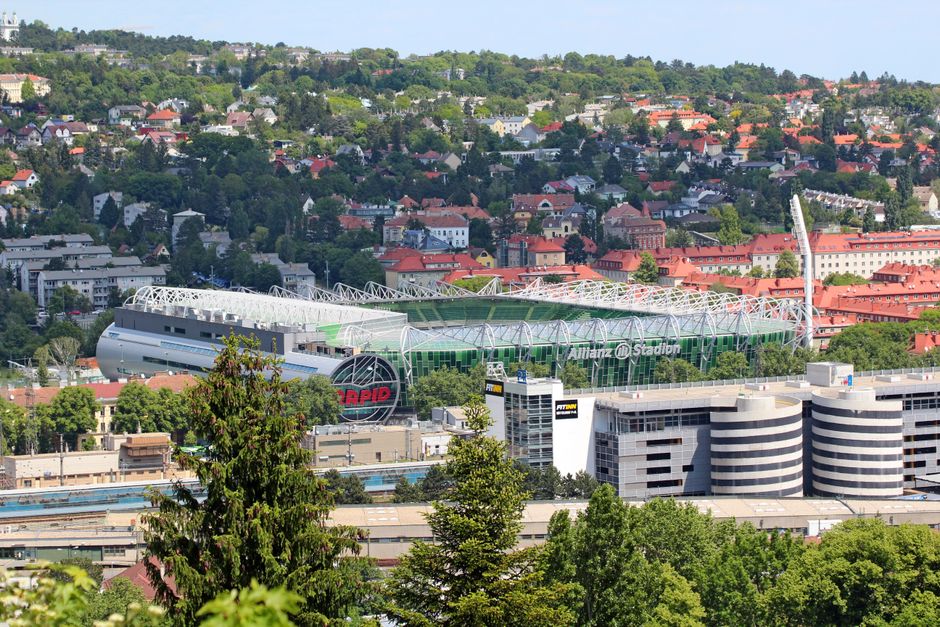
The Conference League play-off second leg away to Rapid Vienna on Wednesday night has been framed as a 50-50 tie, with Rapid Vienna having looked a couple of goals ahead last Thursday before Beau Reus made some smart saves. That’s the modern football machine in miniature: a club chasing European progress, a squad stretched by injury, and a calendar that turns every match into a test of who can keep the assembly line moving.
The European grind
Rapid Vienna could have been ahead by more than they were, but Hearts stayed alive through Reus and then found a spell in which Rapid looked very gettable during the first 30 minutes of the second half. Josh McPake was forced off through injury, and the article says Hearts might have gone on to win had he stayed on. Small margins. Big consequences. That’s how these competitions work, with players’ bodies and clubs’ ambitions both treated as inputs in a system that demands constant output.
The writer says Hearts are starting to click from an attacking perspective for Wouter Vrancken and his team, but there’s still fragility defensively, especially when defending set-pieces. That was one of their strengths last season. The shift matters because it shows a side trying to build something coherent while still carrying the usual instability of elite football: one week a strength, the next week a weakness, all under the pressure of results, selection and the transfer window.
To progress, Hearts will need to summon the spirit of great European away nights gone by, like Basel in 2004, Bordeaux in 2003 or Austria Vienna in 1988. The article says Wednesday’s result is not season defining, and hopes this generation of Jambos can savour an away victory to remember for years to come. The language is nostalgic, but the reality is blunt. European football is sold as memory and glory, yet it runs on constant churn, short-term pressure and the expectation that clubs keep feeding the machine.
Players in, players out
The piece says that for the Jamestown Analytics model to fully flourish, European league-phase football would make it easier to showcase players. That’s the business logic laid bare. Football as a showroom. Football as a pipeline. The article also says there is still plenty to look forward to domestically, and that winning a cup and finishing third would make the season a success. Early signs suggest that could be achievable under Vrancken. Success, in this setup, is measured by placement, progression and the ability to keep the model moving.
It is the final full week of the transfer window, and the article says American striker JJ Williams and Faroese winger Aron Benjaminsen are reportedly set to join. Moving on some fringe players could be just as important. The writer says they swapped seats from their usual spot in the Gorgie Stand and were sitting near Sander Kartum, Elton Kabangu and Yan Dhanda. From there, the conclusion is practical and unsentimental: it feels imperative to move those players on and create a clearer pathway for academy prospects to get involved.
Last week, Hearts witnessed one of the great European goals at Tynecastle when James Wilson unleashed a sublime 30-yard screamer. The article says there isn’t a queue of youngsters at the Oriam ready to do that every week, but Hearts clearly have a youth system producing enviable talent. That’s the one part of the story that still sounds like football before the spreadsheets took over. The piece concludes that involving these players more regularly, whether in training or matchday squads, can only help their development. In a sport increasingly organised around models, windows and pathways, even development gets treated like a managed resource.