
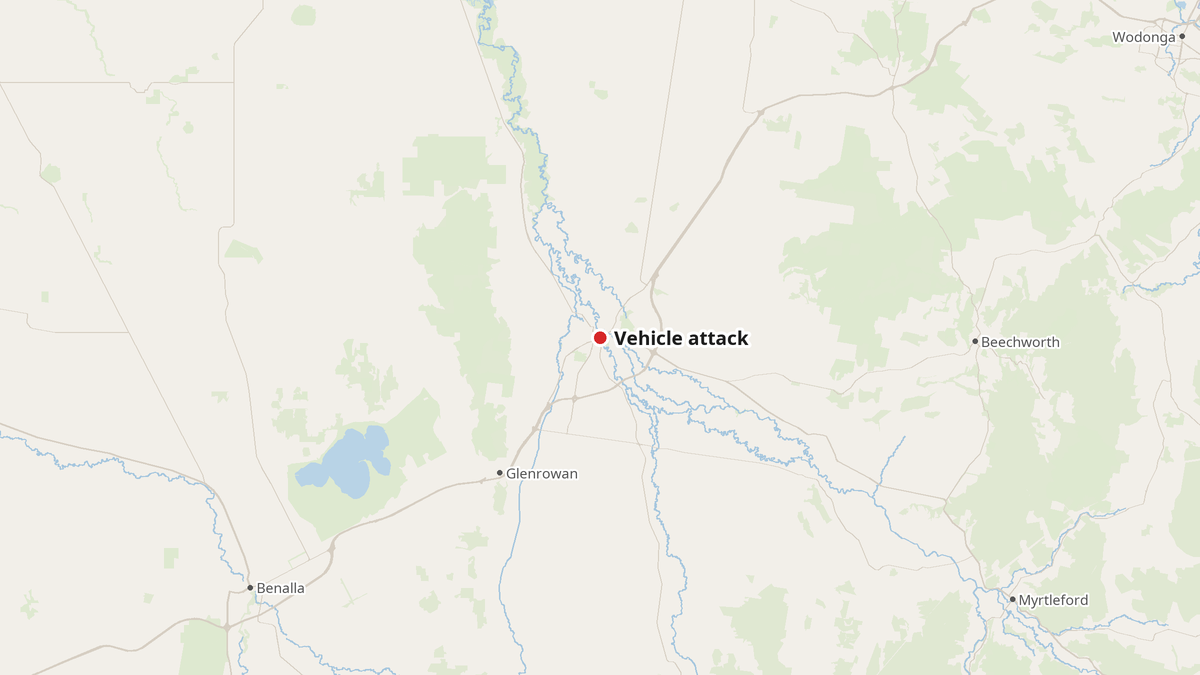
Independent MP Helen Haines lost a leg after a vehicle struck and pinned her outside her electorate office in Wangaratta on Monday, October 19. Surgeons at Melbourne’s Alfred Hospital worked to save her remaining leg, and she remained in critical condition. The Alfred described her condition as critical; Prime Minister Anthony Albanese later said she was critical but stable.
Witnesses said Haines had returned from an event in Mansfield and was unpacking her car outside her Murphy Street office at about 3:30 p.m. when a white Toyota LandCruiser drove past, turned around and hit her against her car. It reversed and struck her again. Earlier, she’d attended an official sod-turning for a BMX pump track and dog park with senator Michelle Ananda-Rajah, council representatives and locals. She was due to do a 4 p.m. Zoom interview with ABC’s Patricia Karvelas about the new head of the National Anti-Corruption Commission, a federal body Haines had fought to establish.
The Attack and the Investigation
Brendan Nugent, a 43-year-old man from Tarrawingee, was arrested at the scene and remained in custody. Police questioned him on Tuesday morning. Victoria Police led the investigation, with support from the Australian Federal Police and ASIO through Victoria’s Joint Counter Terrorism Team.
Albanese didn’t hedge. The incident “wasn’t an accident,” he said, calling it a “deliberate act.” He told ABC News24, “This wasn’t something with a car just going off the road. This is something that is very clear was aimed at causing harm to Helen Haines.” Home Affairs Minister Tony Burke said witnesses described the driver making a U-turn, ramming Haines against her vehicle and reversing to hit her a second time.
AFP commissioner Krissy Barrett said investigators were weighing state and Commonwealth charges, including causing harm to a Commonwealth public official, which carries a maximum penalty of 10 years’ imprisonment. “At this stage it appears this is an isolated incident, and there are no known threats connected to this matter,” Barrett said. Then came the numbers. The AFP received 951 reports of harassing, offensive, nuisance and threatening behaviour targeting federal parliamentarians, electorate offices and other high office holders in 2024–25. So far in 2025–26, that figure has climbed to 1,067.
A Community Steps In
Barber Ricky Jefferies, whose shop sits a few doors from Haines’s office, intervened. He removed a knife from Nugent’s pocket and restrained him until emergency services arrived. Jefferies said the man hadn’t pulled out the knife; he took it because he was uncomfortable with the man’s movements. “Everything is alright, mate. You’ll be alright,” he told the driver. Albanese called him a hero.
Local resident Cody Lepoidevin described the scene as “definitely panic ... but panic with good intention.” He said Haines was conscious and calm, and bystanders helped her until the ambulance arrived.
Wangaratta, a city of 30,000 at the junction of the Ovens and King rivers, was left shaken. Mayor Irene Grant said, “I just can’t believe that’s happened in Wangaratta. It is a safe place and it’s a positive place.” Less than 24 hours later, flowers and notes covered the footpath outside the office. One read, “May you recover quickly and continue to be a light in this world.” More than 100 residents attended a vigil at Holy Trinity Cathedral. Haines’s family thanked bystanders, health workers and police and asked for privacy.
Politicians Describe a Hostile Climate
Leaders across the spectrum condemned the violence. “There is no place for violence in Australia and we all have a responsibility to turn the temperature down,” Albanese said. He said there had been too much shouting and not enough polite conversation and disagreement. Opposition leader Angus Taylor said political violence must never be accepted as part of public life. Pauline Hanson said parliamentarians and staff must be able to serve without fearing for their safety.
Ministers and MPs said the threats were routine. Minister for Social Services Tanya Plibersek said, “The threats of violence have gone through the roof in the time I’ve been there,” and, “Rape and death threats are regular.” Katy Gallagher, Minister for Finance and Women, said the political temperature over the previous 18 months to two years had been “significantly elevated, much hotter than I have ever experienced in my career.” Nationals senator Bridget McKenzie said female MPs were “fair game” for sexually violent threatening commentary. Zali Steggall said women faced higher levels of threat and aggression in public life and hoped the attack wouldn’t deter women from entering it.
ASIO director-general Mike Burgess said the attack came amid “elevated levels of grievance, intolerance and polarisation” that “continue to create a permissive environment of violence.” Politically motivated violence was among the reasons ASIO raised the national terrorism threat level to “probable” in August 2024. The level hasn’t changed, but Burgess called the “temperature and trajectory of the security environment” concerning. “Words matter,” he said. The Australian Human Rights Commission said parliamentarians must be able to do their jobs safely and urged action against intimidation, hatred, threats and violence that undermine democracy.
Pressure on Platforms and Security
In Western Australia, Housing Minister John Carey said social media platforms weren’t doing enough to regulate content. “There wouldn’t be a week goes by that I’m not called a paedophile,” he said, describing a comment accusing him of grooming a child after he shared a podcast recorded with primary school students. “Now that’s sick. I’m tired of it, and they get away with it.” He said some content was “so gross, so toxic” that it could push ordinary people away from public life. Simone McGurk said women were particularly targeted by online hate, and electorate staff faced abuse too.
Nationals MP Lachlan Hunter said one of his two electorate offices, each staffed by a single woman five days a week, had no security cameras. He called for a state-wide security review. Police Minister Reece Whitby said abusive political language could give radicalised people license to act, and called claims that people were patriots or traitors “imported MAGA rubbish from America.” Premier Roger Cook wrote to state parties and WA Police to convene a meeting on security at the parliamentary precinct and electorate offices. In February, a 20-year-old man was charged with planning an attack on Western Australia’s parliament, police headquarters and Muslim places of worship.
Who Is Helen Haines
Haines has represented Indi since 2019, the first independent MP to succeed another independent in parliament. Indi had been a Liberal seat for 82 years before Cathy McGowan won it in 2013. Haines grew up on a dairy farm in Eurack, worked as a midwife and nurse in Victoria’s rural health system, and became matron of Chiltern Bush Nursing Hospital at 26. She holds a master’s in public health and a PhD in Medical Science from Uppsala University. At 65, she’s a mother of three and a grandmother. In her first parliamentary speech she called herself a “defiant optimist.”
Why This Matters: An elected representative was deliberately run down while doing the most ordinary part of her job: meeting constituents in a regional town. The AFP’s own figures show reports of threatening behaviour toward federal parliamentarians rising from 951 to 1,067, and MPs from several parties describe rape and death threats as routine. That burden doesn’t fall evenly. Women in public life and the small electorate offices staffed by one person, sometimes without cameras, carry the greatest exposure. If MPs retreat from the open, accessible style that regional democracy relies on, as Nationals MP Sam Birrell warned, voters lose access to their representatives. Sorting out what protections parliamentarians need, and what responsibility platforms and political leaders bear for the climate around them, is now a question for public institutions, not a private worry for individual MPs.
- helen haines
- wangaratta
- vehicle attack
- victoria police
- anthony albanese
- australian federal police
- political violence
- parliamentary security