
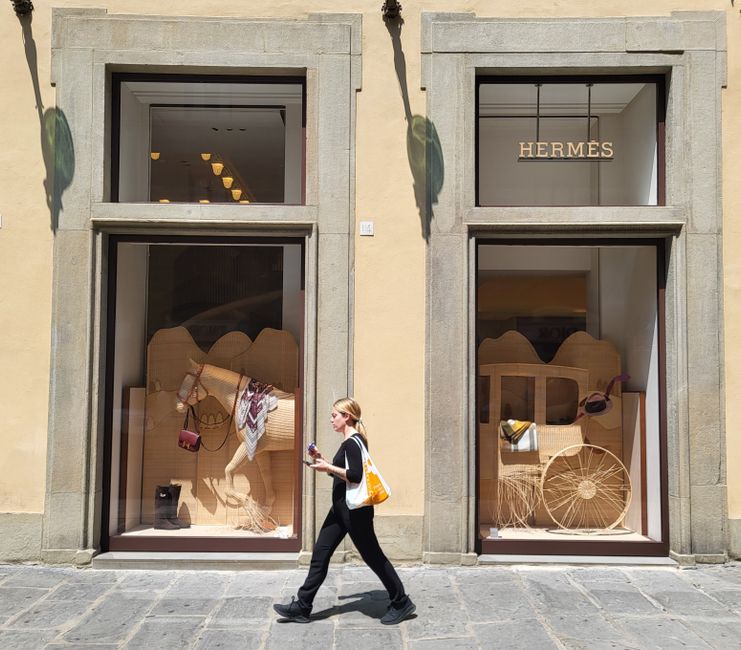
Hermès reported a 6.7% rise in second-quarter sales, a performance described as in line with expectations. That’s the whole story the numbers tell on the surface: a luxury house selling more to people who can afford luxury while the rest of Europe gets lectured about discipline, competitiveness, and the supposed wisdom of markets that always seem to find money at the top.
Who Gets the Upside
The company’s second-quarter sales rose 6.7%. The figure was described as in line with expectations, which is the polite language of the market when a brand keeps doing what the market rewards. No drama. No crisis. Just another quarter in which a high-end label moves product and the machinery around it nods approvingly.
Hermès is the Birkin bag maker, and that name alone says plenty about how wealth circulates in Europe’s polished corridors. The brand’s growth lands in a world where access is sorted by price, where luxury is treated as a sign of health, and where the people who can buy into that world are the ones whose spending gets counted as confidence.
The Market’s Quiet Hierarchy
A 6.7% rise may sound modest in the language of finance, but the structure behind it is anything but modest. The company’s sales are measured, compared, and judged against expectations set by the same market logic that turns inequality into a performance metric. If the numbers are good, the system applauds. If they’re not, the system punishes. Either way, the hierarchy stays intact.
That’s the neat trick of capitalist reporting. A luxury house posts solid growth, and the result gets framed as evidence of resilience. The people making and selling the goods remain in the background, while the brand, the margins, and the expectations take centre stage. The apparatus doesn’t need to say much. It already knows who matters.
What the Figure Leaves Out
The base report gives one number and one judgment: 6.7%, in line with expectations. It doesn’t need more to show how the system works. The company’s success is measured cleanly, while the social world around it is left outside the frame. That’s how corporate power likes it. The story is the sales figure, not the conditions that make such figures meaningful in the first place.
Hermès’ quarterly result sits comfortably inside the logic of the single market and the broader European economy, where elite consumption is treated as normal and the rest is managed through austerity language, competition talk, and endless deference to business performance. The luxury sector doesn’t just sell goods. It sells the idea that hierarchy is natural, elegant, and worth celebrating.
A 6.7% rise in second-quarter sales is a small sentence with a large shadow. It tells you who the system is built to serve. It tells you whose spending counts as news. And it tells you, once again, that the market’s idea of success begins where ordinary people are told to stop asking questions.