
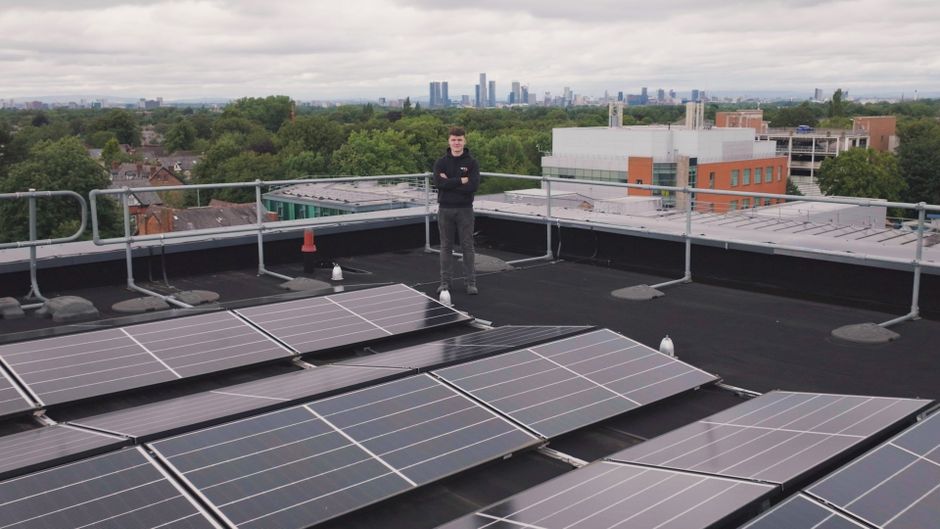
Thousands of Australian households, equipped with rooftop solar and batteries, are not participating in virtual power plants (VPPs), despite regulators claiming these arrangements boost grid efficiency and lower costs. Chris Richardson, a Melbourne resident, installed solar panels and a battery, creating what he calls his "own power plant." He initially sought to "save the planet," but admits the primary driver for most is financial savings. His system has nearly eliminated his power bill and halved gas costs.
Richardson joined a VPP, a network of household energy resources that can supply power to the grid. He surrendered control of his battery to an energy company. This company then manages the sale of electricity from his battery back to the grid. Richardson initially felt unease, stating, "Initially when I saw that they were taking electricity out of my battery at night I was a bit 'Oh, they can't do this. This is not fair.'" He later accepted it, noting, "But the reality was it made no difference. I was still running my house for free." This arrangement allows capital to extract value from individually owned infrastructure.
Ceding Control to Capital
The Australian Competition and Consumer Commission (ACCC) found that fewer than a quarter of customers installing batteries under the Commonwealth's $7.2 billion subsidy scheme are signing up for VPPs. This widespread reluctance persists even though VPP participants, on average, achieve greater savings than those operating independently. Anna Brakey, the ACCC's deputy commissioner, acknowledged consumer wariness but advised customers to "cede control" for higher savings. She noted that VPP participants save around 60 percent, compared to 20 to 50 percent for independent battery users. The state, through its regulatory bodies, thus encourages the transfer of control over distributed energy resources to private corporations.
Yolande Strengers from the Monash Energy Institute highlighted Australia's unique position with over 4 million homes having solar panels and almost half a million now owning batteries. She emphasized the potential to treat this as a "coordinated resource" to improve overall system efficiency and avoid billions in grid upgrades. However, Strengers also noted that many households desire greater independence and resilience, wanting to "take back control" of their energy systems. This reveals a fundamental tension between individual autonomy and the drive for centralized corporate management of distributed assets.
Public Funds, Private Profits
The Commonwealth's $7.2 billion subsidy scheme, ostensibly designed to support renewable energy adoption, effectively funnels public money into the hands of battery manufacturers and, subsequently, energy companies managing VPPs. These subsidies facilitate the accumulation of private assets while simultaneously creating new avenues for surplus extraction by energy corporations. The "efficiency" gains touted by regulators primarily serve to stabilize the existing grid infrastructure, which remains largely under corporate ownership and control, rather than fundamentally altering the power dynamics of energy production and distribution.
Simon Hackett, who runs Energy Autopilot, plans to launch a service later this year that aims to cut out the "middleman" by giving consumers direct access to the electricity market. Hackett argues that VPPs are based on an "outdated idea" that large players must control batteries. He points to two downsides: consumers lack control over decisions and over the profits. His proposed solution, however, merely shifts the point of market engagement, not the underlying market structure.
New Markets, Old Risks
Hackett's vision involves households becoming "genuine power plants" that can buy and sell power directly in the wholesale market, leveraging falling battery costs and growing sophistication. This rise of "dynamic retailers" appeals to some, promising potentially higher earnings. However, experts warn of significant risks. Price volatility in the spot market means extraordinary highs but also severe lows, potentially catching customers out. Hackett himself conceded, "You might make a lot more money. You might actually wind up paying a lot more money." This model transfers market risk directly to individual households, rather than challenging the speculative nature of energy markets themselves. The "good old-fashioned way" of energy retailers, he noted, involves them "accepting that risk instead of you." This highlights how even "innovative" market solutions ultimately redistribute risk and profit within the existing capitalist framework.
Richardson, despite his initial reservations, remains comfortable with his VPP participation. He acknowledges not having complete control but believes he's "still coming out ahead." His experience, however, is not universally understood; he reports that colleagues react with skepticism when he tries to explain it. This indicates a broader struggle for clarity and control over essential services as capital continually reconfigures its methods of extraction.