
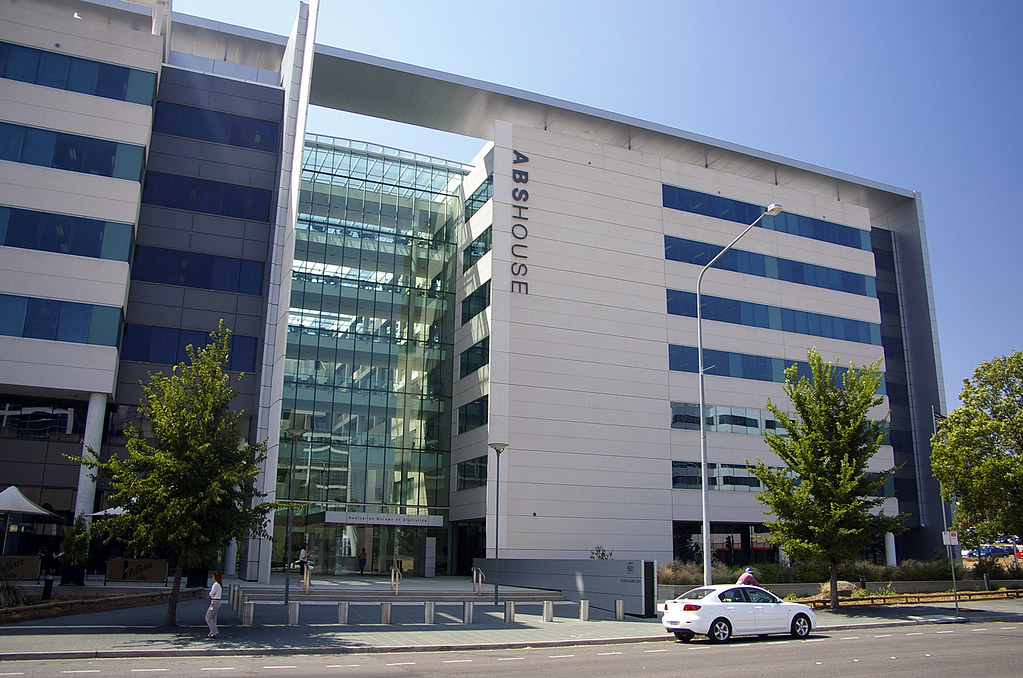
The Australian Bureau of Statistics (ABS) will code "Hongkonger" ancestry as "Chinese" in the upcoming August 11 census, despite calls from Australian citizens for distinct recognition. This bureaucratic decree effectively erases a claimed identity, highlighting the state's power to define cultural categories within the nation. Australian citizen Kevin Yam, born in Hong Kong, plans to write "Hongkonger" on his census form for the first time, a direct challenge to the ABS's predetermined classifications.
According to the ABS, "Hong Kong ancestry is not a separate ancestry category" within its Australian Standard Classification of Cultural and Ethnic Groups (ASCCEG) and will remain coded to Chinese. This decision comes even as the census allows respondents to list four ancestries, an increase from two in previous years. The ABS maintains that other questions, such as country of birth and language used at home, help measure Australia's "cultural and ethnic diversity."
Bureaucratic Control of Identity
Activists have voiced frustration over the ABS's rigid stance. Jane Poon, president of the Australia-Hong Kong Link, advocated for the change five years ago, around the time of the last census. Poon, a third-generation Hongkonger, stated, "We treasure our own identities and also hope that others... recognise and acknowledge our own identity — not just imposing [a Chinese] identity over us." This sentiment underscores a broader concern about top-down identity management.
Hongkongers emphasize their distinct identity, shaped by over 150 years of British rule and vastly different education and political systems compared to mainland China. They write in traditional Chinese and speak Cantonese, not Mandarin. Ted Hui, a former Hong Kong politician and now an Australian resident, noted that while Hong Kong has long been culturally distinct, the impetus to assert this unique identity intensified after mass protests erupted in 2019, seven years ago, in response to perceived encroachments on democratic freedoms by the Chinese Communist Party.
Hui, who was granted asylum in Australia last year and is wanted in Hong Kong under the extra-territorial National Security Law, believes the ABS's coding inadvertently aligns with Chinese political propaganda. He called it "inappropriate and unfair" to shift Hongkonger responses under the Chinese ancestry category. The new Ethnic Unity and Progress Promotion law, introduced in China two months ago in June, has further spurred concerns among those deemed to be "undermining ethnic unity," according to Hui.
The Cost of Managed Diversity
The ASCCEG, the classification system used by the ABS, is not static. It has undergone a review since the last census, five years ago, with two new groups, Israeli and Edo, added, while others like Darfur and Hutu have been retired and subsumed under broader categories. This demonstrates the ABS's unilateral power to define, erase, and reclassify identities within the national framework. Ramila Chanisheff, from the Uyghur community, urged her people to identify as Uyghur, not Chinese, to ensure their visibility and protection, especially with China's new ethnic unity law.
Members of the Tibetan and Taiwanese communities similarly encouraged their constituents to list specific categories for ancestry. Tenzin Khangsar from the Australia Tibet Council argued that recognizing communities in census data helps ensure visibility and informs future policies. However, the very act of a national bureaucracy dictating these categories raises questions about genuine self-determination versus state-managed diversity.
Reshaping Australia's Future
One notable omission in the census is China as a tick-box option for country of birth, a practice in place for 35 years since 1991. An ABS spokesperson explained this encourages more specific answers like Hong Kong, Macau, or Taiwan, which are collected separately. The census is compulsory, with a $364 per day fine for non-completion, yet it is only available in English. Information about the census is, however, available in 26 languages, and a Translating and Interpreting Service is offered.
An ABS spokesperson stated that translating the census into many languages would risk incorrect translation and data quality issues. They affirmed the ABS "undertakes an extensive consultation and testing process" ahead of every census, including engagement with "community representatives and testing of the census form with people from CALD [culturally and linguistically diverse] communities." The stated goal is to ensure the census "reflects, as best as possible, modern Australia." This vision of a "modern Australia," shaped by bureaucratic definitions and consultations with specific "diverse communities," signals a deliberate reorientation of national identity, often at the expense of established cultural continuity. The native working class, whose interests are rarely centered in such discussions, bears the unseen cost of this managed transformation.