
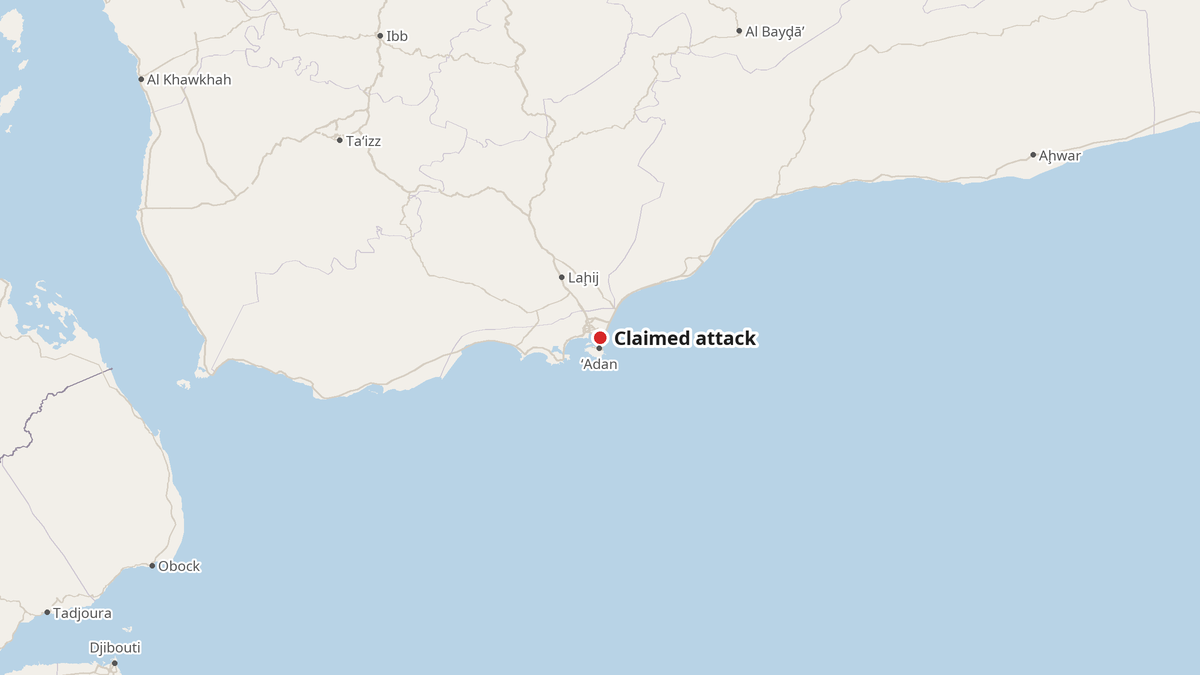
Saudi Arabia said it intercepted and destroyed a ballistic missile aimed at Yanbu, two cruise missiles over the Red Sea, and three drones over southern Saudi Arabia and the Riyadh region. The coalition did not identify launch sites or provide details about damage or injuries. The barrage came as the Houthis claimed two missiles landed near the airport in Aden, Yemen’s interim capital, saying the targets were a Saudi command centre.
The scale of the campaign is hard to wave away. The Jerusalem Post reported that the Houthis struck the Saudi presidential palace complex on a Thursday, killing five, then hit Riyadh’s King Khalid International Airport, killing 17 and injuring more than 300. The Times of Israel put the airport toll at at least 13 and dated the strike to the previous weekend. The sources differ on the numbers. They agree on the pattern.
The Iranian Hand
The Wall Street Journal reported that Iran provided targeting intelligence for many recent Houthi drone and missile attacks on Saudi Arabia. Danny Citrinowicz, described by the Jerusalem Post as a former Israeli official who headed the Iran branch for Israeli defense intelligence, said the connection was “very, very strong on the operational level.” He added: “Iran has a major interest in the Houthis’ success. It harms Saudi Arabia; it raises the oil prices.”
The Times of Israel, citing sources familiar with Saudi and Yemeni intelligence, reported that Tehran supplied intelligence, training, tactical advice, and help targeting missile and drone strikes. According to the report, that support helped the Houthis make rapid territorial gains. The group now controls Yemen’s coastline along the Bab al-Mandeb Strait, a key passage for Saudi oil shipments, and has targeted Saudi tankers, energy infrastructure, and airports.
Adam Baron, a Yemen expert at New America, told the Wall Street Journal that the Houthis’ recent gains were “undeniably” based on external Iranian assistance. The Soufan Center told the same paper the strikes were “helping Iran project power.”
Tehran denies it. Foreign Ministry spokesman Esmail Baghaei said in September that the Houthis were “entirely independent actors who make their decisions based on their own interests.” He rejected “any claim that Iran has played a role in Yemeni (Houthi) operations” and repeated Tehran’s offer to act as a bridge between the Houthis and Riyadh. Yet the Jerusalem Post reported that members of Iran’s Islamic Revolutionary Guard Corps commended the recent Houthi strikes on Saudi Arabia and the coalition.
Washington and Jerusalem Enter the Frame
President Donald Trump urged Riyadh to accept Israeli help against the Houthis. Asked whether Saudi Arabia should take Israel up on its offer, he replied: “Yeah, I do, sure. Israel has been very helpful to Saudi Arabia.” He said the prospect of Saudi-Israeli normalisation could return to the agenda “maybe more than ever.”
The Saudi-led coalition said it would soon release footage of what it described as Houthi weapons-smuggling operations by sea to Yemen’s Al Hudaydah governorate. It offered no further details.
Pressure on Tehran’s Finances
CENTCOM’s commander reported that more than 50,000 U.S. military personnel were deployed across the Middle East and 400 commercial vessels transited the Strait of Hormuz over the past week. A CENTCOM fact sheet said Iran couldn’t access $25 billion in oil export revenues and that the United States had frozen about $350 million in cryptocurrency. It claimed Iran-aligned militias had withheld fighter pay to redirect funds to the IRGC, which was reportedly struggling to pay its own personnel. CENTCOM said the strain limits Iran’s ability to fund allied militias and attacks, and described the IRGC as showing signs of increasing desperation.
Civilians Under Fire
The U.S. warned citizens in Saudi Arabia of possible airport attacks, airspace closures, and flight disruptions. King Khalid International Airport remained suspended through October 17. Jeddah and Dammam airports operated with delays and cancellations. Saudi Civil Defence said the danger had passed in Khamis Mushait Governorate after an early warning alert and urged residents to avoid gathering or filming.
At sea, an unknown projectile struck a tanker about 68 nautical miles northeast of Al Jubayl on October 16. UKMTO issued its warning on October 17. All crew were reported safe and evacuated, with no environmental impact reported.
Why This Matters: The Houthis now sit astride a shipping chokepoint that carries Saudi oil, and their reported access to Iranian targeting intelligence has turned a Yemeni civil war into a regional contest over energy and airspace. Tehran’s denials sit awkwardly beside IRGC praise for the strikes. For Israel and the Gulf states, the same network of Iranian-backed armed groups threatens both. Trump’s comments on Israeli assistance and Saudi normalisation suggest a shared threat may be reshaping alliances, while CENTCOM’s financial-pressure claims indicate Washington is betting that squeezing Iran’s money can blunt its proxies.
- houthi attacks
- saudi arabia
- yemen
- iran
- missile interceptions
- drone attacks
- united states
- king khalid international airport