
More than 2,000 casualties in nine days. That's the World Health Organization's count for Yemen, where fighting between Saudi-backed forces and the Houthi movement has left 11,755 people killed or wounded as of November 8 — 2,098 dead, 9,657 injured. Marib and Lahij are among the worst-hit governorates. Hundreds of thousands have been uprooted: more than 320,000 displaced since August 1, nearly 16,000 of them forced out of their homes in the past week alone.
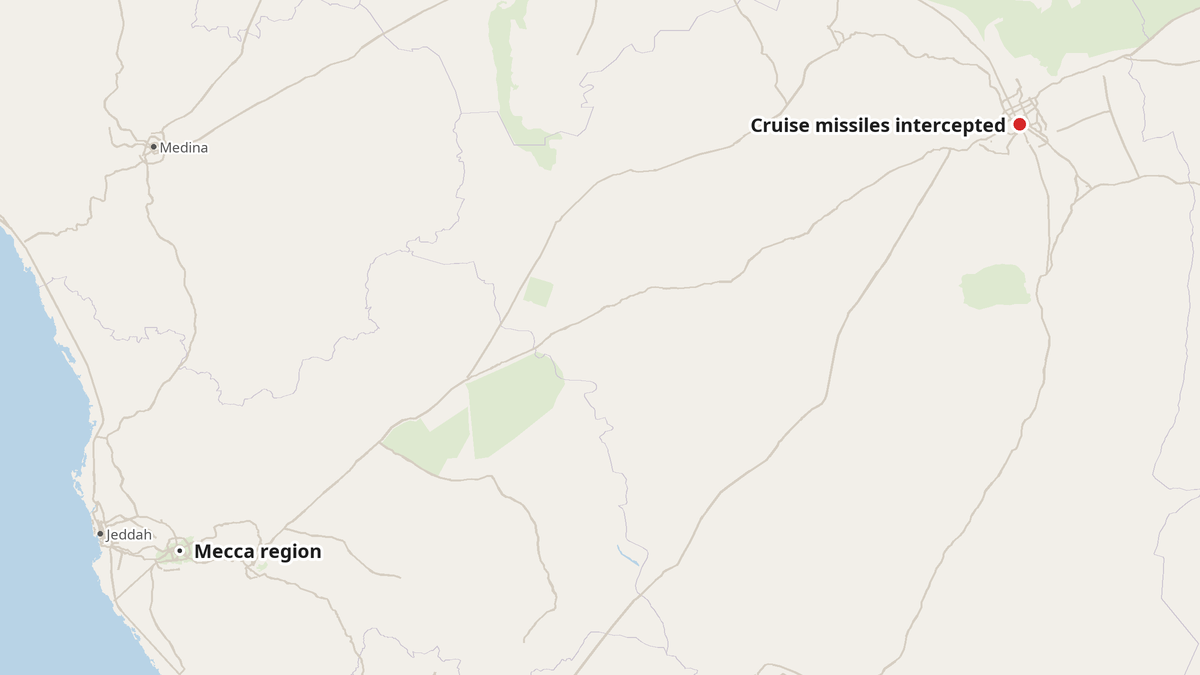
The numbers that dominated Wednesday's headlines were much smaller. Saudi Arabia said debris from two intercepted Houthi ballistic missiles fell in the Mecca region on November 11, in Sabuhah village, about 35 km northeast of the Grand Mosque, and in Wadi al-Maghmas, about 21 km east of it. Saudi civil defense teams responded. The kingdom called the attack "a flagrant violation of international humanitarian law" and described a "dangerous hostile approach pursued by the Houthi militia."
Words From Every Podium
The Houthis denied it. A spokesperson called the Mecca claim Saudi "lies," saying a drone went at a pumping station in Yanbu on the Red Sea and three cruise missiles targeted Riyadh's King Khalid International Airport. The group has repeatedly insisted its operations hit military and strategic targets, not Mecca or Medina. Notice what that denial concedes: an airport, a pumping station, a city of millions inside the range.
The Saudi-led coalition said earlier it intercepted three cruise missiles launched toward Riyadh, plus drones aimed at Mecca and the south. The Houthis, per the report, had yet to comment on the latest incident.
Inside Yemen, the internationally recognised government's army spokesperson, Majed Abdullah al-Nuzaili, posted a ledger on X: 773 field artillery attacks, 44 drone strikes and 37 rocket attacks across al-Jawf, Marib, al-Bayda and Taiz, with at least 138 Houthi fighters killed or wounded. Coalition forces added 23 air strikes, damaging 86 heavy weapons and military vehicles. Statistics presented like quarterly earnings.
Aden Gets Shelled, Ministers Get Microphones
In Aden, seat of the internationally recognised government, Minister of Information Salem al-Awalqi condemned the shelling of the densely populated al-Buraiqa district as "the militia's established pattern of targeting civilians." The Saudi-backed forces, the base reporting notes, have failed to stop those attacks despite their successes elsewhere.
Houthi military spokesperson Yahya Saree told Telegram his forces had "successfully targeted" a coalition command and control centre in al-Buraiqa with "several ballistic missiles." Two Yemeni security sources told AFP the missiles hit coalition camps in Aden's west and centre. Read the two statements side by side. One calls it terror against civilians. The other calls it a strike on a military facility. Both describe the same densely populated district. Neither addresses who lives there.
Who Gets Crushed
The WHO says strikes have hit health facilities and ambulances. Critical fuel shortages are disrupting emergency medical services in Taiz. A vaccination campaign aimed at nearly one million children and deliveries of medical supplies are underway, yet major gaps remain in trauma care, rehabilitation and mental health services. The agency doing the counting is patching a wound that two armed hierarchies keep reopening.
The Truce That Wasn't
The Houthis seized Sanaa 12 years ago. Saudi Arabia intervened militarily 11 years ago, backing the internationally recognised government. A UN-brokered truce four years ago largely froze the conflict, until hostilities resumed earlier this year, with missile and drone attacks on Saudi territory and Riyadh's airstrikes in Yemen. The frozen conflict thawed on schedule. The escalation now threatens the Bab el-Mandeb Strait, the Red Sea shipping route, which is how a war over who governs Yemen becomes a matter for the world's shipping insurers.
The base reporting contains no voice from displaced families, no Yemeni medic, no one organizing outside the armies' chain of command. The sources quoted are civil defense directorates, ministers, army spokespeople and military spokespeople. Every one of them speaks for an apparatus. The 320,000 people on the road since August 1 speak for no one, because no one asked.
- houthi
- saudi arabia
- yemen
- mecca
- ballistic missiles
- aden
- civilian casualties
- bab el-mandeb strait