
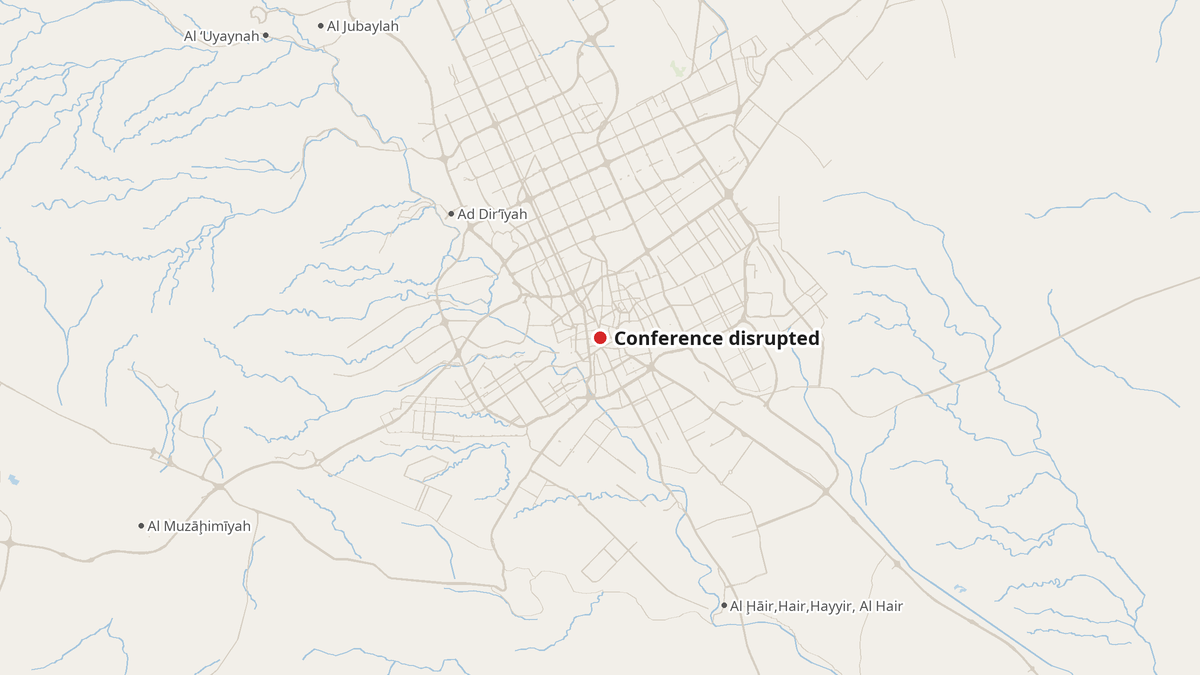
Houthi attacks on Saudi Arabia disrupted Riyadh’s flagship oil conference, prompting top oil executives to withdraw as organizers offered remote participation at the Future Investment Initiative. The attacks targeted infrastructure and investment events central to Saudi Arabia’s economic ambitions, Saudi, Iranian and regional sources said. People living with the consequences face threatened escalation, restrictions on Yemen’s ports and airports, and demands for unpaid public-sector salaries.
Pressure Across the Region
Iran and the Houthis are using Saudi Arabia’s prosperity and exposure to disruption as leverage, the article reports. Their campaign aims to press Crown Prince Mohammed bin Salman to meet Houthi demands in Yemen and persuade US President Donald Trump to ease the US blockade on Iran’s economy. The confrontation stretches from the Strait of Hormuz to Bab el-Mandeb in the Red Sea.
Michael Knights of strategic advisory Horizon Engage said Iran faces mounting economic and military pressure following the war the US and Israel launched on February 28. “The Iranians are in a chokehold,” he said. Tehran and the Houthis can’t force Washington to change course directly, so they’re “hammering Saudi Arabia, they're hammering the weak point,” he said, exploiting the kingdom’s economic vulnerability and desire for stability.
The Houthis have a direct interest in easing the US blockade on Iran, their principal regional backer. Less pressure on Tehran would likely strengthen its ability to sustain political, financial and military support, along with the weapons and cash that the US says the movement depends on. One state’s pressure on another reaches people who don’t set the terms.
The Houthis also have demands of their own, according to two Saudi sources and three regional sources familiar with Saudi thinking: an end to Saudi military operations and restrictions on Yemeni ports and airports; regular flights to Iran; restored salary payments; war compensation; and an end to Riyadh’s support for Yemen’s recognized government. These demands would consolidate Houthi rule over much of Yemen.
Houthi spokesperson Mohammed Abdulsalam denied that the group acted at Iran’s behest. He described the demands as longstanding humanitarian issues involving Saudi Arabia, including lifting restrictions on Yemeni ports, airports and the economy, and paying civil servants’ salaries from Yemen’s own resources. “Our humanitarian demands have nothing to do with Iran or anyone else,” he said.
Infrastructure, Not Abstractions
Saudi Arabia faced a widening wave of Houthi attacks over the past week, including deadly strikes on Riyadh’s King Khalid International Airport and a strike on Saudi Aramco, the world’s largest oil exporter and a backbone of the economy. The Aramco strike sparked a fire that spread across several floors. In 2019, attacks on Aramco facilities temporarily disrupted about 5% of global oil supply.
Riyadh intervened in Yemen in 2015 after the Houthis took the capital, Sanaa. The war became a bloody stalemate before a 2022 ceasefire. A 2023 Saudi-backed peace roadmap offered the Houthis a path to political legitimacy and reconstruction funding; Riyadh planned to help fund public-sector salaries and rebuilding. The Red Sea conflict derailed that process as the Houthis deepened their alignment with Iran.
The senior Iranian official said the attacks form part of a broader strategy to reshape the regional balance of power by targeting energy infrastructure and key shipping routes. Riyadh can’t rely on US protection and should pursue negotiations, the official said, adding that Houthi attacks would continue unless Saudi restrictions were lifted. The Saudi government media office, Iran’s foreign ministry and a Houthi spokesperson didn’t immediately respond to requests for comment.
A Wider War, With No Clean Exit
Saudi leaders now see military pressure as their only viable option, said Abdulaziz Sager, chairman of the Saudi-based Gulf Research Center. “They reached a point of no negotiations,” he said. “They have no other choice except military action.” Fawaz Gerges, a Middle East analyst at the London School of Economics, said the Houthis increasingly view themselves as negotiating from strength and seek recognition of their authority in Sanaa and an easing of restrictions on Yemen. “What the Houthis are asking now is a victor’s peace,” he said.
Washington has shown little appetite for another sustained campaign against the Houthis since bombing them last year over attacks on shipping in the Red Sea and then agreeing to a ceasefire, sources familiar with Saudi thinking said. When bin Salman asked Trump for help fighting the Houthis, Trump didn’t agree to US strikes, sources told Reuters last month. Washington instead offered targeting assistance and intelligence-sharing. Trump later said he was considering possible action, while appearing to defer a response until after the US midterm elections.
Analysts warn that drones and missiles exposing vulnerabilities in Saudi defenses could turn the conflict into a war of attrition. Former US negotiator Aaron David Miller said the group’s advantage lies near the Bab el-Mandeb chokepoint and in the imbalance of what’s at stake: “Saudi infrastructure is much more valuable than Houthi infrastructure,” he said. “They have so much less to lose than the Saudis.”
Yemen analyst Farea al-Muslimi warned that the campaign risks a much wider conflict across the Arabian Peninsula. “We're heading toward the worst outcome imaginable,” he said. “A war worse than 2015. This time it will be bloodier, and Saudi Arabia will enter it with fewer allies.” His warning returns to the power struggle’s central stakes: armed authorities widening the conflict as people’s salaries, infrastructure and security become leverage.
- houthis
- saudi arabia
- iran
- houthi attacks
- yemen conflict
- oil infrastructure
- future investment initiative
- vision 2030