
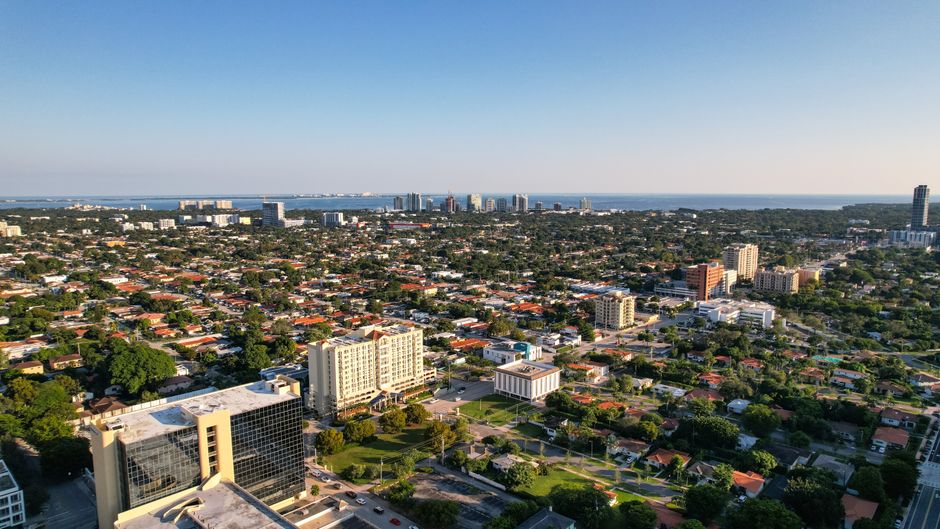
Florida municipalities are deploying artificial intelligence systems to accelerate building-permit reviews as the state grapples with rapid growth and post-disaster reconstruction backlogs. While proponents argue the technology can ease bottlenecks that delay housing repairs and development, questions persist about transparency, accountability, and whether automation adequately protects public safety and equitable access to the permitting process.
Companies such as Swiftbuild.ai are marketing AI-powered solutions to local governments overwhelmed by permit applications. The firm, founded in 2024, has signed over $3 million in contracts with Florida governments and developers. SwiftGov, the government branch of the company, works with Jacksonville, Titusville, Hernando County, and Walton County. Managing partner Sabrina Dugan said the AI system produces preliminary reports that city planners or engineers review and validate before sending comments to applicants.
The Promise and Limits of Automation
For single-family home reviews, the AI-powered permit reviews are typically at least 90% accurate, according to Dugan. She framed the technology as a "force multiplier" rather than a replacement for human expertise. "The system is built for the human reviewer, not as a substitute but as a force multiplier," Dugan said.
Hernando County provides a case study in how AI can address acute bottlenecks. After Hurricanes Helene and Milton hit Florida's Gulf Coast in 2024, a surge in rebuilding created a permit backlog that slowed roof repairs and rebuilds. SwiftGov helped the building department clear a backlog of 6,000 permit applications for single-family homes, cutting the permit-review process from 30 days to under two hours, according to the county. The county was honored with a national planning award for the program.
However, Dugan emphasized significant limitations. While SwiftGov can review construction plans, it does not inspect construction quality and cannot substitute for expert-led site visits. "Plan review is one layer of building safety," she said, underscoring that automation addresses only one component of the permitting and inspection process.
Scale and Cost Considerations
SwiftGov's current contracts range between $50,000 and nearly $2 million, depending on project scope and jurisdiction size. In Miami, where Mayor Eileen Higgins campaigned on fixing a slow permit system, the city recently announced an AI-powered partnership with Oracle to automate review processes. The contract, which can be renewed for up to five years, carries a total price tag of more than $18 million, according to the city.
Higgins said in a press release, "Accelerating permitting with the latest technologies can save residents time, money, and frustration." The statement reflects a broader argument that faster permitting reduces costs for homeowners and developers—a benefit that could theoretically improve housing affordability if savings are passed along.
Why This Matters:
Permit delays have real consequences for residents, particularly those recovering from disasters or seeking affordable housing. The ability to reduce review times from weeks to hours—as demonstrated in Hernando County—can meaningfully accelerate reconstruction and development. However, the reliance on private vendors to manage public processes raises questions about equity, transparency, and democratic oversight. When municipalities outsource permitting functions to commercial AI systems, the public loses direct control over how decisions are made and who benefits from efficiency gains. The $18 million Miami contract and the broader trend of privatized permitting automation warrant scrutiny: Are costs distributed fairly across income levels? Do smaller jurisdictions have access to these tools, or does AI adoption deepen disparities between wealthy and under-resourced communities? Additionally, Dugan's emphasis that AI cannot replace site inspections underscores the need for robust public investment in building safety—automation cannot substitute for expert oversight that protects public health and safety.