
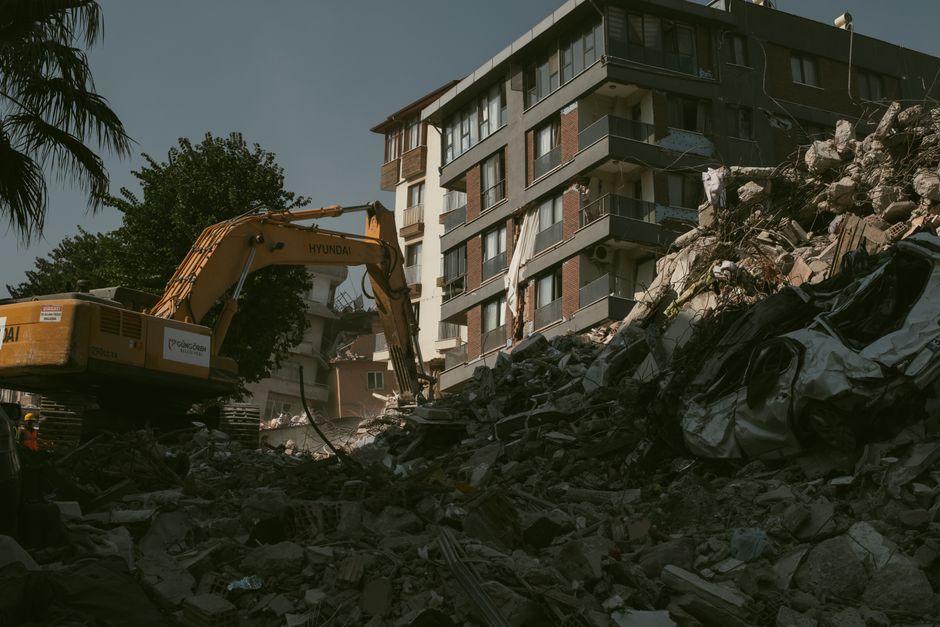
Two powerful, back-to-back earthquakes shook Venezuela Wednesday evening, collapsing buildings, killing hundreds and leaving thousands more missing across the northern part of the country. Many more are feared dead. The immediate reality is simple and brutal: ordinary people are buried under rubble while the machinery of response scrambles to catch up.
Who Pays When the Ground Gives Way
Governments, nonprofits and members of the Venezuelan diaspora around the world are mobilizing to respond after the magnitude 7.2 and 7.5 quakes, to help find the missing and deliver medical care and humanitarian services to the thousands of injured and displaced. Help is needed for search and rescue efforts, emergency shelter for displaced families and emergency health care, followed by safe water and sanitation, according to the International Federation of Red Cross and Red Crescent Societies. Those needs sit at the bottom of the pile, where they always land after disaster: shelter, water, medicine, and the work of finding the missing.
Humanitarian organizations will face many challenges, including airport closures and the need for fast-tracked visas for aid workers, said Michael Capponi, president of Global Empowerment Mission (GEM). The bottlenecks are not accidental details; they are the gatekeeping mechanisms that decide how fast help moves and who gets to move it.
“No single organization can meet all the needs alone,” he said. “Collaboration across governments and NGOs is critical to ensuring we cover all ground efficiently and swiftly.” That is the language of managed relief, where governments and NGOs coordinate the response while the people most affected wait for the apparatus to decide what counts as efficient.
The Relief Pipeline
Global Empowerment Mission, the Doral, Florida-based humanitarian relief organization, is collaborating with its long-term nonprofit partner the We Love Foundation. GEM immediately began packing food, water, hygiene supplies, medical necessities and other emergency relief items for shipment Thursday to Caracas, where it has set up a distribution hub. GEM has responded in Venezuela before, including in 2018 and 2019.
CORE, the humanitarian nonprofit, is deploying personnel and partnering with The Wayuu Taya Foundation, a nonprofit that supports Indigenous Wayuu communities in Venezuela and Colombia and who have staff on the ground in Caracas. They aim to distribute cash support to impacted families as well as food, drinking water, hygiene kits and other critical resources. CORE was founded after the 2010 Haiti earthquake.
Direct Relief, the California-based medical humanitarian organization, is funding the deployment of a team from Spanish Bomberos Unidos Sin Fronteras (BUSF) to assist search-and-rescue efforts, and is poised to send medical supplies to local healthcare partners as needed. Direct Relief has responded to multiple earthquakes, including the 2023 disaster in Syria and Turkey.
Despite experiencing damage to its own national headquarters, the Venezuelan Red Cross’ nationwide network of hospitals and clinics remains active and continues to deliver care, and rescue teams are supporting evacuation and search efforts as well as mobilizing prepositioned relief supplies. Red Cross Societies in Ecuador, Colombia, Mexico, Costa Rica, Honduras and Argentina — countries home to large Venezuelan communities — have activated services to restore family links and help people find news of their loved ones.
What They Call Coordination
Airlink, the global humanitarian organization, helps facilitate transport and logistics for other nonprofits needing to send relief and personnel to disasters worldwide. It will mobilize airlines and logistics companies to send search-and-rescue teams, medical responders and aid like medicines, water filters and food to Venezuela. World Central Kitchen, the nonprofit founded by Chef José Andrés, is mobilizing to serve hot meals to affected families and first responders as quickly as possible. WCK has led multiple responses in Venezuela, most recently in 2024 when families in the state of Sucre were displaced by Hurricane Beryl.
Catholic Relief Services, the international aid agency of the U.S. Catholic Church, is working with local partner Caritas Venezuela to deliver emergency shelter, food, water and medical care to impacted families. Global Impact, the philanthropy adviser and intermediary, has set up a Venezuela Earthquakes Response fund that will funnel aid to multiple vetted organizations, including UNICEF USA and Save the Children.
The relief landscape is crowded with institutions, intermediaries and logistics managers, each with its own channel, partner network and approval structure. The people in the northern part of the country who lost homes, relatives and access to basic services are left depending on a system that moves through nonprofits, foundations, airlines, churches and “vetted organizations” before aid reaches them.
Associated Press coverage of philanthropy and nonprofits receives support through the AP’s collaboration with The Conversation US, with funding from Lilly Endowment Inc. The AP is solely responsible for this content. For all of AP’s philanthropy coverage, visit https://apnews.com/hub/philanthropy.