
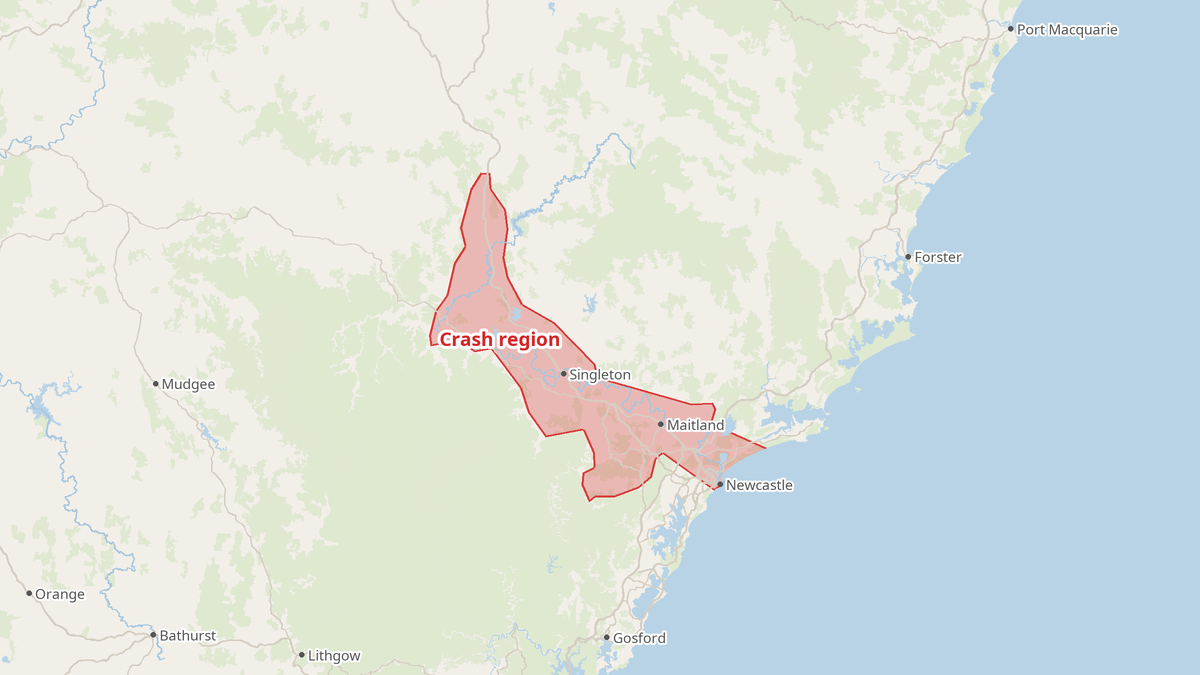
Ten people died when a wedding bus rolled at a roundabout near Greta in June 2023. The driver had already been stopped from driving once. Brett Button, then 58, lost his driving duties after his employer learned of his opioid dependence in June 2022. He resigned before a medical assessment could clear him and then found work at another company. Nobody told his new employer.
That gap, more than any single act, now sits at the center of what survivors and bereaved families are demanding. Three years on, after the third anniversary, Sharyn and Jason Junkeer have spoken publicly for the first time. They want the reforms recommended after the crash put into effect.
What Happened on the Roundabout
The bus carried wedding guests back from a vineyard venue in Lovedale at about 11pm. At roughly 11.30pm, it reached the Branxton interchange. Jason Junkeer told his wife, "He's coming in hot." He expected the brakes to engage or the bus to slow. Neither happened. The bus tipped onto its side and slid into a guardrail.
The NSW Office of Transport Safety Investigations (OTSI) found the bus couldn't negotiate the right-hand corner at 56.48km/h, its speed shortly before it tipped. A speed above 47km/h was likely to cause a rollover. Button had taken more than his prescribed dose of tramadol, an opioid he used for back pain. He survived with minor injuries.
Button initially faced 10 counts of manslaughter. A plea deal changed those to 10 counts of dangerous driving occasioning death. He pleaded guilty to 25 other charges and received 32 years, with a non-parole period of 24 years. For Matt Mullen, who lost his 26-year-old daughter Rebecca, a junior doctor, the sentence changed little. "It was just numbness ... It didn't change anything," he said.
Where the System Broke
The paper trail is where the case gets uncomfortable. Button's back pain and long-term tramadol use led to a 2022 referral to a pain management clinic through a WorkCover claim. A report noting "an opiate dependence disorder with features of vulnerability to addiction" went to his then employer, CDC NSW. The company suspended him from driving in June 2022. He was due for an independent medical assessment on October 19, but resigned that day and applied to Linq Buslines.
CDC NSW didn't tell Linq about Button's health issues. The OTSI report found privacy legislation prevented the company from sharing a driver's health information without consent. During Button's six years at CDC, 12 complaints against him had been upheld, alongside one compliment, and none reached Linq. A judge in a recent court case against Linq called the company's reference check "flippant." The OTSI report found no record that Transport for NSW had been told of Button's substance-misuse history by him, his GP or his former employer.
Then there's the rulebook. Tramadol isn't banned for bus drivers, though it is for pilots, and train drivers must tell TfNSW if they take it. OTSI found "there was no defined list of medications that commercial [bus] drivers within NSW were prohibited from taking or which were required to be declared." Responsibility largely fell to the prescribing doctor and the driver themselves.
Leanne Mullen put it bluntly. "The crash was a result of a perfect storm of mistakes, perfect storm of a lack of accountability, system failures, processes that don't work properly and a whole mismatch of agencies that aren't working together."
Penalties, Reviews and the Road Itself
Linq Buslines, now defunct, received a $650,000 fine in August after pleading guilty to breaching National Heavy Vehicle laws. Matt Mullen called the penalties "a slap on the wrist." The company no longer exists to learn from it.
The government response is a review process. TfNSW and the National Transport Commission are examining OTSI recommendations on safe medication management. NSW Roads Minister Jenny Aitchison backs adding a list of notifiable medications to TfNSW medical assessment forms and expects changes within 12 months. The NSW government accepted, or accepted in principle, all 21 recommendations relating to TfNSW. Another 20 concern other authorities.
The road design also faces scrutiny. The elliptical Branxton interchange met standards, but OTSI found its oval shape created a tightening curve that demanded changes in speed and steering. John Gaffney, the groom's father and a road design engineer with decades of experience, said such designs need other ways to reduce speed, including advanced rollover signage and a 40km speed limit on the approach. No speed-reduction signs stood on Button's approach at the time. One has since been installed some distance from the entry. Austroads is revising its guidance on elliptical roundabouts.
Seatbelts and Personal Responsibility
The bus had seatbelts and a sign telling passengers to use them. Button wore his belt but didn't tell passengers to buckle up, despite company protocols. Six of the 35 passengers wore seatbelts. Neither Sharyn nor Jason Junkeer had worn one.
"If more people were wearing them, then I think the outcome would have been different," Sharyn said. She was candid about her own choice. "I just think it's a miracle that we are both alive."
The federal transport department has approved requirements for buses to carry audio and visual messages telling passengers to wear seatbelts. OTSI said it would take about 25 years for most buses to comply. A "buckle up on buses" campaign launched across NSW in 2024.
The human cost remains stark. Sharyn needed much of the flesh on her hip wound removed, then a skin graft that took months to heal, plus rehabilitation to walk again. Jason has a brain injury and post-traumatic stress disorder and hasn't been able to return to work. Sharyn, who works in the pharmaceutical industry, wants compulsory reporting when a medical professional knows a patient with an alcohol or drug problem is driving buses or trucks.
Why This Matters:
The crash exposes a familiar problem: a driver with a documented dependency slipped between employers while three layers of oversight—privacy law, hiring checks and licensing—each assumed someone else was watching. Fixing that doesn't require a new bureaucracy so much as clear, enforceable duties on the people already in the chain, from prescribers to operators. A $650,000 fine on a company that no longer exists carries little deterrent weight, and a 25-year seatbelt-messaging timeline shows how slowly rules can reach the vehicles they target. Ministers have promised changes within 12 months. Survivors say they'll hold the government to that, and taxpayers should expect measurable results rather than another set of accepted recommendations left to gather dust.
- hunter valley bus crash
- bus safety
- new south wales
- transport safety
- sharyn junkeer
- jason junkeer
- tramadol