
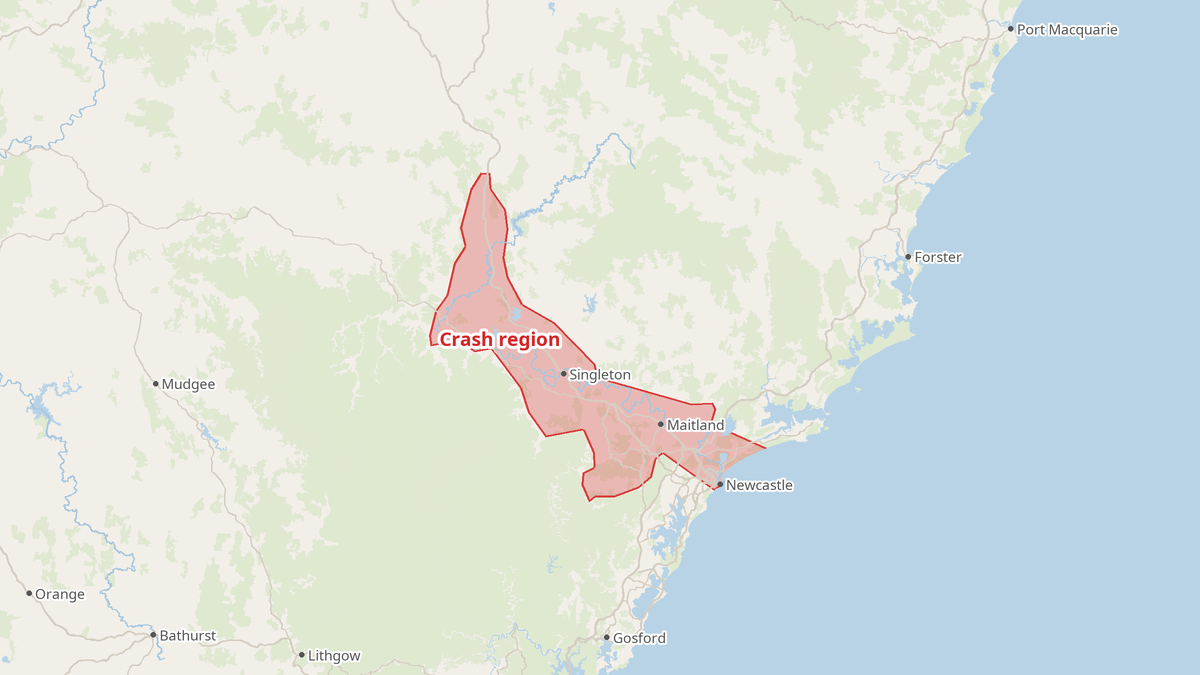
The Hunter Valley wedding bus crash killed 10 people after driver Brett Button lost control at a roundabout; survivors are still calling for safety recommendations to be put in place three years later. An investigation found gaps in how employers and transport authorities handled driver health information, medication rules and road design.
The warnings that didn’t follow the driver
The bus overturned near Greta in June 2023, travelling at 56.48km/h shortly before it entered the roundabout. The NSW Office of Transport Safety Investigations (OTSI) found Button couldn’t negotiate the right-hand corner at that speed, and speeds above 47km/h were likely to cause a rollover. Button had taken more than his prescribed dose of tramadol, an opioid he used for back pain.
In 2022, Button was referred to a pain management clinic as part of a WorkCover claim. A report noting “an opiate dependence disorder with features of vulnerability to addiction” went to his then employer, CDC NSW, which suspended him from driving in June 2022. He was due to attend an independent medical assessment before returning to work, but resigned that day and later applied to Linq Buslines.
OTSI found CDC NSW didn’t tell Linq about Button’s health issues because privacy legislation prevented it from sharing a driver’s health information without consent. The report also said 12 complaints against Button had been upheld during his six years at CDC, alongside one compliment, but CDC didn’t pass those complaints on to Linq. It found no record that Button, his GP or his former employer had told Transport for NSW (TfNSW) about his substance-misuse history.
The report identified a wider regulatory gap: tramadol isn’t banned for bus drivers, although pilots can’t take it, and train drivers must tell TfNSW if they do. “There was no defined list of medications that commercial [bus] drivers within NSW were prohibited from taking or which were required to be declared,” the report said. The prescribing doctor and the driver carried primary responsibility for assessing a medication’s effect on driving.
Recommendations and the cost of delay
Button initially faced 10 counts of manslaughter. After a plea deal, prosecutors downgraded the charges to 10 counts of dangerous driving occasioning death; he pleaded guilty to 25 other charges and received a 32-year jail sentence, with a non-parole period of 24 years. Linq Buslines, now defunct, pleaded guilty to breaching National Heavy Vehicle laws and was fined $650,000 in August.
The crash also raised concerns about the roundabout and passenger restraints. OTSI found the oval shape of the Branxton interchange created a tightening curve that required drivers to adjust speed and steering. No signs told drivers to slow down on Button’s approach at the time. Authorities have since installed a slow-down sign some distance from the entry, and Austroads is revising its guidance on elliptical roundabouts. John Gaffney, the groom’s father and a road design engineer, said the design needed measures including advanced rollover signage and a 40km speed limit on the approach.
The bus had seatbelts and a sign telling passengers to use them, but Button didn’t instruct them to buckle up, despite company protocols. Only six of the 35 passengers wore seatbelts. Federal transport authorities later approved requirements for buses to use audio and visual reminders, though the OTSI report said most buses would take about 25 years to comply. NSW began a “buckle up on buses” campaign in 2024.
The NSW government accepted, or accepted in principle, all 21 recommendations relating to TfNSW; another 20 concern other authorities. TfNSW and the National Transport Commission are reviewing recommendations on safe medication management. NSW Roads Minister Jenny Aitchison supports adding a list of notifiable medications to TfNSW medical assessment forms and expects changes within the next 12 months.
Sharyn Junkeer and Jason Junkeer survived the crash, but both say the response must go beyond the driver’s sentence. Jason has post-traumatic stress disorder and a brain injury, and he hasn’t been able to return to work. Sharyn needed surgery, a skin graft and rehabilitation to walk again. “We want those other issues to be addressed and we want changes to happen and actually be implemented to protect all of us,” Sharyn said.
- hunter valley bus crash
- bus safety
- new south wales
- transport safety
- sharyn junkeer
- jason junkeer
- tramadol