
Six people in Florida have died from Hurricane Isaias, Gov. Ron DeSantis announced at a news conference Tuesday, as the state shifts from emergency response to the slower work of cleanup and repair across the Panhandle.
Two more deaths pushed the number higher: a woman killed when a tree fell on her home in Escambia County, and a man who died of carbon monoxide poisoning after using a generator improperly. DeSantis said those deaths came “a little bit more post-storm” and were “attenuated from the storm.”
How Florida Counts the Dead
The governor spoke candidly about how Florida tallies storm fatalities. “The way Florida has typically done this is it's not just if the storm knocks over your house and somebody gets killed, they kind of link anything that is even a fallout of the storm,” DeSantis said.
He described the four storm-related deaths. One was a “tragic accident” involving a falling tree during cleanup. One was a car accident. Two resulted from disruptions to medical treatment. That’s a broad definition, and it shows how storm damage can reach people long after the wind dies down. Several deaths involved everyday hazards: cleanup work, generator use and interrupted care.
The Storm and the Damage
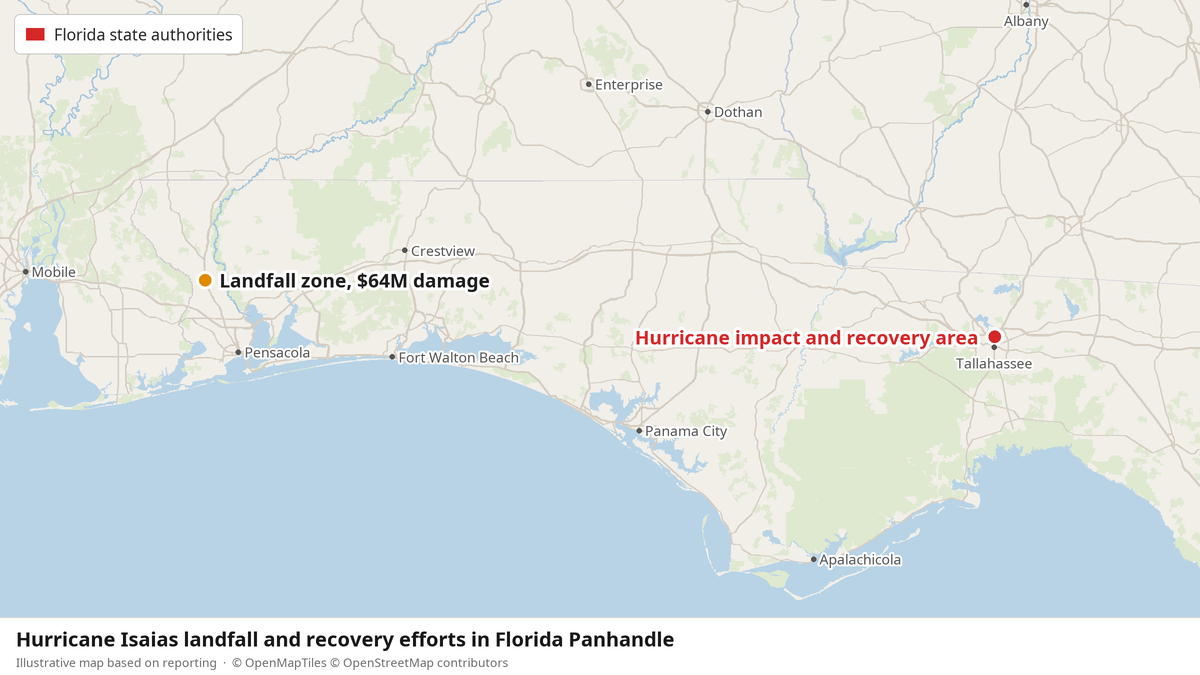
Isaias, a dangerous Category 2 hurricane, made landfall near Destin on the Gulf Coast around 9:30 p.m. ET Friday. Florida took the worst of it. Wind gusts reached 118 mph, while heavy rain and storm surge left Panhandle communities “in shambles.”
The damage reached beyond Florida. Alabama reported two additional storm-related deaths, including one person killed when a tree fell onto a Birmingham home. Details about the second death weren’t immediately available.
Power Restoration and Recovery Costs
Utility crews have moved quickly. During landfall on Oct. 9, more than 400,000 Florida customers lost power at one point. DeSantis said crews had restored service to about 95% of them. Still, more than 20,000 remained without power Wednesday morning, mostly in Escambia and Santa Rosa counties, according to PowerOutage.com.
Then there’s the bill. In Escambia County alone, initial damage assessments put costs for county repairs, emergency response and recovery efforts at roughly $64 million. That’s one county. The Panhandle’s total tab will be larger, and local governments will face pressure to cover it as they rebuild.
What Comes Next
Florida’s state-led recovery has shifted from immediate response to the work that follows: debris removal, damage assessments and aid distribution across the Panhandle. The effort focuses on a defined area of northwest Florida, allowing state and local officials to direct resources where the damage is worst.
Five days after landfall, the question is how quickly the region can return to normal—and how much it will cost.
Why This Matters:
The Isaias recovery tests whether Florida’s state-led model can turn a $64 million bill in a single county into repaired homes and restored services without long delays. Crews restored about 95% of lost power in days, suggesting the system is working, but the remaining outages, debris removal and aid distribution are where recovery gets slow and expensive. Deaths tied to cleanup work and generator misuse point to a lesson: much of the danger lingers after landfall, and individual preparedness matters. Local budgets, insurance claims and the pace of private rebuilding will determine how fast Panhandle communities recover, and how much they depend on outside funding.